Estimated reading time: 5 minutes
Introduction
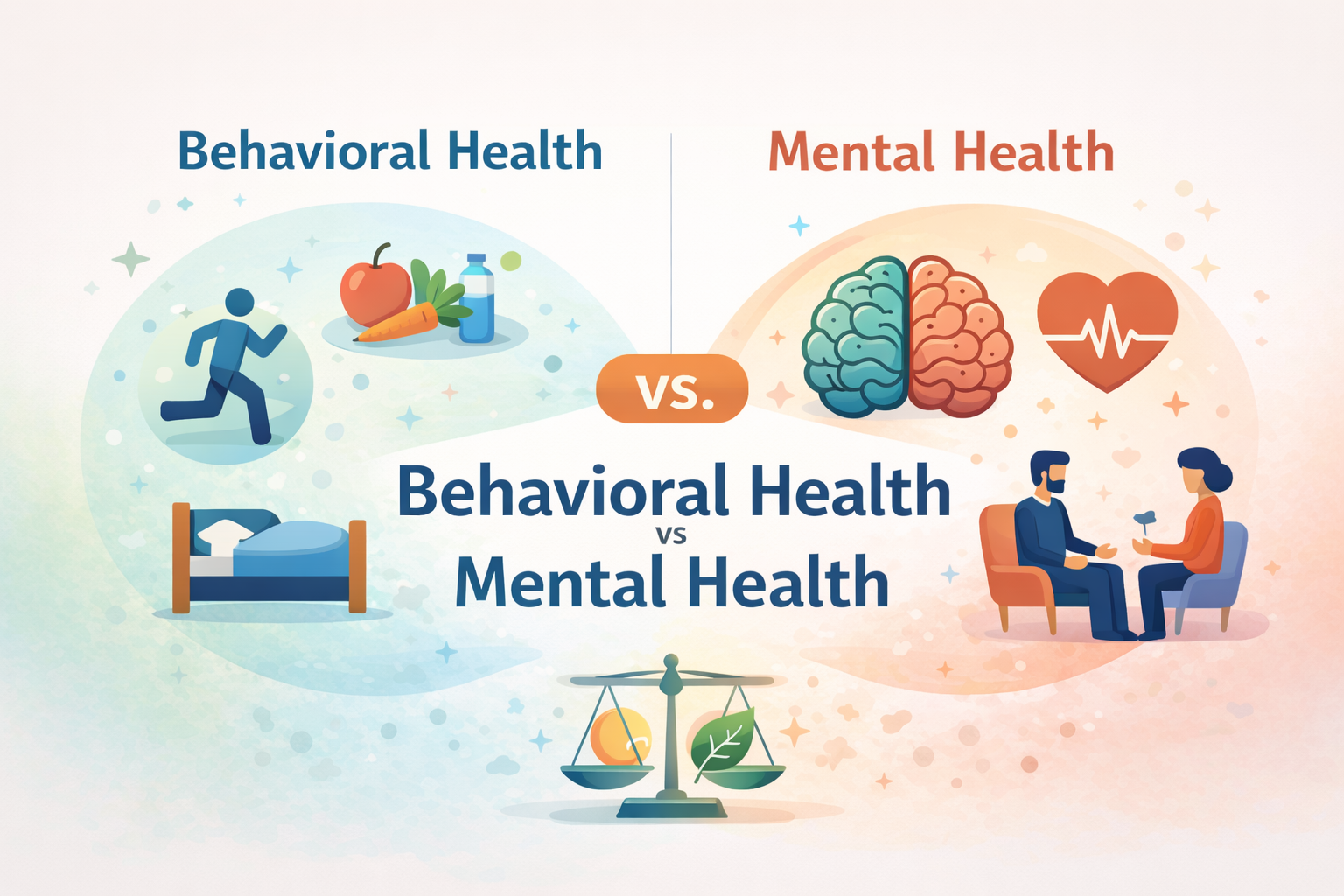
Many people think behavioral health and mental health mean the same thing. They are not the same, but they are closely related. Each focuses on a different part of health.
Mental health focuses on an individual’s thoughts, emotions, and psychological well-being.
Behavioral health focuses on an individual’s habits, actions, and lifestyle choices.
Both affect how we feel and how we live our daily lives.
Understanding the difference can help people make better health decisions.
It can also help people seek the right treatment when needed.
What is Mental Health?
Mental health is a person’s emotional and mental well-being.
It affects:
• How a person thinks in their daily life.
• How people feel about life.
• In the way they handle stress.
• Helps them to make decisions.
• How people relate themselves to other people.
Good mental health helps people cope with daily challenges. It also supports healthy relationships and productivity. Poor mental health can affect a person’s life in many ways. It may lead to emotional distress and difficulty functioning.
Common Mental Health Disorders
Some common mental health conditions that affect the well-being of a human include:
• Depression
• Anxiety disorders
• Bipolar disorder
• Post-traumatic stress disorder (PTSD)
• Schizophrenia
These conditions affect mood, thinking, and behavior. Many people can manage them with proper treatment.
What is Behavioral Health?
Behavioral health looks at how actions affect health. It studies how habits connect to wellness.
These behaviors can include:
• Which diet does a human take in their daily routine?
• They do regular exercise or not.
• Follow a tight sleep schedule or sleep late at night and wake up late in the morning?
• Substance use.
• Way they manage stress.
Behavioral health also includes mental health. But it goes beyond thoughts and emotions. It looks at how daily habits influence physical and emotional health.
Examples of Behavioral Health Issues
Some behavioral health problems include:
• Alcohol or drug addiction of an individual
• Eating disorders such as eating fried, packaged food, and having sugary beverages daily. In short, following a diet that harms itself.
• Poor sleep habits, such as irregular sleeping time or inadequate rest.
• Risky behaviors: Doing things that can harm oneself as well as others.
• Putting pressure on the mind for little things, suffering from chronic stress.
These behaviors can strongly affect both mental and physical health.
Behavioral Health vs Mental Health (Key Differences)
The two terms, behavioral health and mental health, are connected but not identical. Here is a simple comparison.
| Aspect | Mental Health | Behavioral Health |
| Focus | Thoughts and emotions | Habits and behaviors |
| Scope | Psychological well-being | Broader lifestyle health |
| Examples | Depression, anxiety | Addiction, sleep problems |
| Treatment | Therapy, medication | Behavior change, counseling |
In simple words:
Mental health is about how you feel and think.
Behavioral health is about what you do and how you live.
How Mental Health and Behavioral Health Are Connected
Mental health and behavioral health influence each other.
For example:
Poor sleep habits can increase anxiety and irritability. Chronic stress may lead to unhealthy coping behaviors. Depression may cause people to withdraw socially.
Healthy habits can also improve mental health.
Examples include:
• Regular exercise, even for 20 to 30 minutes.
• Healthy diet: eating 80% of weekly food healthy and having only 20% junk food can be helpful.
• Good sleep routine: sleeping early in the night and waking up early in the morning helps your body to repair itself.
• Meditation and mindfulness: Meditating even for 5 to 10 min can relax your mind. Also, spend some time on activities that bring you joy.
When both areas are balanced, overall health improves.
Treatment for Mental and Behavioral Health Issues
Treatment depends on the type of problem. Both areas may require different professionals.
Mental Health Treatments:
• People who are suffering from chronic behavioral changes like anxiety, anger, etc., may need psychotherapy for treatment.
• People who need an immediate solution for their short-term problem may need Counseling sessions.
• Some with severe conditions of depression and anxiety may need medications for the management of their problem.
• Psychiatric care
These treatments help manage emotions and thought patterns.
Behavioral Health Treatments
Behavioral health treatment often focuses on changing habits.
Examples include:
• People who notice drastic changes in their overall behaviour may need Behavioral therapy.
• People who are suffering from alcohol or drug addiction may need de-addiction treatment programs
• Lifestyle counseling
• Stress management techniques
These methods help people develop healthier behaviors.
Why Understanding the Difference Matters
Knowing the difference between these terms is important.
It helps people better understand their health.
It also helps healthcare providers give the right treatment.
A person may have mental health challenges, behavioral issues, or both.
A holistic approach often works best.
This approach treats both mind and behavior together.
Tips to Improve Mental and Behavioral Health
Small daily habits can improve overall well-being.
Try these simple steps.
• At least make 20 to 30 minutes for exercise daily.
• Prioritize eating healthy food as much as you can.
• Maintain a good sleep schedule.
• Practice mindfulness or meditation.
• Stay connected with family and friends.
• Seek professional help when needed.
These habits support both mental and behavioral health.
Conclusion
Behavioral health and mental health are closely connected.
However, they are not the same.
Mental health focuses on emotions and thoughts.
Behavioral health focuses on actions and lifestyle habits.
Both play an important role in overall well-being.
By improving daily habits and emotional health, people can build a healthier and more balanced life.
H2: Frequently Asked Questions
No. Behavioral health includes mental health but also focuses on lifestyle habits and behaviors.
Both are equally important for overall well-being.
Yes. Poor habits like lack of sleep or substance use can worsen mental health.
Professionals such as therapists, psychologists, psychiatrists, and addiction counselors provide treatment.