Your gut does a lot more than digest lunch. If you’re wondering how to improve gut health, it’sYour gut does more than digest lunch. If you want to know how to improve gut health, start with your gut microbiome. It holds trillions of bacteria. It holds fungi too. It holds other tiny microbes. This whole system shapes digestion. It shapes immunity. It shapes mood. It shapes skin. It shapes sleep. When it’s balanced, you barely notice it. When it’s off, you may feel bloated. You may feel tired. You may feel foggy. You may break out. You may feel stomach pain.
Here’s the good news. How to improve gut health doesn’t need pricey supplements. It doesn’t need an extreme diet. Small daily habits make a real difference over time.
What Is Gut Health, Really?
Gut health means the microbes living in your gut. Mostly, this means your large intestine. A healthy gut is diverse. It has many types of bacteria. No single type takes over.
This mix helps your body break down food. It helps you absorb nutrients. It helps make certain vitamins. It helps control swelling in the body. Your gut also talks to your brain. This link is called the gut-brain pathway.
If you’re asking how to improve gut health, this brain link matters too. When gut bacteria fall out of balance, doctors call this dysbiosis. Digestion often suffers first. Studies also link gut imbalance to immune issues. They link it to metabolism issues. They link it to skin and mood too.
In short, your gut isn’t just about digestion. It’s a big part of your whole health.
Signs You Might Have an Unhealthy Gut
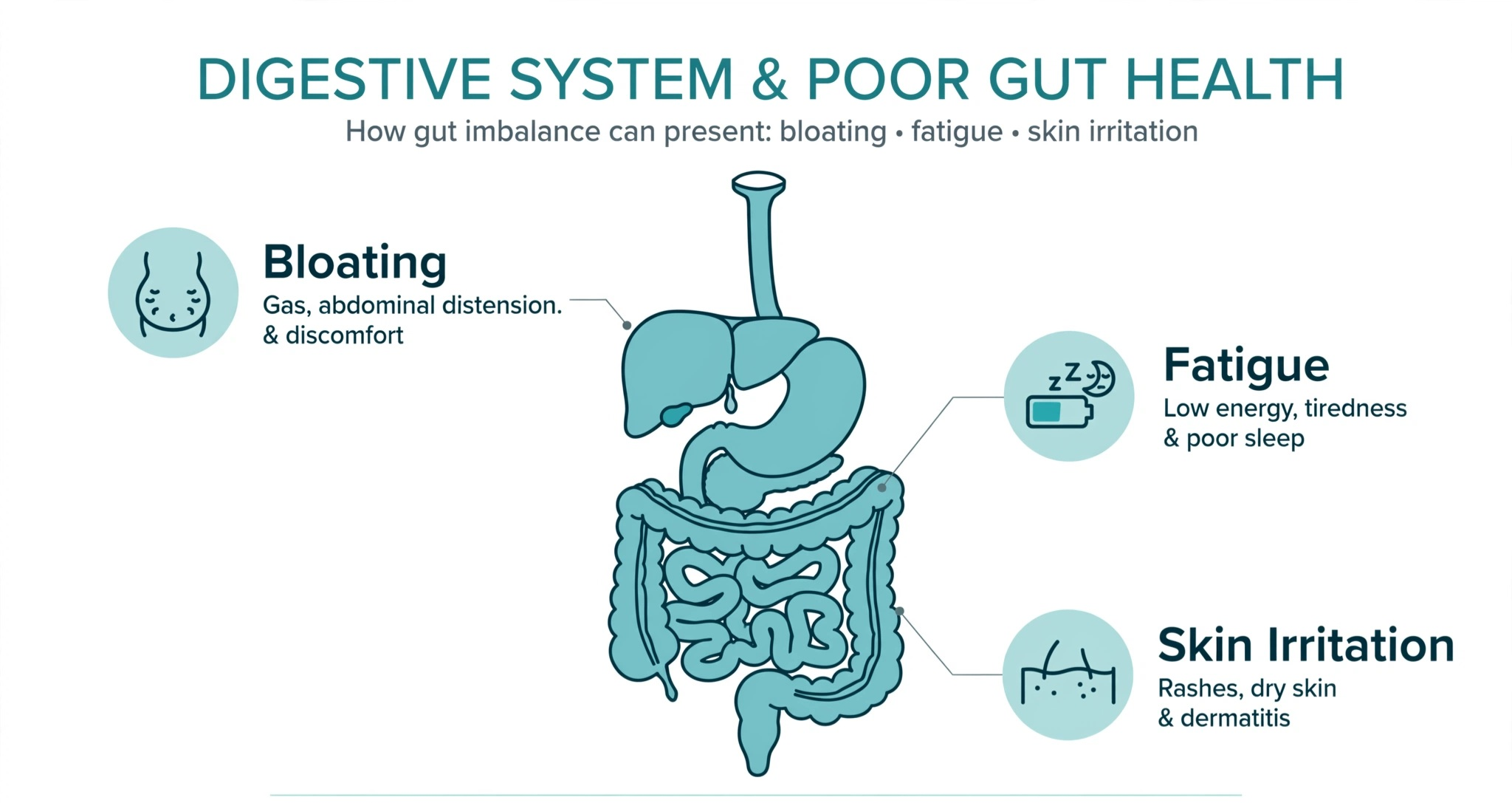
Before you learn how to improve gut health, learn the warning signs first. Poor gut health doesn’t always show up as a clear stomach issue.
Watch for these signs:
- Trouble digesting: Bloating, gas, constipation, diarrhoea, heartburn, or acid reflux.
- Fatigue: You still feel tired even though you slept through the night.
- Skin issues: Breakouts, eczema, rash, or itching, along with digestive complaints.
- Unusual reactions to foods: Foods that were okay before now give you trouble.
- Sugar cravings: Often change depending on what is going on in your digestive tract.
- Weight changes: Your appetite and digestion may change your weight.
- Mood issues: You’re moody, lack motivation, or feel sluggish.
- Sleep issues: The two interact with one another in both directions.
None of these signs alone means you have a problem. But they’re a signal to pay closer attention. Learning how to improve gut health starts with listening to your body.
Best Foods to Improve Gut Health
Food shapes your gut microbiome the most. What you eat feeds different types of bacteria. This makes food one of the simplest ways to improve gut health.
Eat More Fiber
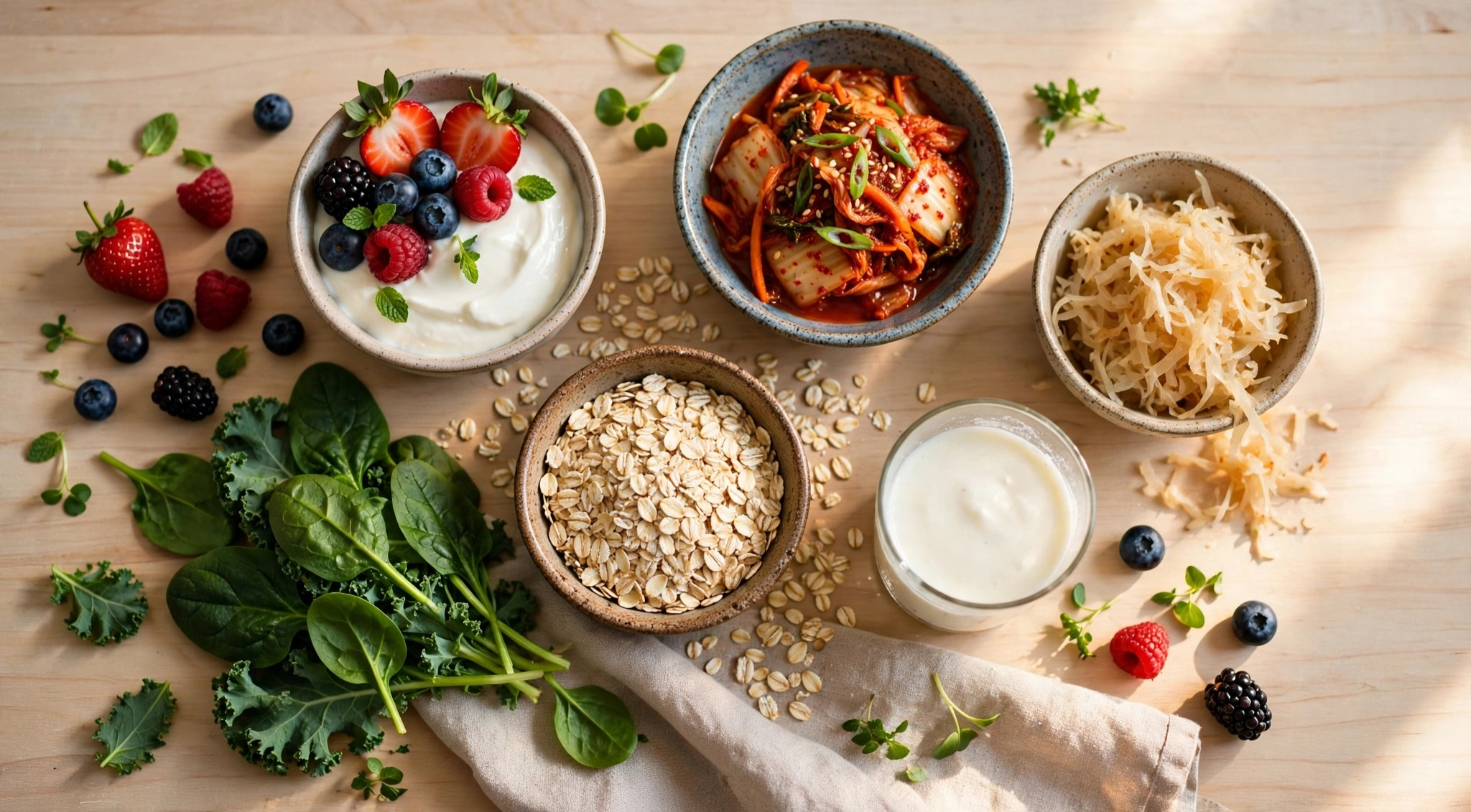
Fiber feeds your good gut bacteria. Most adults need 25 to 38 grams of fiber each day. This number can shift based on your body. Good fiber sources include:
- Whole grains like oats, quinoa, and brown rice
- Lentils, chickpeas, and black beans
- Leafy greens, broccoli, and Brussels sprouts
- Berries, apples, and pears with the skin on
If you want to know how to improve gut health, add fibre slowly. A big jump too fast can cause gas or bloating. Drink enough water too. This helps your gut handle more fiber.
Add Fermented, Probiotic-Rich Foods
Probiotics are live microbes. They can support your gut. Fermented foods offer them naturally.
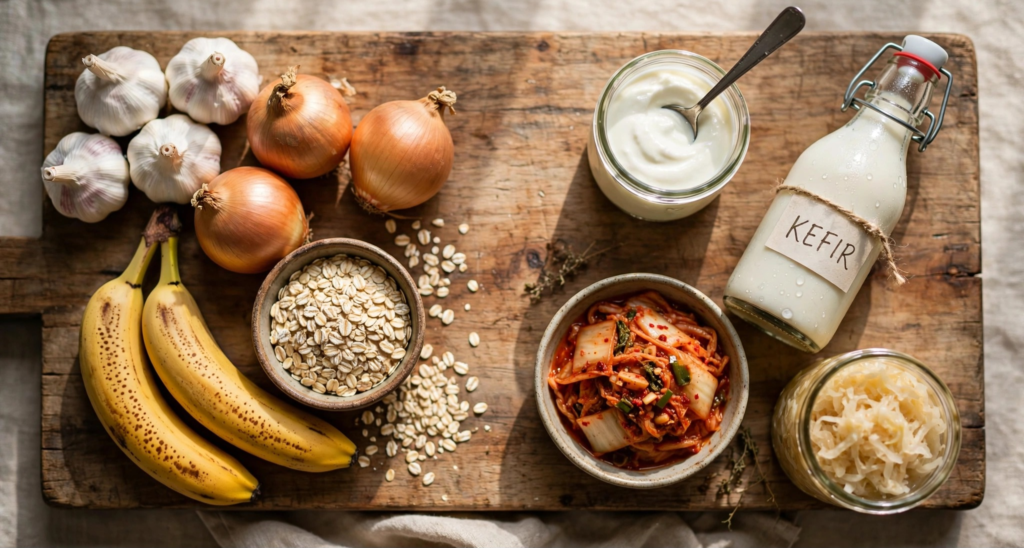
Try plain yoghurt or kefir with live cultures. Try sauerkraut. Try kimchi. Try miso. Try tempeh. Try kombucha, in small amounts. Khamiri kulcha is another fermented food. It’s made by letting dough rest with yeast.
These foods fit into the best foods for gut health list. They work best paired with a varied, fiber-rich diet.
Don’t Skip Prebiotic Foods
Prebiotics are fibers that feed your existing good bacteria. Think of probiotics as seeds. Think of prebiotics as fertilizer.
Try garlic, onions, leeks, asparagus, bananas, and oats. Eat prebiotic foods alongside fermented foods. This builds a strong home for good bacteria.
This step matters a lot in how to improve gut health. Adding bacteria without feeding them may not help much long-term.
Cut Back on Ultra-Processed Foods
Highly processed food and added sugar can shrink your gut diversity. This doesn’t mean cutting out every treat.
Make whole foods your daily go-to instead. A varied plate gives your body different fibers and nutrients. This is one practical way to work on how to improve gut health.
Lifestyle Habits That Support Gut Health
Food matters. But your daily habits matter too. Several simple choices shape your gut.
Prioritize Sleep
Sleep plays a big role in your health. Poor sleep can throw off your gut bacteria. Gut trouble can also disrupt sleep. It works both ways.
Aim for 7 to 8 hours of steady sleep. Keep a regular bedtime. Skip screens before bed.
If you’re asking how to improve gut health, don’t focus on food alone. Good sleep belongs in your plan too.
Move Your Body Regularly
Exercise supports gut diversity. It also supports general digestion. You don’t need an intense workout every day.
A simple 30-minute walk is a great start. Regular movement is one of the easiest ways to improve gut health without a complex routine.
Reduce Chronic Stress
Long-term stress affects gut movement. It affects your bacterial balance too. It can trigger bloating. It can trigger cramps. It can trigger irregular bowel habits.
Try deep breathing. Try walking outside. Try journaling. Try meditation. These simple tools ease daily stress.
Learning how to improve gut health means looking past digestion alone. It means looking at your full daily habits.
Stay Hydrated
Water supports digestion. It supports the lining of your gut too. Not drinking enough water can cause constipation. It can slow digestion down.
Your water needs depend on your body, activity level, climate, and diet. Drink more when you exercise. Drink more in hot weather.
Good hydration is another basic step in how to improve gut health.
Chew Your Food Thoroughly
Digestion starts in your mouth. Eating too fast makes your stomach work harder.
Chew your food well. Try eating without your phone or screen nearby. Slowing down helps you notice when you’re full.

The Gut-Immune Connection
Much of your body’s immune tissue sits near your gut. This makes sense. Your gut constantly meets food, bacteria, and outside substances.
A diverse gut helps your immune system respond the right way. An unbalanced gut, though, links to low-grade inflammation.
This is why how to improve gut health supports your whole body, not just digestion. Fiber, food variety, sleep, movement, and stress control all work together.
The Gut-Skin Connection
Your gut and skin talk to each other. Scientists call this the gut-skin axis. Gut changes can sometimes show up as skin issues, like acne, redness, or eczema.
This doesn’t mean fixing your gut fixes every skin problem. But if skin issues keep showing up with gut issues, talk to a doctor about both.
A balanced diet supports how to improve gut health. It also supports your overall wellbeing.
Gut Health Myths, Debunked
Many gut health claims are overblown. Here are a few common ones.
- Myth: You need a supplement to fix your gut. Whole foods give you fiber, nutrients, and good microbes together. Supplements can help in specific cases. They’re not a must-have for everyone.
- Myth: All gut bacteria are simply good or bad. Your gut is more complex than that. The same microbe can act differently depending on its surroundings.
- Myth: Detox teas fix your microbiome. Most detox products offer no lasting fix. Some laxative-based ones can even irritate your gut.
- Myth: Feeling fine means your gut needs no attention. Good habits still matter, even without clear symptoms.
These facts make How to improve gut health simpler. You don’t need a miracle product. You need steady habits.
Should You Get a Gut Microbiome Test?
At-home microbiome tests have grown popular. They give a snapshot of the microbes in a stool sample.
But turning these results into exact diet advice is still new science. A test shouldn’t replace basic habits, like eating enough fiber and eating varied whole foods.
For most people, how to improve gut health starts with the basics, not an expensive test.
Gut Health at Different Life Stages
Your gut changes throughout your life.
- Children build much of their early gut diversity in their first years. Diet, environment, and antibiotic use all shape this.
- Pregnancy also brings natural shifts in gut bacteria. Hormones and metabolism drive these changes.
- Older adults may see less gut diversity. Diet changes, medication use, and slower digestion all play a role.
- At every stage, the basics stay the same: eat more fiber, eat more variety, add suitable fermented foods, and cut back on ultra-processed foods.
These are solid foundations for how to maintain gut health.
How Antibiotics and Alcohol Affect Your Gut
Antibiotics affect both harmful and helpful bacteria. After a course, your gut diversity may take time to bounce back.
If you’ve taken antibiotics recently, talk to your doctor about diet or probiotic options. This matters more if you still have symptoms.
Regular or heavy drinking can also affect your gut lining and bacteria balance. Cutting back on alcohol supports gut health.
These factors matter for how to improve gut health over the long run.
Common Mistakes People Make
Many people try to fix their gut health but get frustrated. Often, they expect fast results.
Common mistakes include:
- Adding probiotics without enough prebiotic fiber
- Expecting overnight change
- Leaning too much on supplements
- Cutting out whole food groups without guidance
- Ignoring sleep and stress
- Skipping regular movement
A better path for how to improve gut health moves slowly. Add one or two habits at a time. Stick with them before adding more.
How Long Does It Take to Improve Gut Health?
Some gut bacteria shifts can start within days of a diet change. But real changes in digestion, energy, or symptoms take a few weeks to show.
A more diverse, stronger gut usually needs months of steady habits.
So, when you think about how to improve gut health, don’t judge results after three days of yoghurt. Give your routine real time to work.
Does Meal Timing Matter?
Food choice gets most of the attention. But meal timing matters too.
Eating at random times, or eating heavy snacks late at night, can throw off your routine. Finish dinner a couple of hours before bed. Skip constant snacking. This gives your gut steady rest periods.
If you’re thinking about structured fasting, talk to a doctor first. This matters more if you have a gut or metabolic condition already.
This is another useful piece of advice on how to improve gut health.
Snacks That Are Gut-Friendly
Snack time is where many people slip into low-fibre choices. Simple swaps help a lot.
- Instead of fried chips: Try roasted chickpeas, walnuts, or almonds.
- Instead of candy: Try an apple with almond butter.
- Instead of sugary soda: Try sparkling water or lemon water.
- Instead of flavored yogurt: Try plain Greek yoghurt with berries.
- Instead of a granola bar: Try overnight oats with chia seeds.
These swaps fit right into the best foods for gut health list, especially in a varied diet.
Hydration: How Much Water Do You Need?
Your gut needs enough fluid to move food along. It also needs fluid to keep its protective mucus lining strong.
A simple rule: drink steadily through the day. Drink more when you exercise or spend time in heat.
Pale yellow urine usually means you’re hydrated well. Very dark urine means you need more fluids. Fully clear urine, all the time, can mean you’re drinking more than you need.
Hydration stays a key part of your plan for how to improve gut health.
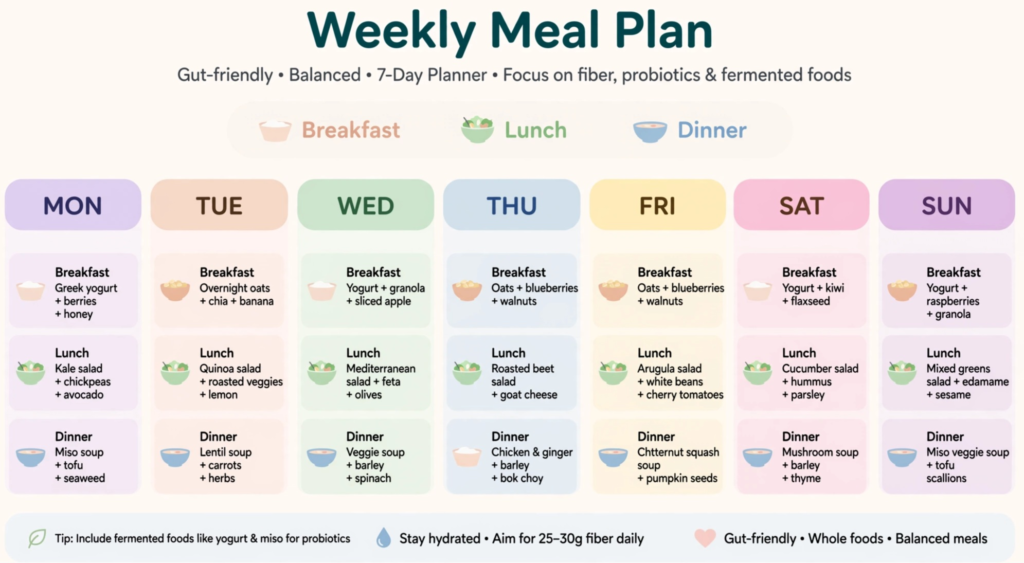
7-Day Sample Gut Health Meal Plan
This is a sample plan, not a fixed rule.
| Day | Breakfast | Lunch | Dinner |
| Mon | Oatmeal with berries and flaxseed | Lentil soup with whole-grain bread | Salmon, broccoli, quinoa |
| Tue | Greek yoghurt with banana and walnuts | Chickpea salad | Tofu, garlic, mixed vegetables |
| Wed | Kefir smoothie with spinach and berries | Whole-grain wrap with hummus | Chicken, sweet potato, greens |
| Thu | Overnight oats with chia seeds | Quinoa bowl with black beans | Miso soup, brown rice, vegetables |
| Fri | Yoghurt with granola and fruit | Leftover grain bowl | Kimchi fried rice with egg |
| Sat | Whole-grain toast with avocado | Lentil and vegetable stew | Fish, asparagus, wild rice |
| Sun | Kefir, oats, and berries | Chickpea salad | Sauerkraut, vegetables, salmon |
A varied plan like this gives you many fiber sources and nutrients. This variety sits at the heart of how to improve gut health.
When Supplements Might Help
Whole foods should come first. But some targeted supplements can help too. This applies after antibiotics, for example. It also applies when eating enough food is hard.
If you try a probiotic, look for clear strain names. Skip vague blends. A doctor can help you decide if a supplement fits your needs.
Psyllium husk can help people who struggle to hit their fibre goals. Use it with enough water and proper guidance.
Supplements should support your work, not replace it, when you try to improve gut health naturally.
For personalized Ayurvedic guidance and support with how to improve gut health, explore Healthy Ayu. If you want to look deeper, read out the root causes of poor health, gut health tips, ways to improve mental health, and healthy food choices for better well-being.
Key Takeaways
Good gut health doesn’t come from one miracle food. It comes from steady, repeatable choices.
Eat more fiber. Add suitable fermented and prebiotic foods. Drink enough water. Sleep well. Move often. Manage stress. Cut back on ultra-processed food and alcohol.
These habits offer real foods to improve gut health. More than that, they build a full lifestyle plan for how to improve gut health.
Give your body time. Real change can take weeks or months. Results differ, since everyone has a different body, diet, lifestyle, and starting point.
If gut symptoms stick around despite steady changes, talk to a doctor or gut specialist. Ongoing bloating, reflux, sudden weight change, or rectal bleeding shouldn’t just get blamed on your microbiome.
Frequently Asked Questions
What’s the fastest way to improve gut health?
Add more fiber. Add suitable fermented foods. This is a strong starting point. If you’re searching for how to improve gut health, aim for steady change, not a quick detox.
Can gut health affect mental health?
Yes. The gut-brain link lets your gut and brain talk through nerves and hormones. This is one reason How to improve gut health touches more than just digestion.
Does everyone need a probiotic supplement?
No. Many people get good microbes from food, like yogurt, kefir, kimchi, and sauerkraut. Supplements help in specific cases only.
How do I know my gut health is improving?
Watch for less bloating. Watch for easier digestion. Watch for regular bowel movements. Watch for steady energy and more comfort. These signs show if your How to improve gut health plan is working.
What are the worst foods for gut health?
A diet high in ultra-processed food, added sugar, and heavy alcohol use hurts gut diversity. Focus on your overall diet quality, not fear of one food.
When should I see a doctor about gut health?
See a doctor for ongoing digestive symptoms. See a doctor for sudden weight loss or gain. See a doctor for constant reflux, severe stomach pain, or rectal bleeding. Get checked if symptoms don’t improve.
Can chronic stress cause gut problems?
Yes. Chronic stress affects gut movement and bacterial balance. Managing stress is a key part of how to maintain gut health.
Can I improve gut health without cutting out foods?
Often, yes. Adding fiber-rich and fermented foods can boost your diet variety without cutting whole food groups. Only cut foods out if you have a known intolerance or medical reason.
What foods best support the microbiome?
Whole grains, vegetables, fruits, legumes, nuts, seeds, yoghurt, kefir, and other fermented foods give a strong mix of fiber and nutrients. Eating a variety of these is one of the simplest improve gut health naturally strategies.
What are some simple daily habits for digestion?
Eat slowly. Chew well. Drink enough water. Stay active. Sleep on a steady schedule. Eat a range of plant foods. These simple habits are practical ways to improve gut health and are easier to keep up than extreme plans.
How do I maintain a healthy gut over time?
Consistency beats perfection. Keep adding different fiber sources. Add suitable fermented foods. Keep a steady sleep schedule. Manage stress. Stay active. These habits sum up how to maintain gut health in a simple, lasting way.
What should I eat when working on gut health?
There’s no single perfect food. Build meals around vegetables, fruits, whole grains, legumes, nuts, seeds, and suitable fermented foods. This gives you a wide range of fibers. It supports gut diversity. It’s a practical answer to the best foods for gut health.
Can I improve my gut health naturally?
Yes. Many basic habits support your gut without extra supplements. Eat a varied diet. Stay hydrated. Sleep well. Exercise. Manage stress. These are smart ways to improve gut health naturally.
The goal isn’t a perfect routine. It’s building small habits you can repeat. When you focus on how to improve gut health through daily food and lifestyle choices, progress becomes much easier to keep up.