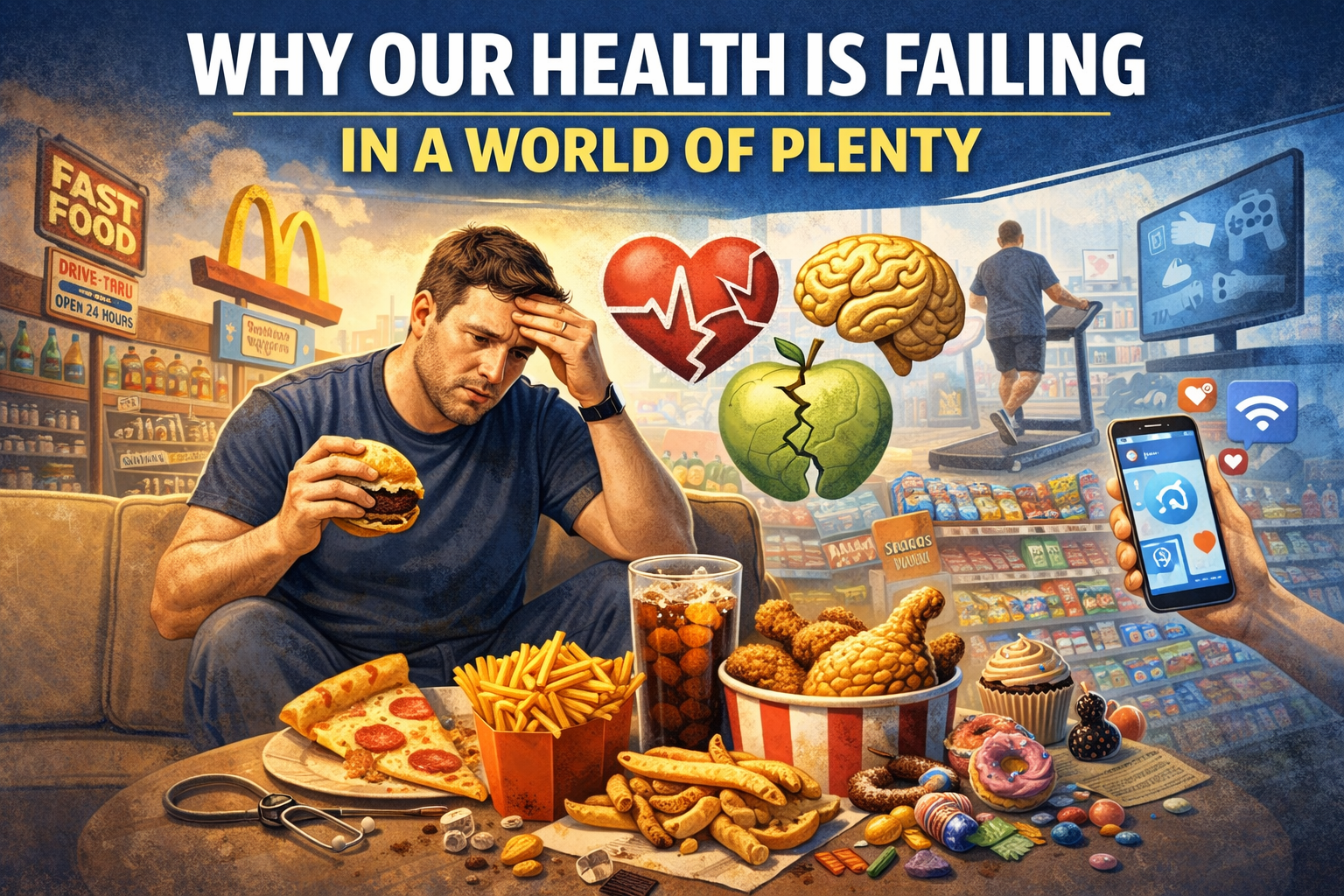
We live in a modern world. Life seems very easy now. We have more food than ever. We have many doctors. Medical science moves very fast. Doctors can test our bodies in fast ways. They can study our food in deep detail. All of this should keep us strong. But why our health is failing in world of plenty is still a big question.
Under the surface, a quiet problem grows. We have plenty of food, care, and health tools. Yet human health keeps dropping every day. Most people feel tired every day. They feel weak, stressed, and drained. We feel far from nature. When we look at why our health is failing in world of plenty, we see this sad truth clearly.
We traded nature for easy man-made living. Now our bodies pay a heavy price. Bad toxins hide inside our food. Screens and soft chairs took away daily movement. People sit too much each day. People work too long and stare at screens all night. These simple habits are real causes of poor health. Most people do not even notice them.
Learning why our health is failing in world of plenty is the first step to getting well. Let us look at the main reasons for this health drop.

Major factors for decline in health
- Food
- Lifestyle
- Toxins around us
- Slow-building disease
These four areas show us the root causes of poor health. They show why modern life does not make us feel good.
Food
Food gives energy to the body. It helps us grow and stay strong. We have more food choices today than ever in history. But both the amount and the quality of food matter. Food quality sits right at the heart of why our health is failing in world of plenty.

Today, our food lacks the good things we need to thrive. Here is why:
- Processed Overload: We eat too much processed food. We eat salty snacks and cheap oil. This causes bad swelling inside the body. Over time, it leads to weight gain and high blood pressure.
- The Sugar Trap: Sugar is a top cause of poor health. Boxed snacks and sweet drinks hold too much sugar. Even some wheat now holds extra sugar. This raises the risk of diabetes, weight gain, and sick hearts.
- Nutrient Loss: Poor farming methods harm our dirt. Soil now has fewer good minerals. Fresh greens hold fewer vitamins than in the old days. Farm chemicals hurt food quality too. This explains key causes of declining health in our food supply.
- Food Mixing: Food needs are high across the world. Some companies mix fake or cheap things into real food. This unsafe mixing harms our stomachs and weakens our bodies.
Lifestyle
Our bodies were made to walk, run, and live in nature. But now we live our lives on chairs and behind screens. Many people rarely step outside. City life keeps us away from trees and fresh air. This huge shift is another big reason why our health is failing in world of plenty.
- Sedentary Life: Studies show adults sit for 6.5 to 8 hours every day. Sitting weakens the immune system. It slows down how the body burns food for power.
| Era | Avg Sitting Time | Main Cause of Sitting |
| 1900 – 1950 | 3 to 4 hours a day | Meals, reading, or resting |
| 1960 – 2000 | 5 to 6 hours a day | Office jobs and television |
| 2000 – 2025 | 7 to 11 hours a day | Computers, phones, and commuting |

- Sleep Trouble: Blue light from phones strains our eyes. It throws off natural sleep cycles. Good sleep is key for the body to heal itself. Yet one in three adults never gets enough rest. Simple healthy lifestyle habits can restore healthy sleep and set screen limits.
- Constant Stress: Our busy world keeps stress high. Social media forces people to compare their lives to others. Stress never turns off. This leads to burnout and heart trouble.
- Mental Health Strain: Young people face tough competition at school and work. This causes fear and bad moods. Money worries are high today. Living far from loved ones adds to this pain. Bad mental states cause weak physical health. This is one of the root causes of poor health hiding behind busy modern lives.
Environmental Toxicity

- Tiny Plastics & Chemicals: Chemicals in our water, plastic, and homes throw off the body’s balance. They hurt the gut and cause bad stomach pain.
- Air Pollution: Dirty air is a top cause of early death across the globe. Cars, plants, and dust fill the air with smoke. Cutting down forests makes air worse. Dirty air brings lung disease and stroke to millions. This adds another layer to why our health is failing in world of plenty.
- Extreme Climate Shifts: Too much industry harms the planet. This brings extreme weather and heat waves. High heat puts heavy strain on the heart.
Slow-Building Disease
Some illnesses grow very slowly inside us over many years. These are now top killers worldwide. We do not catch them like a cold. Even young people now face bad heart disease. Cancer grows in quiet ways with no quick signs. This rise shows how far health has declined. Heart disease, stroke, and cancer cause two out of three deaths worldwide. This heavy loss shows the clear causes of poor health built from bad food, stress, sitting, and air pollution.
The health reclaim
We are not sick due to a lack of doctors. We are sick because we lost our connection to natural living. Real health comes from real food, movement, sun, and close friends. How do we reclaim our health? Seeing why our health is failing in world of plenty asks us to look at what we lost while getting modern ease.
Steps to reclaim our health
The Audit: Where Are You Now?
Before you fix anything, you need a clear start. You cannot fix what you do not see. Find bad habits in your day. This audit shows why our health is failing in world of plenty right inside your own life.
- Track Yourself: For 3 days, write down sleep, water, and daily steps.
- Spot the “Energy Leaks”: Find what drains you. Is it late phone use, sugar, or sitting all day?
- Get Professional Data: Get a blood test from a doctor. Check Vitamin D, B12, Iron, and cholesterol.
Reset the “Big Three”
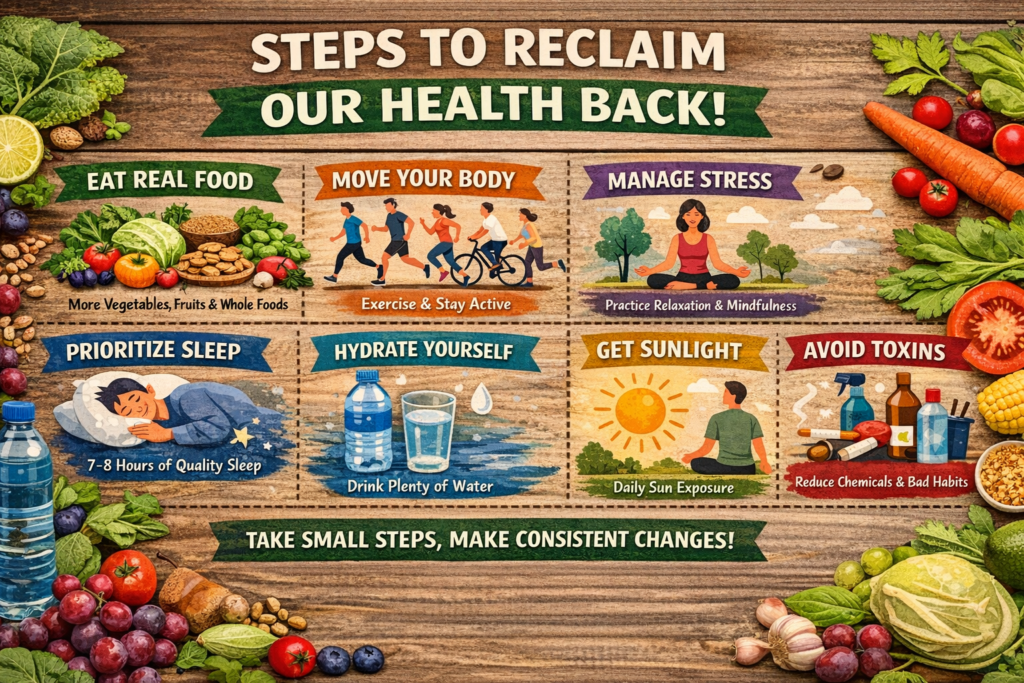
Focus on three key steps first. Do not aim for 100%. Aim for steady 70% daily work. Easy healthy lifestyle habits bring fast results.
- Sleep (The Foundation): Sleep lets the body rebuild. Get 7 to 8 hours of sleep each night. Turn off screens 30 minutes before bed.
- Nutrition (The Fuel): Clean food gives energy. Eat protein, healthy foods, and colourful veggies with meals. Drink water before tea or coffee.
- Movement (The Engine): Start small with daily movement. Walk or stretch for 10 minutes a day. Build up slowly each week. Why our health is failing in world of plenty is easy to fix when you move every day.
Manage the “Mental Load”
Health is physical and mental. Your mind matters just as much as your body.
- Stress Management: Deep stress hurts the body even with good food. Try 5 to 10 minutes of slow breathing. Listen to music or walk outside. Lowering stress fixes why our health is failing in world of plenty.
- Sunlight & Nature: Spend 15 to 30 minutes in the morning sun. Sunlight resets your body clock. Walk in a green park to rest your mind.
At Healthyayu, you will get to know the best foods for health, ways to improve mental health, best foods for gut health, and healthy food choices for better well-being.
FAQs
What are the main reasons leading to poor health?
Bad food, sitting too long, high stress, poor sleep, dirty air, and bad routines are the main causes. These causes of declining health explain why our health is failing in world of plenty.
Why are we becoming careless about health?
Busy days make health fall down the list. Work stress, long screen time, and fast food take over. Over time, these bad habits feel normal. This keeps the root causes of poor health hidden from sight.
Why is health deteriorating in India?
Health drops due to fast food, air pollution, high stress, and sitting all day. Packaged snacks add to the problem. These are clear causes of poor health across cities and towns.
Why is healthy living so difficult?
Modern life leaves little time for good food, daily walks, or rest. But small choices add up fast. Knowing why our health is failing in world of plenty drives us to build simple healthy lifestyle habits.
Why do some people continue to live unhealthy lifestyles?
People stick to old ways due to time limits and daily stress. Once bad ways become normal, the causes of declining health stay hidden. Spotting them is the first step to getting well.