Introduction
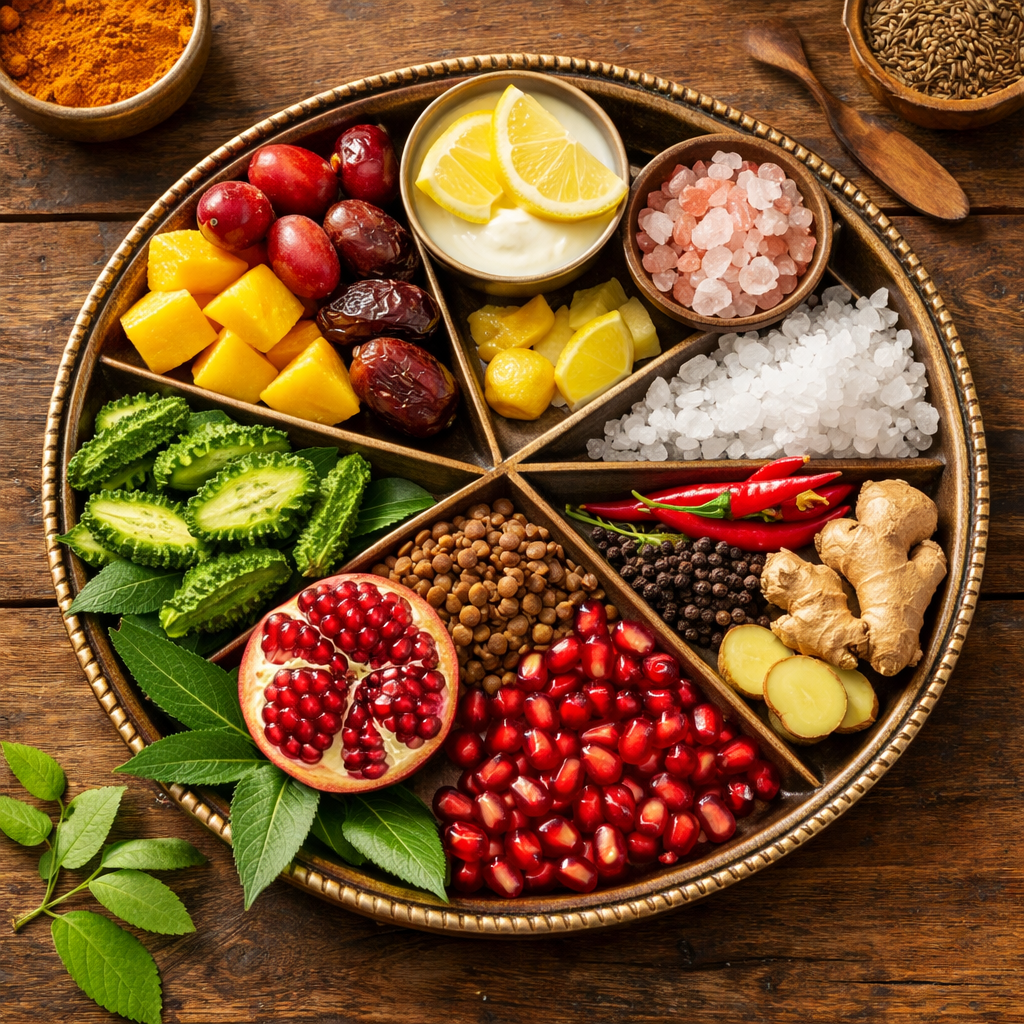
The Ayurvedic six tastes, called Shad Rasa, are the foundation of the Ayurvedic diet. There is one rule of thumb taught in Ayurveda: to have all six tastes in every single meal.
The six tastes are:
- Madhura (Sweet)
- Amla (Sour)
- Lavana (Salty)
- Katu (Pungent)
- Tikta (Bitter)
- Kashaya (Astringent)
Eating all six tastes helps balance the three doshas – Vata, Pitta, and Kapha. It also supports proper digestion and nutrient uptake. This basic idea explains why the Ayurvedic six tastes hold such a key place in a balanced meal. The Ayurvedic six tastes work best together, not alone.
In this guide, you will learn:
- What the six tastes in Ayurveda are
- Their benefits and effects on the body
- Food examples for each taste
- How to add them to your daily diet
What Are the Ayurvedic Six Tastes (Shad Rasa)?
In Ayurveda, taste is called “Rasa.” Each taste affects the body in its own way. It shapes digestion, metabolism, and mental health. Each taste also has a different effect on the three doshas, so no single taste suits every person at every time.
According to Ayurvedic practitioners, the six tastes should be incorporated into every meal. This not only aids in digestion but also creates a balanced nutritional diet. Furthermore, it contributes to one’s overall health. The six tastes, in accordance with Ayurveda, provide a simple way of understanding the effect that foods have on our body.
1. Sweet Taste (Madhura)
Sweet taste is the most nourishing of the Ayurvedic six tastes. It builds tissue, gives energy, and supports strength. It comes from earth and water. It balances Vata and Pitta but raises Kapha.
Sweet taste is one clear case of how a food quality can help some doshas while it raises another.
Key Effects of Sweet Taste:
- Tissue Building: Grows bone and muscle. Helps heal broken bones. Good for children and older adults.
- Dosha Balance: Cools Pitta and calms Vata dryness.
- Immunity: Builds Ojas, the root of body strength. Supports skin and hair health.
- Comfort: Brings mental calm and lifts mood. It can also act as a natural aid to libido and overall vitality.
- Special Use: Boosts breast milk in nursing mothers. Eases nausea, especially from sugary drinks.
Effects of Too Much Sweet:
Eating too many sweet foods increases Kapha levels and results in either weight gain, fatigue, or breathing problems. Other problems include a slow digestive system and feeling heaviness after eating. According to modern medicine, excessive amounts of sugar increase the chances of getting diseases in the future.
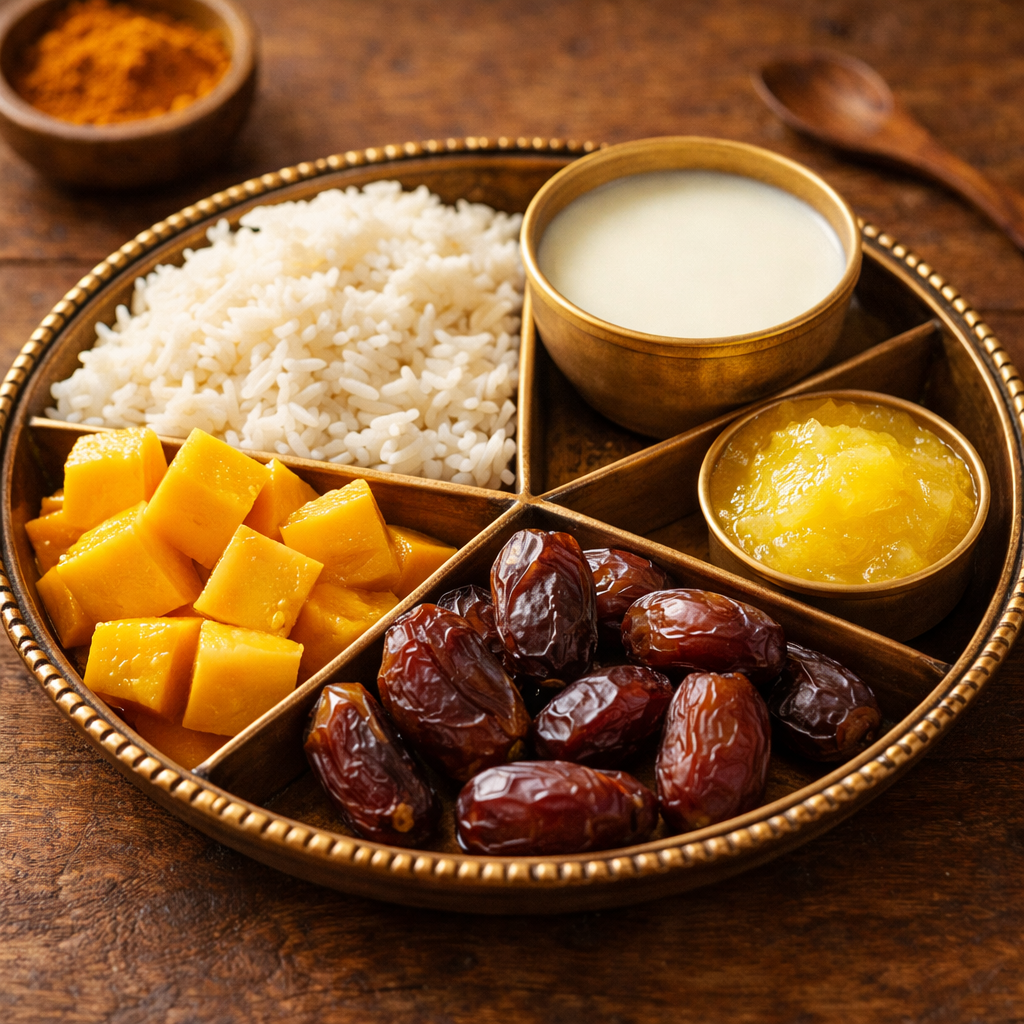
Examples of Sweet Foods:
- Grains: rice, wheat, oats, barley
- Natural sweets: honey, jaggery, milk, ghee
- Fruits: sweet fruit, dates, sweet potato
Key Points:
Sweet food is heavy and slow to digest. Ayurveda says to eat sweet food first in a meal, since it helps balance Vata and Pitta. Knowing this shows how the Ayurvedic six tastes work in daily eating. The goal is not one taste alone. The goal is a mix of tastes in balance.
2. Sour Taste (Amla)
Sour taste, or Amla Rasa, comes from fire and earth. It heats, moistens, and wakes up the body. It calms Vata but raises Pitta and Kapha. It boosts digestion, sparks appetite, and helps nutrient uptake. This makes it a useful taste for people with a weak or slow digestive fire.
Key Effects of Sour Taste:
- Digestion: Boosts saliva and digestive fire. Helps bile flow.
- Vata Relief: Eases dryness on the skin and in the gut. Warms the body.
- Mind and Energy: Clears mental fog and lifts daily energy.
The sour taste is part of the Ayurvedic six tastes and shows how one taste can shift with the amount eaten.
Effects of Too Much Sour:
Excessive consumption of sour food increases Pitta, which may lead to problems like skin eruptions and acidity. It also increases Kapha, leading to water retention. Symptoms include itching of the skin, toothache, and excessive thirst. Avoid consumption if you have infections or hypertension. Here, we see the importance of balancing the Ayurvedic six tastes.
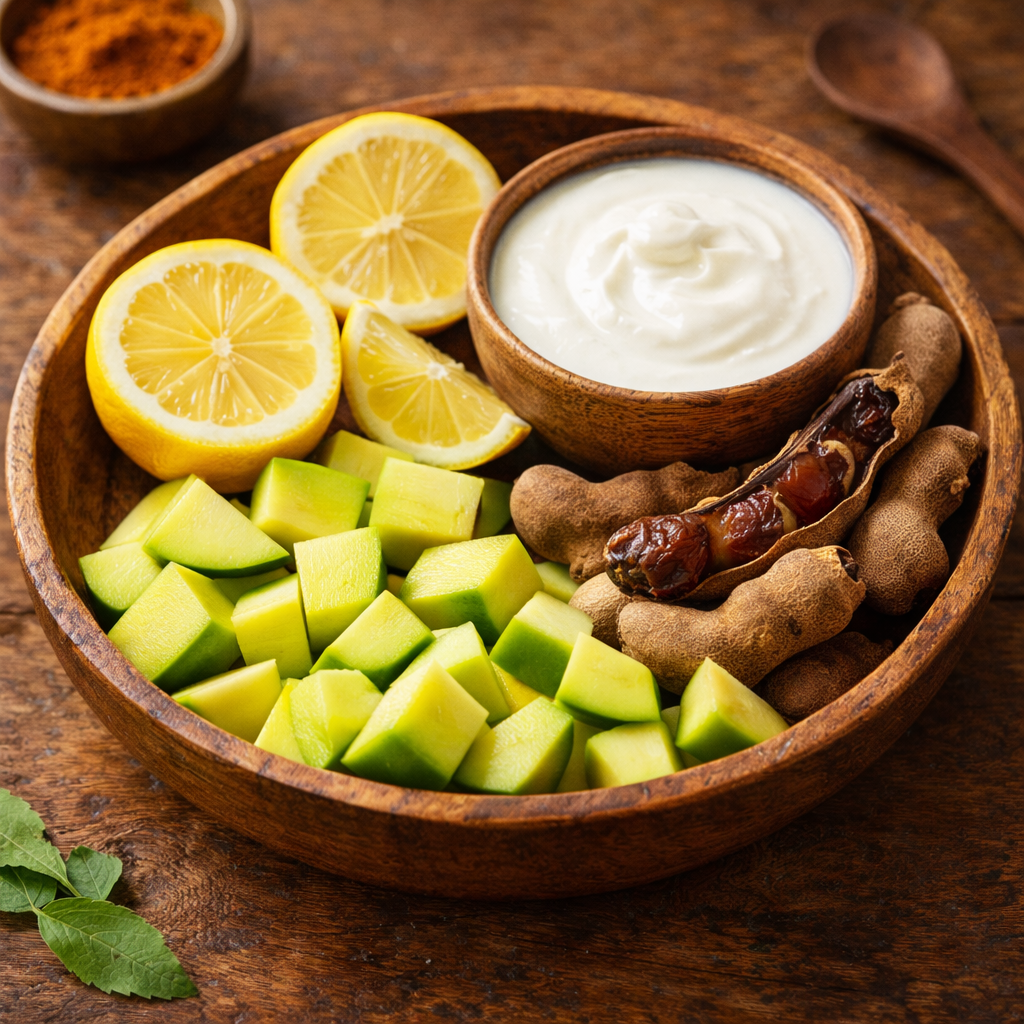
Examples: lemon, vinegar, sour cream, buttermilk, fermented food, raw mango, and amla berries.
3. Salty Taste (Lavana)
Salty taste, or Lavana Rasa, comes from water and fire. It wakes up digestion, eases constipation, and calms the nerves. It lowers Vata but raises Pitta and Kapha. Used in the right amount, it aids hydration and tissue growth. It also helps keep the body’s electrolyte balance in check.
The salty taste is another part of the Ayurvedic six tastes and shows why small amounts matter most.
Key Effects:
- Digestion: Boosts saliva. Softens stiff muscles.
- Tissue Health: Aids nutrient uptake. Eases Vata dryness.
- Calm Mind: Grounds the body and eases fear.
Effects of Too Much Salt:
Too much salt can grey hair early and cause hair loss. It raises Pitta, which brings acid trouble. It raises Kapha, which brings swelling. Over time, it can raise blood pressure and weaken muscle strength.
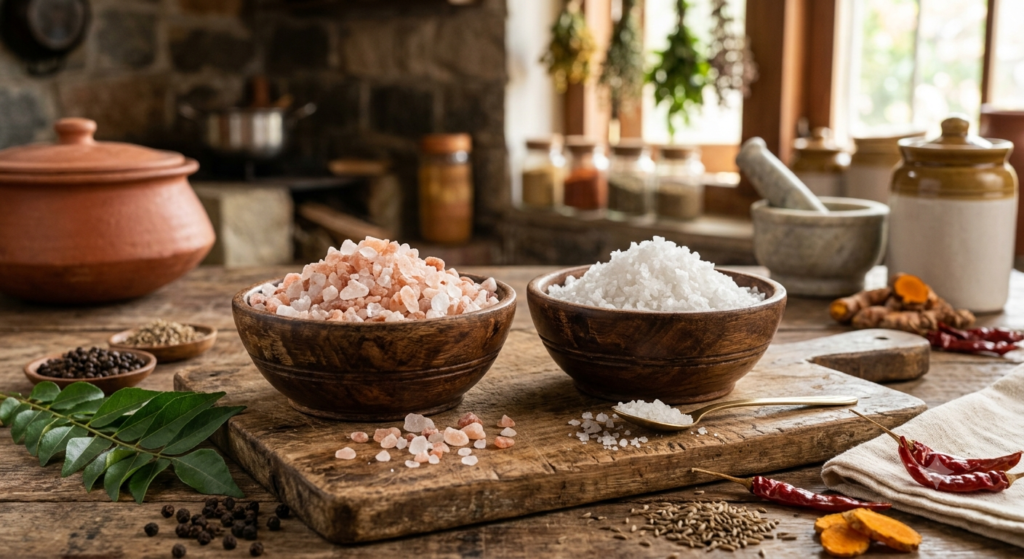
Best Use: Ayurveda favours natural salt, like Himalayan rock salt, over refined salt, mainly to calm Vata. Refined table salt tends to be more drying and harsh on the body over time. This is one more way the Ayurvedic six tastes guide daily food choices.
4. Pungent Taste (Katu)
Pungent taste, or Katu Rasa, comes from fire and air. It is light, hot, and dry. It wakes up digestion, boosts metabolism, and helps blood flow. It clears sinus blockages and cuts fat and mucus, which makes it useful for weight management. It calms Kapha but can raise Vata if overused.
The Ayurvedic six tastes include a pungent taste for its strong, active push on the body.
Key Effects:
- Digestion: Sparks digestive fire. Clears toxins through sweat.
- Breathing: Clears the nose, throat, and sinuses.
- Blood Flow: Eases clots and lowers cholesterol.
- Body: Reduces swelling in the lower legs. Helps oral health.
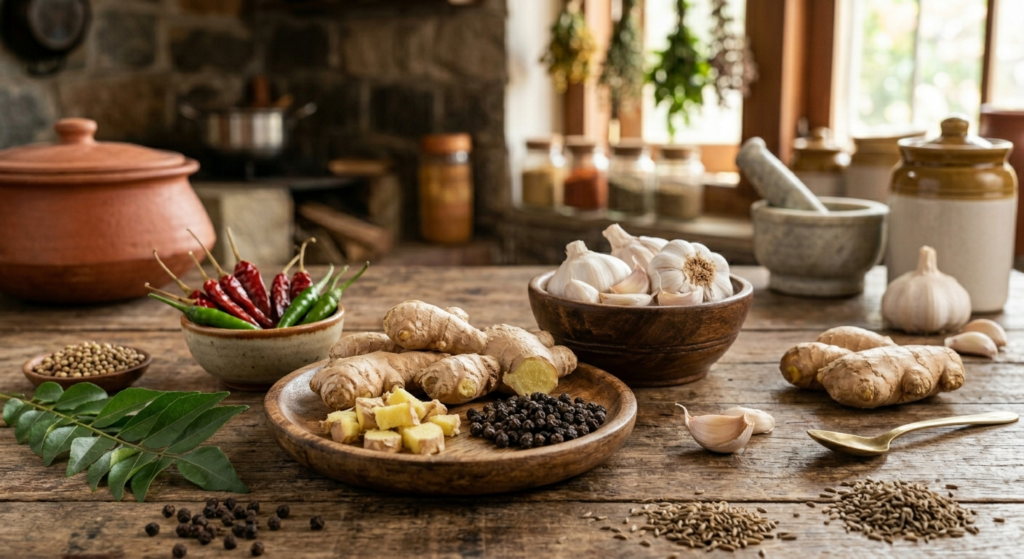
Food Examples: ginger, garlic, black pepper, chilli, and onion.
Effects of Too Much Pungent Food:
Too much can cause chest burn, acid reflux, and skin itching. Some people may get loose stools. Dry skin and a restless mind can also follow.
Pungent taste warms and wakes up the body. It suits people who feel cold in winter. Among the Ayurvedic six tastes, it is the one most linked with heat and speed.
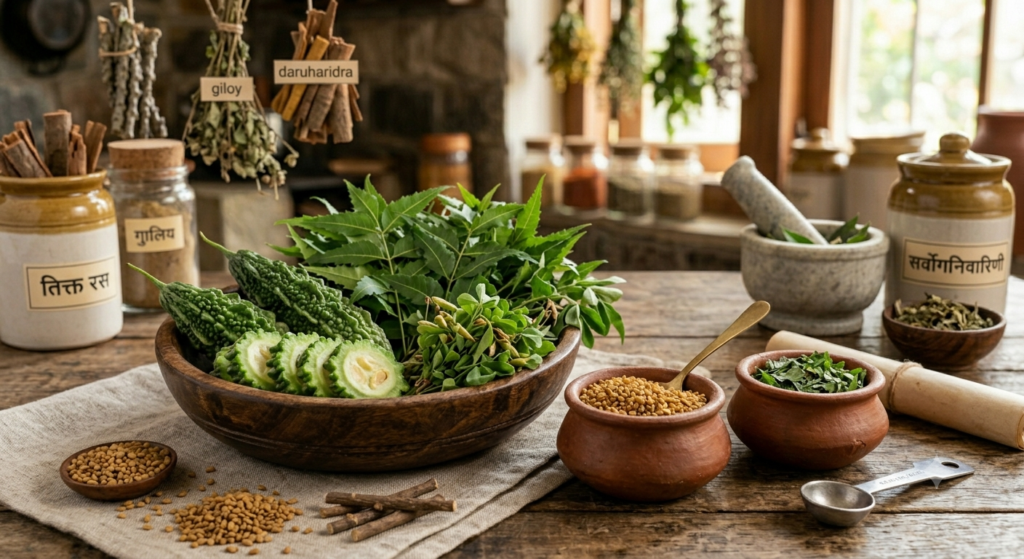
5. Bitter Taste (Tikta)
Bitter taste, or Tikta Rasa, is cold, light, and dry. It comes from air and ether. It cleans the blood, clears toxins, and helps the liver. It cools Pitta and Kapha but raises Vata. Many people find it the hardest taste to enjoy, since it lacks the pull of sweet or salty food.
The bitter taste is part of the six tastes according to Ayurveda and is linked with cleansing.
Key Effects:
- Cleansing: Clears fat and extra fluid. Aids liver health.
- Dosha Balance: Cools Pitta and cuts Kapha buildup.
- Digestion: Sparks appetite despite its cold nature.
- Skin: Eases itching and acne. Firms skin and muscle.
- Mind: Clears mental fog.
Examples: kale, spinach, bitter gourd, turmeric, neem, fenugreek seeds, and giloy.
Effects of Too Much Bitter Food:
Too much bitter food raises Vata. This can bring dryness, tiredness, and constipation. Use bitter taste with care, so the body does not dry out. Among the Ayurvedic six tastes, bitter is the one to use in the smallest amount.
6. Astringent Taste (Kashaya)
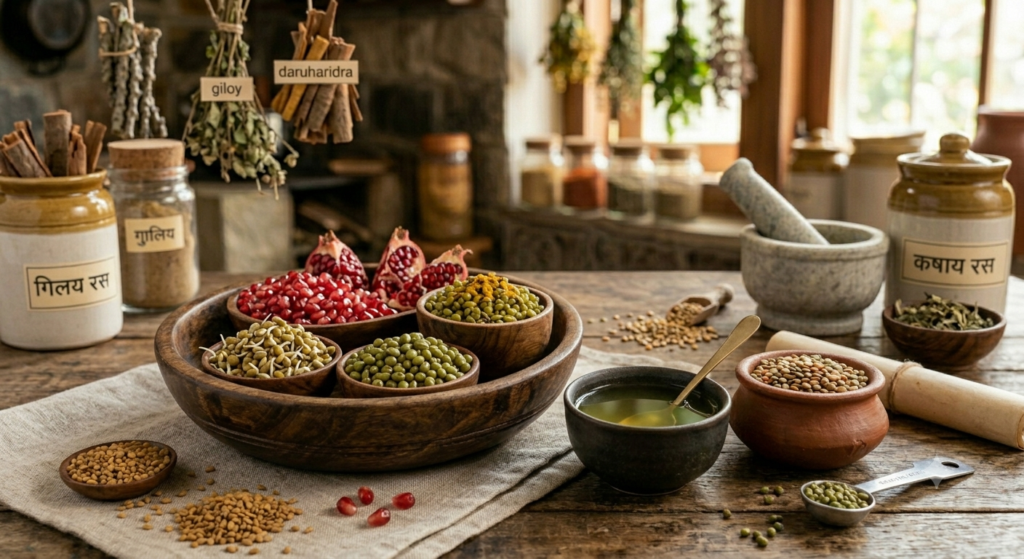
Astringent taste, or Kashaya Rasa, dries, cools, and binds. It comes from earth and air. It cleans the body, helps wounds heal, and cuts fat. It calms Pitta and Kapha but raises Vata, which may cause dry mouth or gas. It is often the least familiar of the six tastes in a modern diet.
The astringent taste completes the Ayurvedic six tastes and adds one more layer to the Ayurvedic meal.
Key Effects:
- Wound Care: Speeds healing of small cuts and sores.
- Cleansing: Soaks up extra fluid and toxins. Helps with loose stool.
- Dosha Balance: Cools Pitta and dries Kapha.
- Skin: Tightens pores and improves skin tone.
- Weight: Aids fat burn and cuts water buildup.
Examples: Pomegranate, raw banana, cranberries, pears, apples, grapes, leafy greens, broccoli, cabbage, chickpeas, lentils, and tea.
Effects of Too Much Astringent Food:
Too much can bring constipation, bloating, and a dry mouth or throat. It may also block the body’s channels and lower vitality. This completes the picture of how each of the Ayurvedic six tastes can help or harm, based on the amount eaten.
Why Are the Six Tastes Important in Ayurveda?
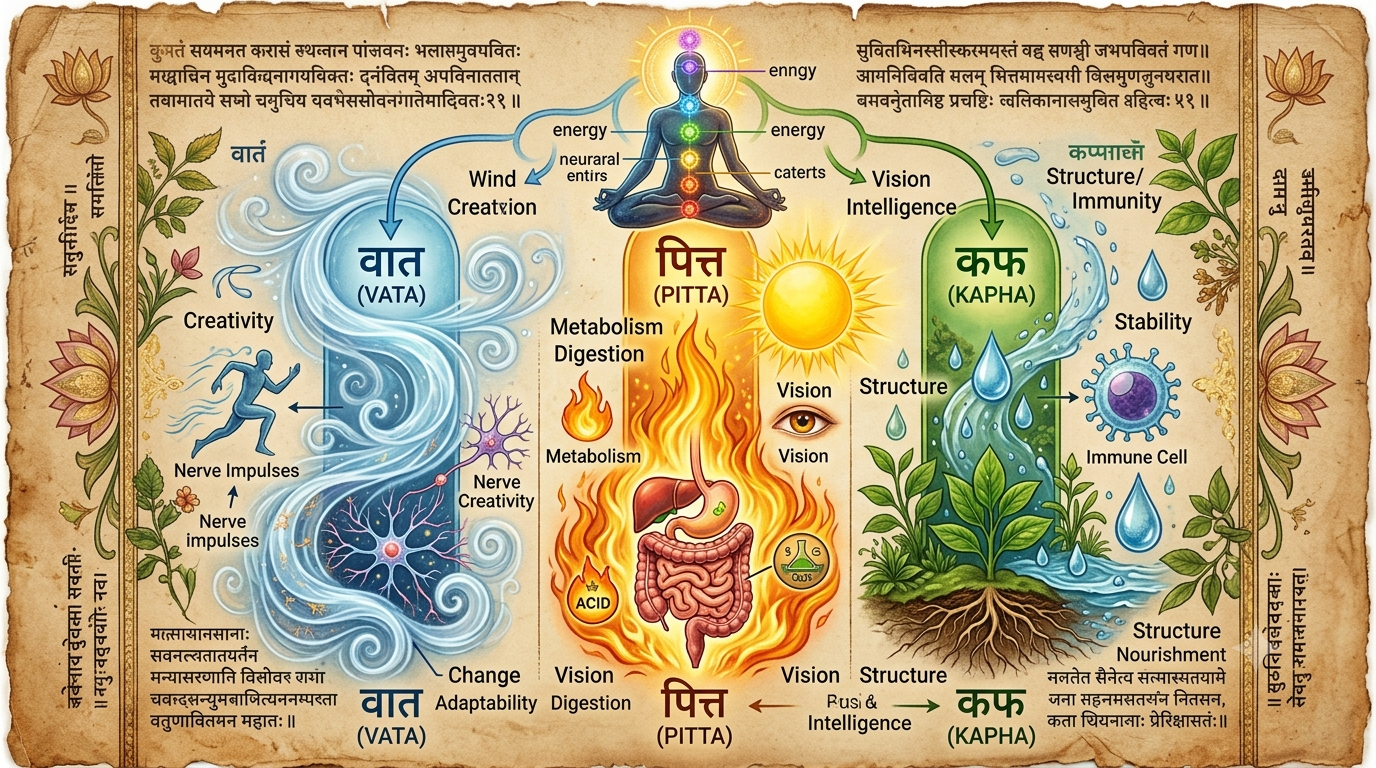
The Ayurvedic six tastes help balance the three doshas:
- Vata
- Pitta
- Kapha
Each taste works on digestion and metabolism in its own way. When a meal has all six tastes, digestion works better, and nutrients are absorbed well. This is the core reason the Ayurvedic six tastes matter so much in daily life.
Ayurveda teaches that a balanced plate with six tastes brings:
- Better digestion
- Strong immunity
- Steady energy
- Healthy metabolism
- Fewer cravings for any single food group
This shows the importance of six tastes in Ayurveda in daily food choices. The benefits of six tastes in Ayurveda grow when each taste is used in the right amount, not just one taste eaten too much.
How to Include All Six Tastes in Your Daily Meals
A classic Indian meal often has all six tastes in it already, without much extra planning. Here is one example plate:
- Rice or chapati (sweet)
- Lemon pickle (sour)
- Rock salt seasoning (salty)
- Ginger chutney (pungent)
- Bitter gourd sabzi (bitter)
- Lentil dal (astringent)
This mix gives the body a wide range of nutrients, and it shows how simple it is to bring the Ayurvedic six tastes into one plate.
A simple plate can carry the Ayurvedic six tastes without a hard or fussy diet plan. The goal is variety and balance, not strict rules.
At Healthyayu, read more about the five elements of Ayurveda, Tridosha in Ayurveda, 7 dhatus in Ayurveda, and Cooling Ayurveda foods for better well-being.
Key Takeaways
- The Ayurvedic six tastes, known as Shad Rasa, are key to a balanced diet. They are sweet, sour, salty, pungent, bitter, and astringent.
- Each taste shapes digestion, nutrient uptake, and health by working on Vata, Pitta, and Kapha.
- All six tastes in each meal support digestion, immunity, and energy.
- A classic Ayurvedic plate mixes tastes with ease, like rice for sweet and lemon pickle for sour.
- Too much of one taste can bring health trouble, so balance across the Ayurvedic six tastes matters most.
FAQs
What are the six tastes in Ayurveda?
The six tastes in Ayurveda are sweet, sour, salty, pungent, bitter, and astringent. They help balance digestion and health. Together, they form the Ayurvedic six tastes used in the Ayurvedic diet.
Why are the six tastes important?
All six tastes in a meal help keep the doshas in balance, aid digestion, and support health. This is a simple way to grasp the importance of six tastes in Ayurveda.
Which taste should be eaten the most?
Ayurveda says the sweet taste should be eaten the most, since it gives strength and energy.
Can eating only one taste cause harm?
Yes. Eating only one taste often can throw off dosha balance and cause digestion trouble. The Ayurvedic six tastes exist to bring variety, so leaning on one taste alone skips the balance Ayurveda asks for. This also shows the benefits of six tastes in Ayurveda when used the right way in daily meals.