Summer brings heat. Your body works hard to stay cool. In Ayurveda, this heat links to Pitta dosha. Pitta is the energy of fire and water. When summer heat rises, Pitta rises too. This is where Cooling ayurveda foods help.
Too much heat in the body causes problems. You may see skin rashes. You may feel acidity. You may feel irritable. You may feel tired.
Ice and cold drinks are not the full answer. They can actually harm your digestion. The better path is Cooling ayurveda foods. These foods support a calmer, cooler summer.
Real relief comes from knowing how to eat right. Cooling foods calm Pitta. They protect digestion. They keep your energy strong, even in the hottest months.
What Are Cooling Ayurveda Foods?
Western nutrition looks at calories. It looks at vitamins. It looks at minerals. Ayurveda looks at something different. It looks at how food acts on the body after digestion. This is why Cooling ayurveda foods are judged by their after-effects, not their calories.
A food is “cooling” for one reason. It has a cooling energy once digested. This is called Virya. It has nothing to do with fridge temperature.
Understanding Virya (Cooling Power)
Every food has an energy direction once digested. This is Virya. Cooling Ayurveda foods connect to this idea of cooling Virya.
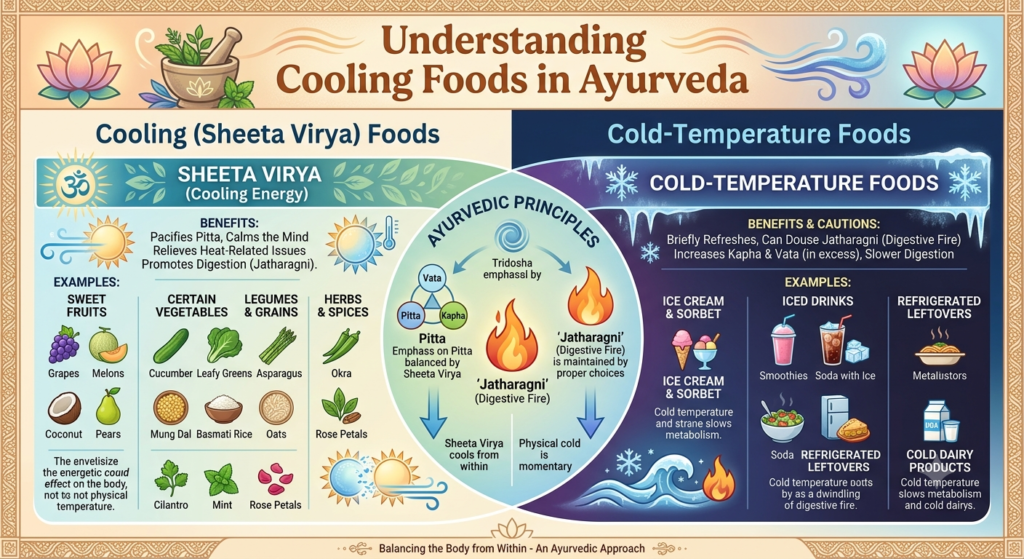
- Sheeta Virya: This means cooling power. These foods calm swelling. They lower body heat. They build tissue. They calm the nerves.
- Ushna Virya: This means heating power. These foods boost digestion. They boost blood flow. But too much in summer can raise body heat.
Cooling Foods vs. Cold Foods
These are two very different things. This matters a lot when picking Cooling ayurveda foods in hot weather.
- Cold foods: Ice water and ice cream feel cold at first. But this cold shocks your stomach. It weakens your digestive fire. Your body then works harder to warm back up. In the end, this raises body heat.
- Cooling foods: A room-temperature cucumber cools you in a real way. So does warm fennel tea. These foods cool your blood and tissues after digestion. They don’t hurt your digestive fire.
The Role of Taste (Rasa)
Ayurveda names six tastes. Three of them calm Pitta. Three of them cool the body. This is why Cooling ayurveda foods often taste sweet, bitter, or astringent:
- Sweet (Madhura): Calming and cooling. Found in ripe fruit, coconut, and ghee.
- Bitter (Tikta): Cleansing and Cooling ayurveda foods. Found in leafy greens, turmeric, and neem.
- Astringent (Kashaya): Drying and absorbing. Found in pomegranate, chickpeas, and cucumber skin.
| Taste Type | Effect on Pitta | Common Foods |
| Sweet, Bitter, Astringent | Calms Pitta | Coconut water, cucumber, mint, ghee, ripe pears |
| Sour, Salty, Pungent | Raises Pitta | Red chillies, aged cheese, tomatoes, vinegar, pickles |
Why Does Ayurveda Push Cooling Foods in Summer?
Ayurveda has an old system for seasonal eating. It’s called Ritucharya. This system explains why Cooling ayurveda foods matter in hot months.
Summer is called Greeshma Ritu. It brings strong heat and dryness. This heat drains the body’s strength and moisture.
Pitta Rises With the Seasons
Summer sun dries up water. It also builds heat in your body.
Pitta shares the same traits as summer. It is hot. It is sharp. It moves fast. It is fluid. So Pitta naturally rises in summer. This is why Cooling ayurveda foods show up so often in summer diets.
The Digestive Fire Puzzle
Many people think digestion is strongest in summer heat. This is not true.
In summer, your body sends heat to your skin to stay cool. This weakens your inner digestive fire, called Agni.
If you eat heavy or spicy food during this time, digestion suffers. Poor digestion creates toxic waste in the body. This waste is called Ama.
Light, cooling, and hydrating foods protect your digestion. They also help stop dehydration and heat sickness.
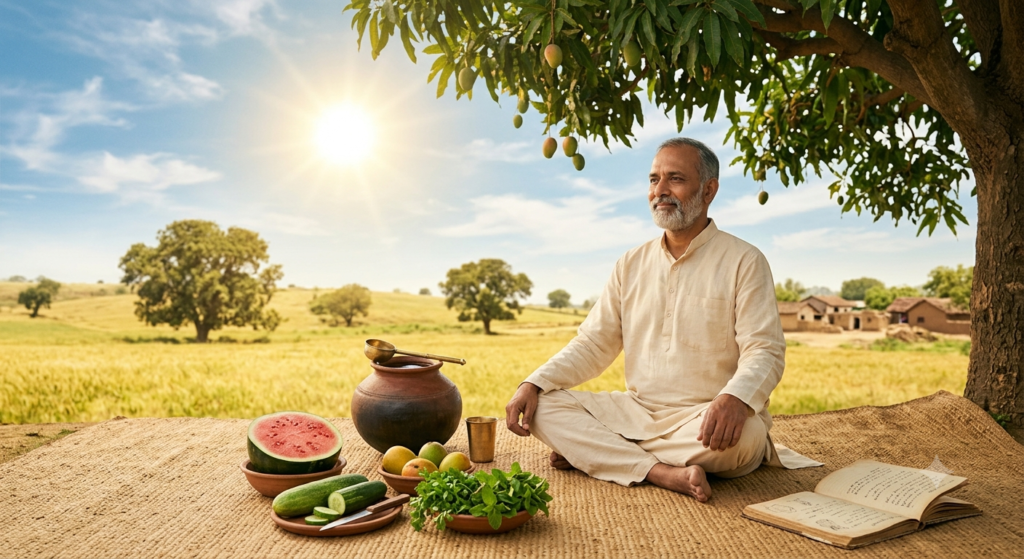
How Cooling Ayurveda Foods Balance Pitta Dosha
Pitta drives digestion and body heat. Too much summer heat plus poor food choices can push Pitta too high. That’s why foods to balance Pitta dosha are chosen for their cool, calm effect.
Signs of Too Much Pitta
- Physical signs: Heartburn often comes first. You may also see sweating, skin breakouts, red eyes, or hot flashes.
- Mental signs: You may feel impatient. This can turn into anger. You may also feel doubtful or harsh in your thinking.
Ayurveda uses a simple rule to fix this. Like increases like. Opposites bring balance.
Pitta is hot and sharp. So cool, calm, and mild foods balance it out. These are also called Cooling ayurveda foods.
Top Cooling Fruits in Ayurveda
Fruit is one of nature’s best coolants in summer. Always eat fruit fresh and ripe. Eat it apart from heavy meals. Fruits are some of the easiest Cooling ayurveda foods to add to your day.
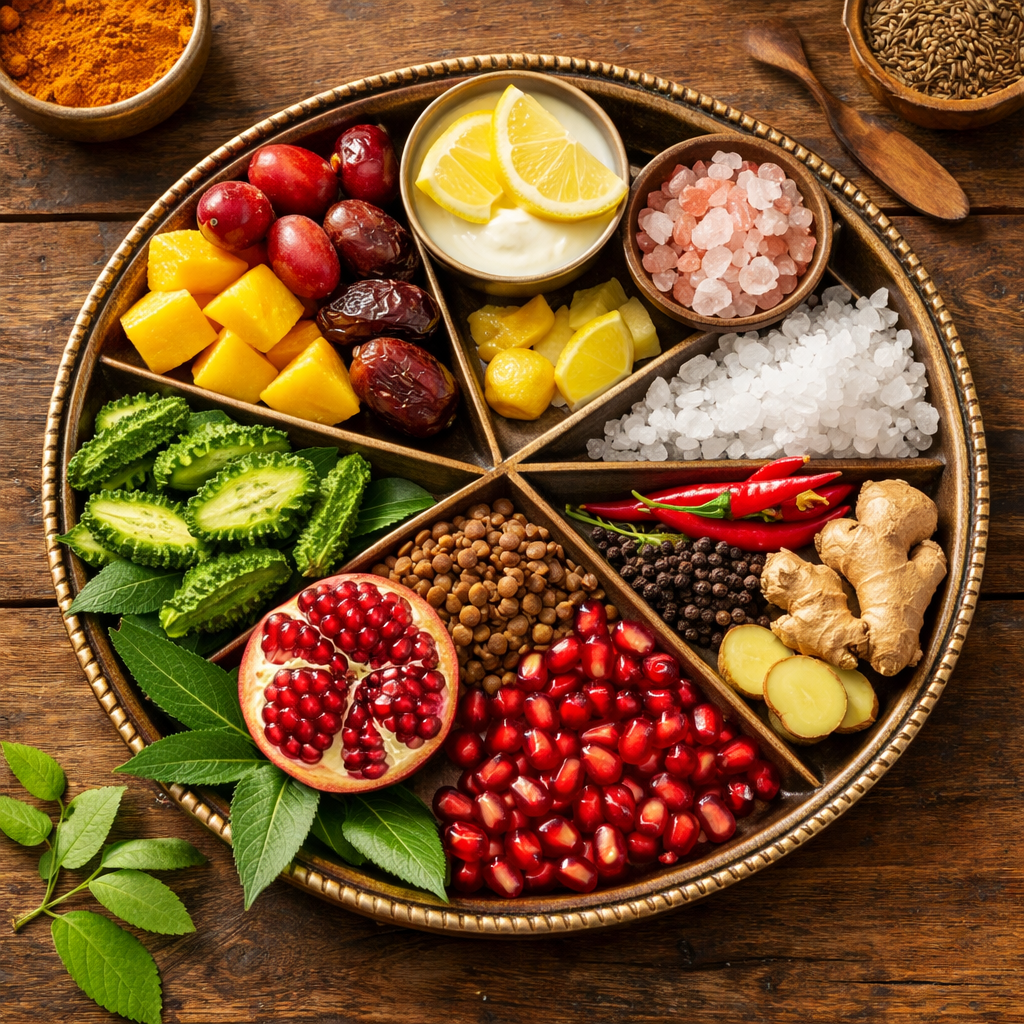
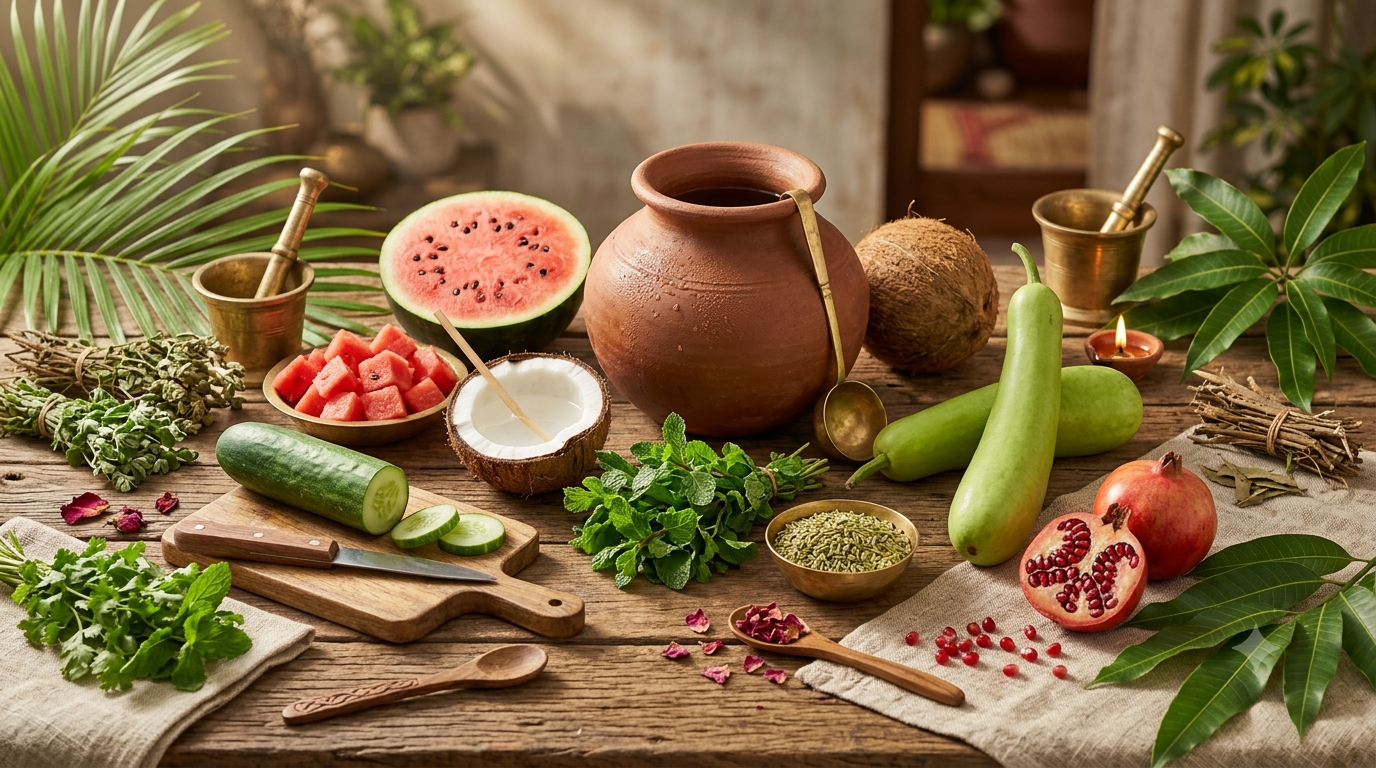
- Watermelon: Very hydrating. Flushes heat through urine. Eat it alone, not with other foods.
- Coconut: A top Pitta-calmer. Both the water and the meat cool the body. They also restore tired tissue.
- Pomegranate: Sweet and slightly dry. Cleans the blood. Cools the veins. Eases acidity gently.
- Grapes and Raisins: Soaked raisins or sweet grapes calm the mind. They also soothe digestion.
- Pears and Apples: High in fibre. Ground an overactive gut. Cool the blood.
- Ripe Mango: Green mango heats the body. Ripe mango, though, nourishes and cools. Eat it in small amounts. Add a pinch of cardamom to balance it.
| Fruit | Benefit | Best Time to Eat |
| Watermelon | Flushes heat, cools blood | Mid-morning (10:00 AM) |
| Coconut Water | Restores minerals, calms acidity | Early afternoon (2:00 PM) |
| Pomegranate | Cleans blood, tones stomach | Breakfast or late afternoon |
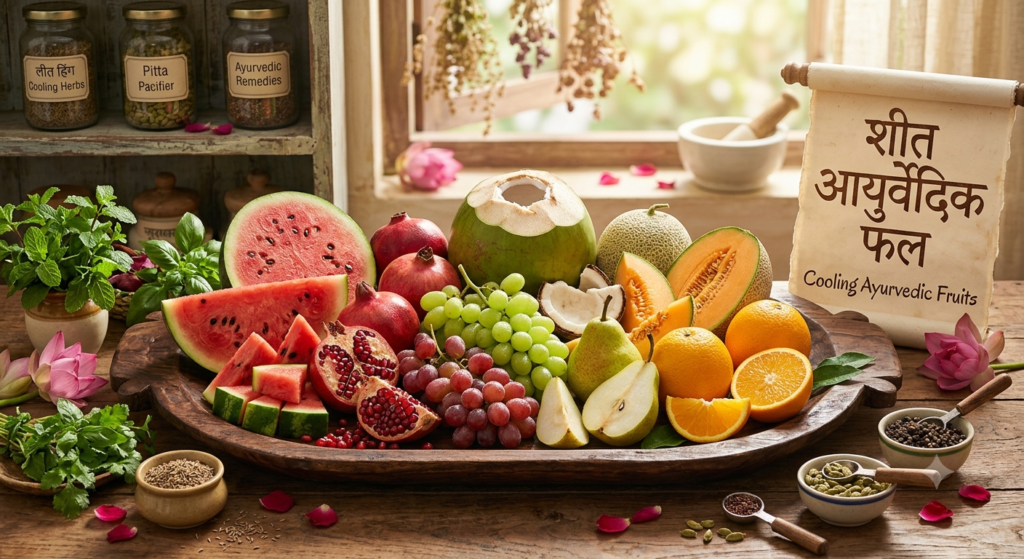
Cooling Vegetables
Summer vegetables should feel light. They should taste sweet or bitter. Cook them with little oil. These choices also work as Ayurvedic foods to reduce body heat.
- Cucumber: Deeply cooling and hydrating. Peel it lightly before eating raw. Cook it if your digestion feels weak.
- Bottle Gourd and Ridge Gourd: Easy to digest. High in water. Soothes an inflamed gut lining. Good after stomach illness too.
- Ash Gourd: Cools the stomach and nerves. Fresh juice helps with severe gastritis.
- Zucchini and Pumpkin: Sweet and grounding. Calm an upset gut. Ease nighttime heartburn.
- Leafy Greens: Spinach, kale, and chard taste bitter. They clean the liver, which holds most of your Pitta.
- Onion: Eat it raw, in small amounts. It can protect against heatstroke.
Cooling Drinks for Summer
Skip soft drinks in summer. They dehydrate your cells further.
Try these traditional drinks instead. They fit well within Cooling ayurveda foods:
Aam Panna: Made from boiled green mango, coconut sugar, mint, and roasted cumin. Helps guard against heatstroke.
Fresh Coconut Water: A top natural electrolyte drink. Great after time in the sun.
Takra (Ayurvedic Buttermilk): Made by mixing fresh yoghurt with water. Skim off the top fat. Season with roasted fennel and cumin. Cools the gut and supports good bacteria.
Fennel-Coriander Water: Soak both seeds overnight in water. Strain in the morning. Sip through the day. Make a fresh batch daily.
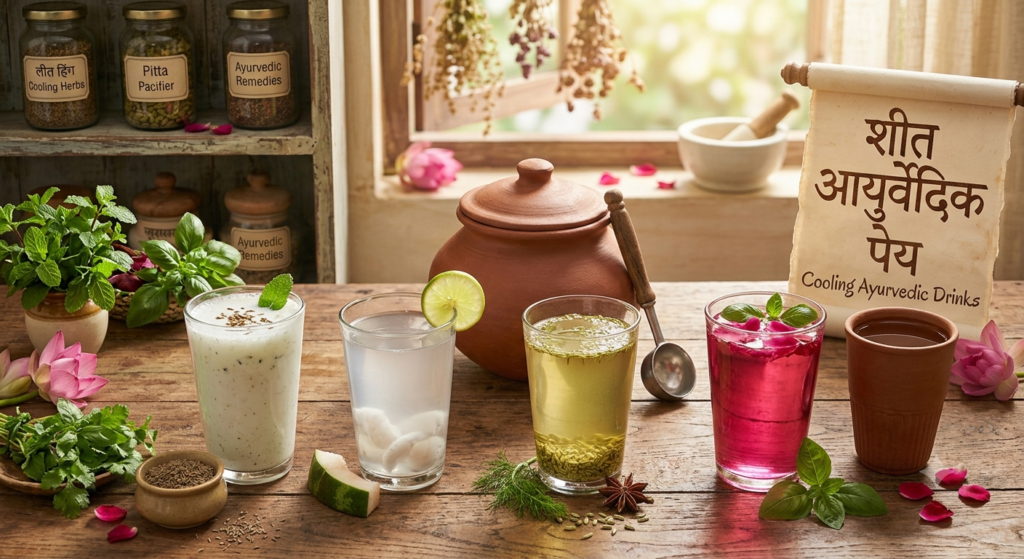
Cooling Herbs and Spices
You don’t need to give up spice in summer. Just choose spices that aid digestion without adding heat. These pair well with Cooling Ayurveda foods.
- Mint and Cilantro: Fresh herbs that cool the body fast. Try fresh juice or infusions.
- Fennel (Saunf): A top summer spice. Boosts digestion without raising Pitta. Relaxes the gut. Cools the urinary tract.
- Coriander Seeds: Soak them for a cold infusion. Eases burning sensations. Helps balance blood sugar.
- Cardamom: Sweet and calming. Eases stomach acid. Freshens breath. Balances heavy dairy.
- Rose: Rose water and Gulkand (rose petal jam) both cool the body. Gulkand cools the eyes, mind, and reproductive tissue. Rose water on skin eases itching and rashes.
Lentils for Summer
Tuvar or Arhar Dal: Naturally sweet, slightly dry, and mildly cooling.
Moong Dal (Green or Yellow): Known as the king of lentils. Eat small amounts with flatbread and light spices.
Masoor Dal (Red Lentils): Old texts call this cooling, light, and sweet.
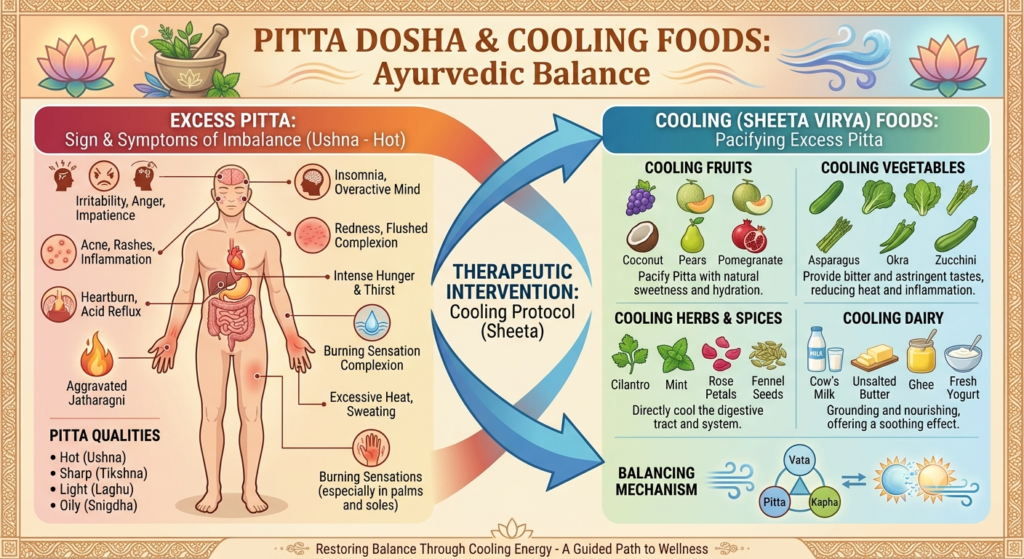
Quick Food Comparison
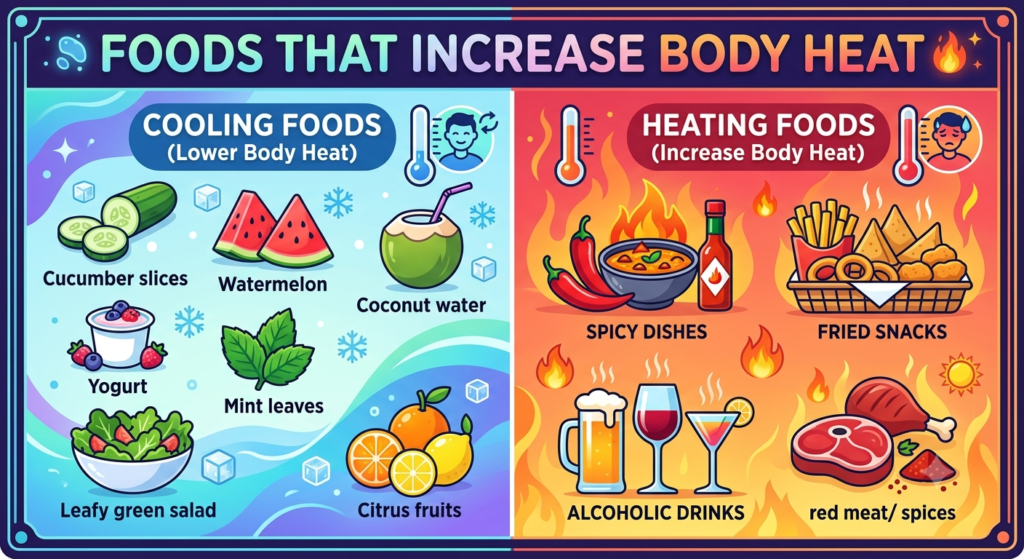
| Choose This (Cooling) | Avoid This (Heating) |
| Coconut oil, Ghee | Mustard oil, Sesame oil |
| Fennel, Coriander, Cardamom | Black pepper, Mustard seeds, Chilli powder |
| Fresh sweet milk, Fresh buttermilk | Aged cheese, Sour yoghurt, Sour cream |
| White basmati rice, Quinoa, Barley | Rye, Corn, Millet |
A Sample One-Day Cooling Meal Plan
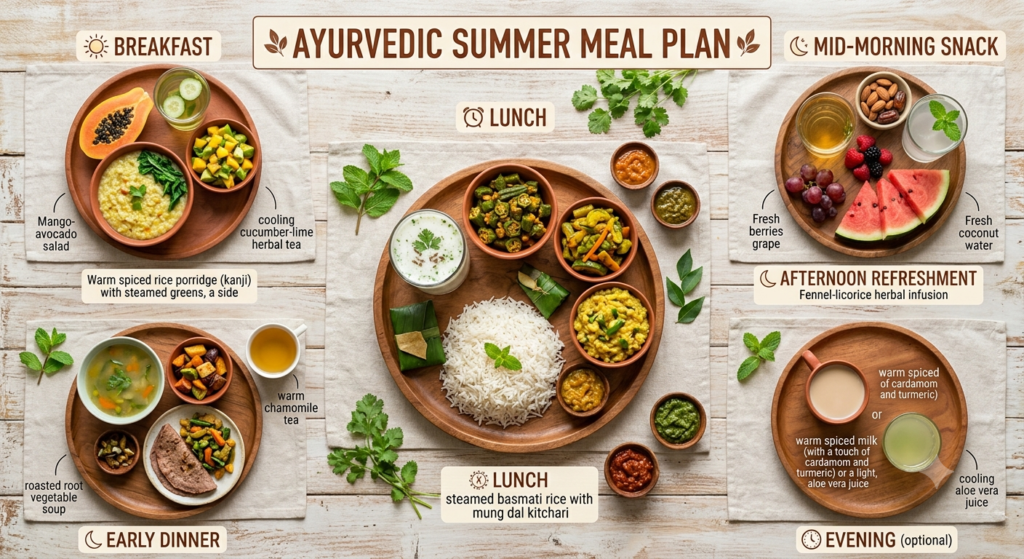
This simple plan keeps your energy steady. It protects your gut in summer heat. It’s a real-world way to use Cooling ayurveda foods for summer without overthinking your meals.
Morning (7:30-8:30 AM)
Warm oatmeal made with milk or coconut milk. Add raisins, soaked almonds, and a pinch of cardamom.
Or try a ripe pear or apple with a touch of water and one clove for flavor.
Mid-Morning (10:30 AM)
Fresh coconut water. Or room-temperature coriander tea with a bit of rock candy (Mishri).
Lunch (12:30-1:30 PM)
Warm white basmati rice with yellow mung dal, ghee, fennel, and turmeric. Add a side of sautéed zucchini or bottle gourd.
After lunch, drink a small glass of fresh Takra topped with coriander leaves. This helps digestion when the day’s heat peaks.
Afternoon Snack (4:00 PM)
Sweet grapes or fresh cantaloupe. Or a spoon of Gulkand mixed into room-temperature water. You can also spread Gulkand on bread or chapati.
Dinner (7:00-8:00 PM)
A light vegetable soup, using any cooling vegetable above. Serve with warm flatbread lightly brushed with ghee.
Keep dinner light. Digestive fire weakens after sunset. This holds in winter too.
Simple Cooling Recipes
These recipes use Cooling ayurveda foods principles in daily life.
Coriander-Fennel Cooling Water
A simple drink to stop midday heat spikes. It also eases bloating and burning after meals.
- Ingredients: 1 tbsp coriander seeds, 1 tbsp fennel seeds, 2 cups room-temperature filtered water.
- Method: Crush the seeds lightly. Add them to a jar with water. Let it sit overnight, or at least 4-6 hours. Strain in the morning. Sip through the day, between meals.
Cucumber Mint Raita
A cooling side dish that pairs with any meal.
Method: Whisk the yoghurt and water together until smooth. Stir in cucumber and mint. Sprinkle fennel powder and rock salt on top. Serve at room temperature with lunch.
Ingredients: 1 cup fresh yoghurt, 1 cup water, ½ cup grated cucumber, 5-6 chopped mint leaves, 1/4 tsp roasted fennel powder, a small pinch of rock salt.
Who Should Be Careful With Cooling Foods?
Cooling foods help in summer heat. But they don’t suit everyone the same way. The right Cooling ayurveda foods depend on your body type, digestion, and the season.
Cold or Rainy Weather: If it’s unusually cold or damp where you live, too many cooling foods can throw off your balance. Warm, well-cooked, mildly spiced meals work better here.
Kapha-Dominant People: These people run cold and hold water easily. Too much heavy, sweet, or cold food can clog their airways. It can slow their metabolism. It can cause water retention.
People With Weak Digestion: If you feel bloated even from liquids or soups, raw and cold foods may slow your digestion further.
Cooling Foods Through a Modern Lens
Old wisdom and new science agree on many points here. The idea of Ayurvedic foods to reduce body heat lines up well with modern views on hydration and nutrition.
- Electrolyte Balance: Coconut water and Takra are rich in minerals. They contain potassium, magnesium, calcium, and iodine. These minerals replace what you lose through sweat. This helps stop cramps and fatigue.
- High Water Content: Cucumber, ash gourd, and bottle gourd hold 90-95% water. Your body absorbs this water slowly. This gives your tissues a steady water supply.
- Antioxidants for Skin: Too much Pitta often shows up as sun damage or skin irritation. Bitter and astringent foods, like pomegranate, tulsi, and coriander, are rich in antioxidants. These fight free radicals from sun exposure. They also support vitamin D production in the skin.
- A quick note: A food’s “cooling” nature (Sheeta Virya) refers to its effect after digestion. It is not the same as its actual temperature.
Frequently Asked Questions
What are Cooling Ayurveda Foods?
These are foods with Sheeta Virya, or cooling power after digestion. They usually taste sweet, bitter, or astringent. They lower body heat. They clean the blood. They calm Pitta. People often group these under Cooling ayurveda foods for summer eating.
Which fruit cools the body fastest?
Fresh watermelon and coconut water work fast. Your body processes them quickly. They flush out heat and restore hydration right away.
Does coconut water lower body heat?
Yes. Coconut water is naturally cooling. It clears heat from your gut. It supports your liver. It helps flush extra heat through urine.
Are bananas cooling or heating?
Bananas are tricky. They feel cooling at first but turn heating after digestion. They’re also heavy on digestion. Eat them in small amounts in summer, only when ripe. Don’t mix them with milk – this can cause congestion.
Can cooling foods help with acidity?
Yes. Ash gourd, pomegranate, and fennel all calm the stomach lining. They ease acidity caused by high Pitta. These foods also count as foods to balance Pitta dosha.
Is yoghurt cooling in Ayurveda?
Not on its own. Raw, thick yogurt actually heats the body and can clog subtle channels. To make it cooling, turn it into Takra. Mix it with water and skim off the top fat layer.
At Healthyayu, read more about Ayurvedic six tastes, 5 elements and doshas, types of doshas in Ayurveda, and seven dhatus in Ayurveda for better well-being.
Key Takeaways
- Staying healthy in peak summer starts with balance. Adding the right Cooling ayurveda foods supports that balance.
- Follow the seasonal wisdom of Greeshma Ritucharya. Cut back on heating foods. Choose naturally cooling meals.
- This keeps your digestive fire working well. Always choose fresh, local fruits and vegetables when you can.
- Every person has a different body type, called Prakriti. So it helps to talk with a trained Ayurvedic practitioner. They can guide you toward the right choices for your body.
- Think of cooling foods for summer as a flexible guide. Adjust them to fit your own needs, not a fixed rulebook.