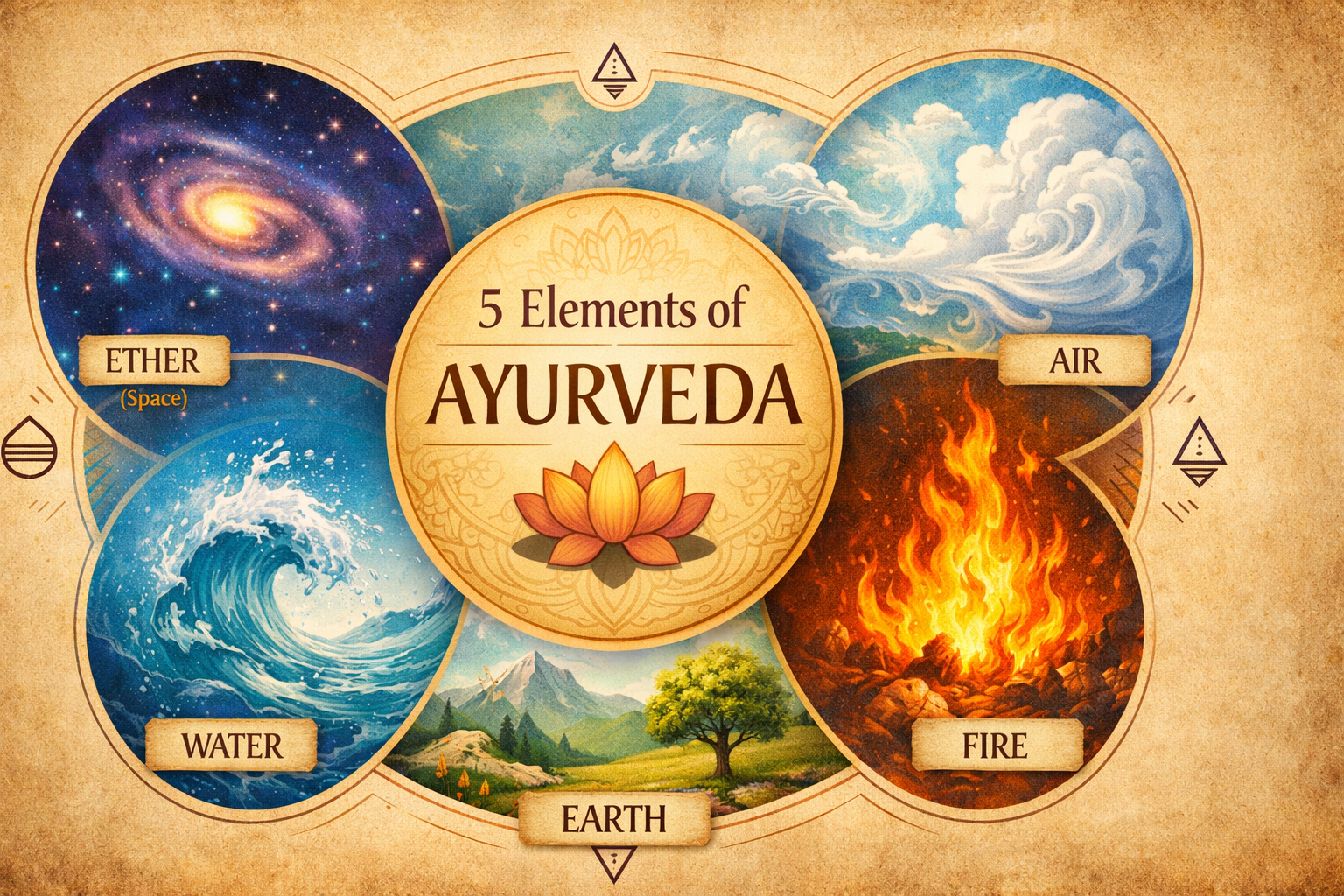
Ayurveda is one of the oldest Treatment systems, dating back about 5000 years. It says that the elements of which this world is made up are the same elements present in the human body. It teaches that the entire universe, including the human body, is composed of five natural Ayurvedic elements of Ayurveda, known as the Pancha Mahabhutas.
These elements are space, air, fire, water, and earth. The balance of these elements determines your health, energy, digestion, and emotional state. When the elements stay balanced, the body functions normally.
When they become imbalanced, disease may appear. An imbalance in the elements may result in an imbalance of the 3 doshas. Any Imbalance in the doshas may result in an imbalance of the elements. This link is important when learning about Ayurvedic elements in Ayurveda.
Understanding the 5 elements of Ayurveda helps you understand your body, lifestyle, and food choices. The five elements of Ayurveda are also used to explain how the body relates to nature.
What Are the 5 Elements of Ayurveda?
The five elements are also known as Pancha Mahabhutas in Sanskrit. This gives a starting point for understanding what are the 5 elements of Ayurveda in the body are.
- Akasha (Space or Ether)
- Vayu (Air)
- Agni (Fire)
- Jala (Water)
- Prithvi (Earth)
According to Ayurveda, everything in nature and the human body is made from these elements in different proportions. This view of Ayurvedic elements connects the body with nature.
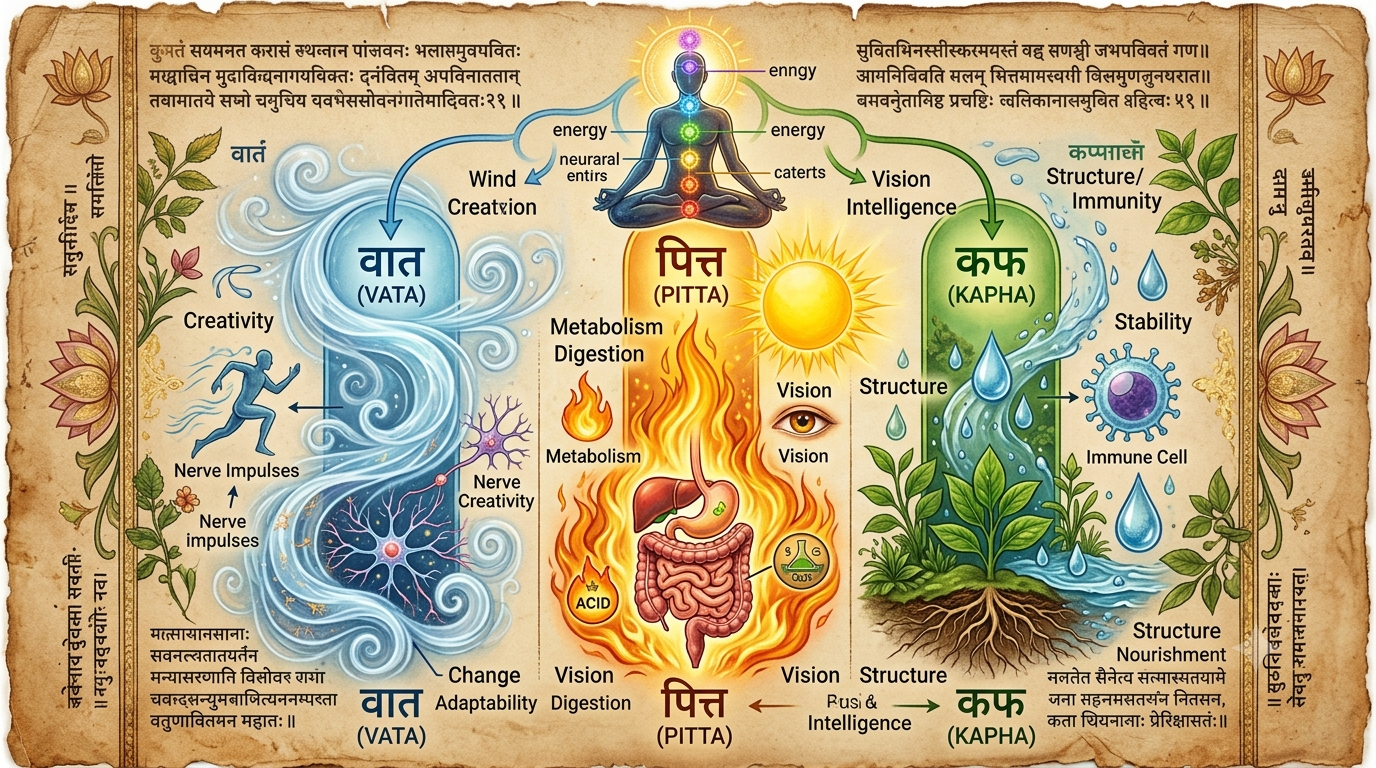
These elements also create the three main doshas:
- Vata (Air + Space)
- Pitta (Fire + Water)
- Kapha (Earth + Water)
This connection between Ayurveda five elements and the doshas helps explain how different qualities work in the body.
1. Akasha (Space Element)

Akasha is the most subtle element in Ayurveda. It represents space, openness, and emptiness. This element allows everything else to exist. Without space, nothing can move or grow.
Role of Akasha
- Empty spaces in organs and tissues are characterized by the Akasha element.
- Cavities such as the mouth, nose, and ears are occupied by Akasha. It helps in the flow of air and provides space for food to be chewed.
- Mental clarity and creativity. It accommodates changes as well as challenges with ease.
- Akasha is linked with the sense of hearing and the ear. When balanced, it promotes calmness and openness of mind.
2. Vayu (Air Element)

Vayu represents the movement and motion of the body in Ayurveda. All forms of activity in the body depend on this element. It may be the physical movement of a person or the circulation of blood. Vayu is one of the key Ayurvedic elements linked with movement.
Types of Vayu
There are 5 types of vayu elements:
- Prana Vayu (Inward/Forward Moving)
- Udana Vayu (Upward Moving)
- Samana Vayu (Equalizing/Balancing)
- Apana Vayu (Downward Moving)
- Vyana Vayu (Circulatory)
Functions of the air element
- Breathing: The process of inhaling and exhaling works with the help of the vayu element.
- Circulation: The supply of blood and other nutrients to different body parts and organs is regulated by vayu.
- Nerve impulses: Movement of neurons from body parts to the brain and vice versa is controlled by vayu.
Vayu element is connected to the sense of touch and the skin. If the air element increases too much, it can cause:
- Anxiety
- Dry skin
- Insomnia
- Gas or bloating
3. Agni (Fire Element)
Agni represents heat, transformation, and digestion. In Ayurveda, digestion and Agni represents heat, transformation, and digestion. In Ayurveda, digestion and metabolism depend on the strength of Agni. Agni is one of the Ayurvedic elements that is closely linked with digestion.
Types of agni
There are 13 types of agni in Ayurveda.
- Jatharagni (Primary digestive fire): It further has 4 types
- Bhutagni (Elemental fire): There are 5 types based on the 5 elements of Ayurveda.
- Dhatavagni (Tissue Fire): It has 7 types based on the dhatus of the body.
Functions of the fire element
- Digestion of food: Digestive fire helps break down food with its heat. There is 4 condition of digestive fire on which the digestion of food depends. These conditions vary from person to person, even from season to season.
- Body temperature regulation: It maintains proper body temperature for normal functioning. The liver is the body’s largest heat-producing organ.
- Vision and perception: They nourish the eye tissues and help our brain process the information from the eye to the brain.
- Energy production: After digestion, Agni converts food into ADP in the body. Which is later burned by Agni for energy.
The role of Ayurvedic elements can also be seen in how Agni is linked with the sense of sight and the eyes. A strong Agni supports good metabolism, immunity, and vitality.
4. Jala (Water Element)

JJala represents fluidity, nourishment, and lubrication. Water is essential for maintaining body fluids. Jala is another of the main Ayurvedic elements needed for normal body functions.
Role of water element in the body
- Blood and plasma: Plays a major role in the formation of blood and plasma.
- Saliva and mucus: It helps to form saliva essential for movement of food in the oesophagus.
- Joint lubrication: Provides lubrication in the joints in the form of synovial fluid.
- Emotional balance: A balanced jala element in the body helps to calm the mind.
The sense of taste and the tongue are associated with the water element. A balanced water element supports hydration, skin health, and emotional stability.
5. Prithvi (Earth Element)

According to Ayurveda, Prithvi represents structure, stability, and strength. It is the most solid element among the five. It is one of the Ayurvedic elements that gives the body its physical form.
Role of the Earth element
- Bones: Bones are the main structural foundation of the body. All hard bones and cartilages (soft bones) are made up of earth elements.
- Muscles: Muscles are responsible for the binding of bones together. Muscles perform all body movement. They are also part of the earth element.
- Teeth: Teeth are very essential for chewing food.
- Tissues: Skin tissues are composed of earth elements that protect our internal organs from external exposure.
Earth is linked with the sense of smell and the nose. This element provides physical strength and grounding energy.
Relationship Between the 5 Elements and Doshas
The five elements of Ayurveda combine to form the three doshas. This relationship is called the 5 elements and doshas.
| Dosha | Elements |
| Vata | Air + Space |
| Pitta | Fire + Water |
| Kapha | Earth + Water |
These doshas control body functions, metabolism, and immunity. The link between Ayurveda five elements and the doshas is central to Ayurvedic thought.
Why the Five Elements Are Important in Ayurveda
• The Pancha Mahabhuta theory forms the foundation of Ayurvedic medicine. It explains:
• Body structure
• Digestion and metabolism
• Mental health
• Disease formation
• Healing methods
The Ayurvedic elements help explain these areas in a simple framework.
Ayurveda aims to restore balance between these elements through diet, lifestyle, herbs, and therapies. This is why the Ayurvedic elements remain an important part of Ayurvedic practice.
How to Balance the Five Elements Naturally
You can maintain balance through simple lifestyle habits. These habits can support the balance of Ayurvedic elements in daily life.
- Eat seasonal and natural foods: Fresh foods support elemental balance. So, according to Ayurveda, eat natural, seasonal and area-dependent food in your diet.
- Maintain a daily routine: Regular sleep as well as having your meals at a regular time daily stabilize body rhythms.
- Practice yoga and meditation: Along with physical exercise, also practice meditation. These practices will help you to balance energy
- Follow Ayurvedic diet principles: Foods influence elemental qualities, so eat according to the doshas, elements, and your prakrirti.
These habits show how Ayurvedic elements connect with food, routine, movement, and daily choices.
Conclusion
• The 5 elements of Ayurveda – space, air, fire, water, and earth – form the foundation of life. Together, they explain the role of Ayurvedic elements in the body.
• Elements exist in nature and inside the human body.
• Balance of elements determines health, vitality, and emotional well-being.
• Ayurveda teaches that true wellness comes from balancing the elements within the body and mind.
The five elements of Ayurveda offer a basic way to understand this connection between nature and the human body.
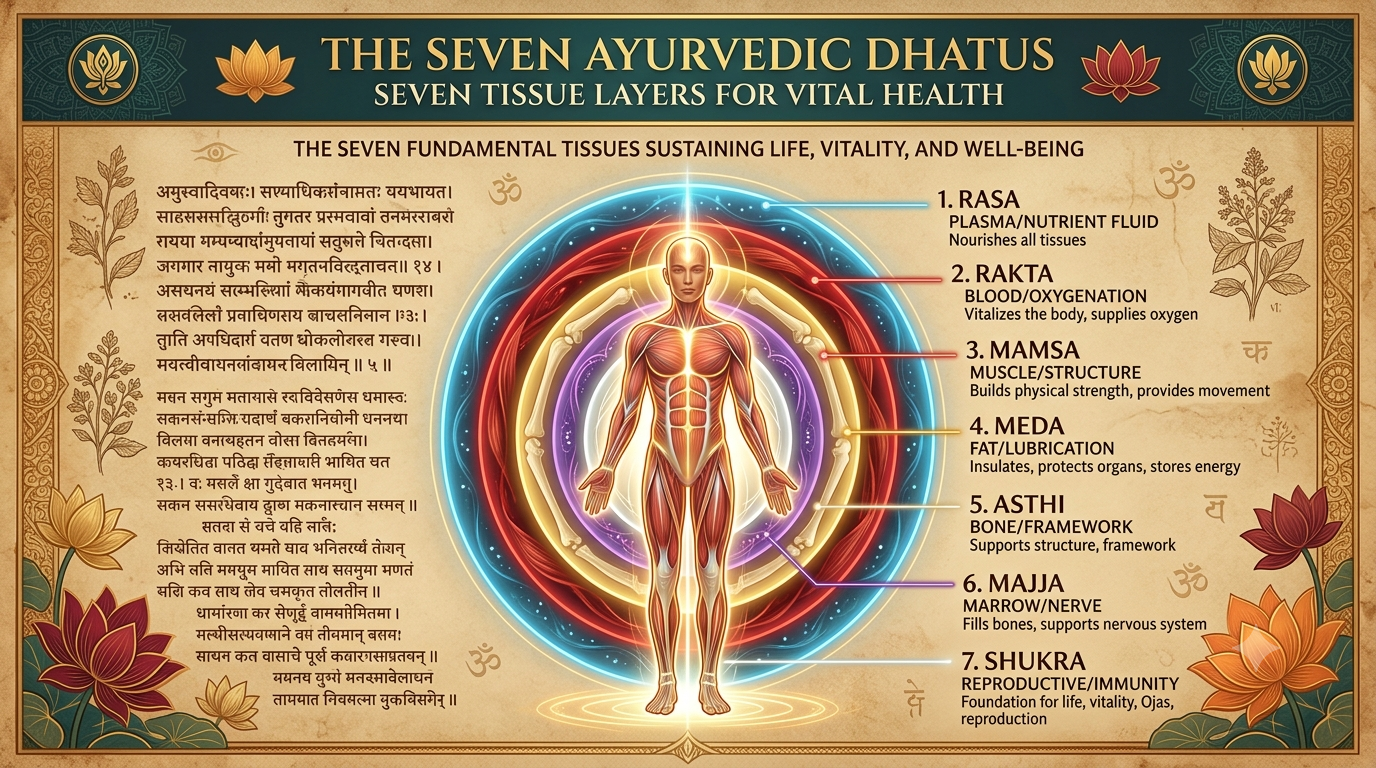
At Healthyayu, read more about Ayurvedic six tastes, Tridosha in Ayurveda, 7 dhatus in Ayurveda, and Cooling Ayurveda foods for better well-being.
Frequently Asked Questions (FAQ)
1. What are the 5 elements of Ayurveda?
The 5 elements of Ayurveda are Space (Akasha), Air (Vayu), Fire (Agni), Water (Jala), and Earth (Prithvi). Ayurveda teaches that everything in the universe, including the human body, is made up of these five elements. This is also the basic answer to what are the 5 elements of Ayurveda.
2. What are Pancha Mahabhutas in Ayurveda?
Pancha Mahabhutas is a Sanskrit term that means five great elements. These elements form the basic structure of the body and nature. These Ayurvedic elements are space, air, fire, water, and earth.
3. How do the five elements relate to the doshas?
The five elements combine to form the three doshas in Ayurveda. This relationship is the basis of 5 elements and doshas.
• Vata = Air + Space
• Pitta = Fire + Water
• Kapha = Earth + Water
These doshas control body functions, metabolism, and overall health.
4. Which element controls digestion in Ayurveda?
The fire element (Agni) controls digestion and metabolism. It also helps break down food, absorb nutrients, and produce energy for the body. This is one reason Ayurvedic elements are important when learning about digestion.
5. Why are the five elements important in Ayurveda?
The five elements teach us how the body, mind, and environment are connected. Ayurveda uses this concept to understand health, disease, diet, and lifestyle. The idea of Ayurvedic elements brings these areas together.
6. How can you balance the five elements in the body?
You can balance the five elements by following a healthy lifestyle. Eating fresh foods, maintaining a routine, practising yoga, meditation, and following Ayurvedic diet principles can help maintain balance in Ayurvedic elements.
7. Are the five elements present in the human body?
Yes. Ayurveda believes the five elements exist in different forms in the body. For example, earth forms body tissues, water maintains fluids, fire supports digestion, air controls movement, and space provides structure in the body.