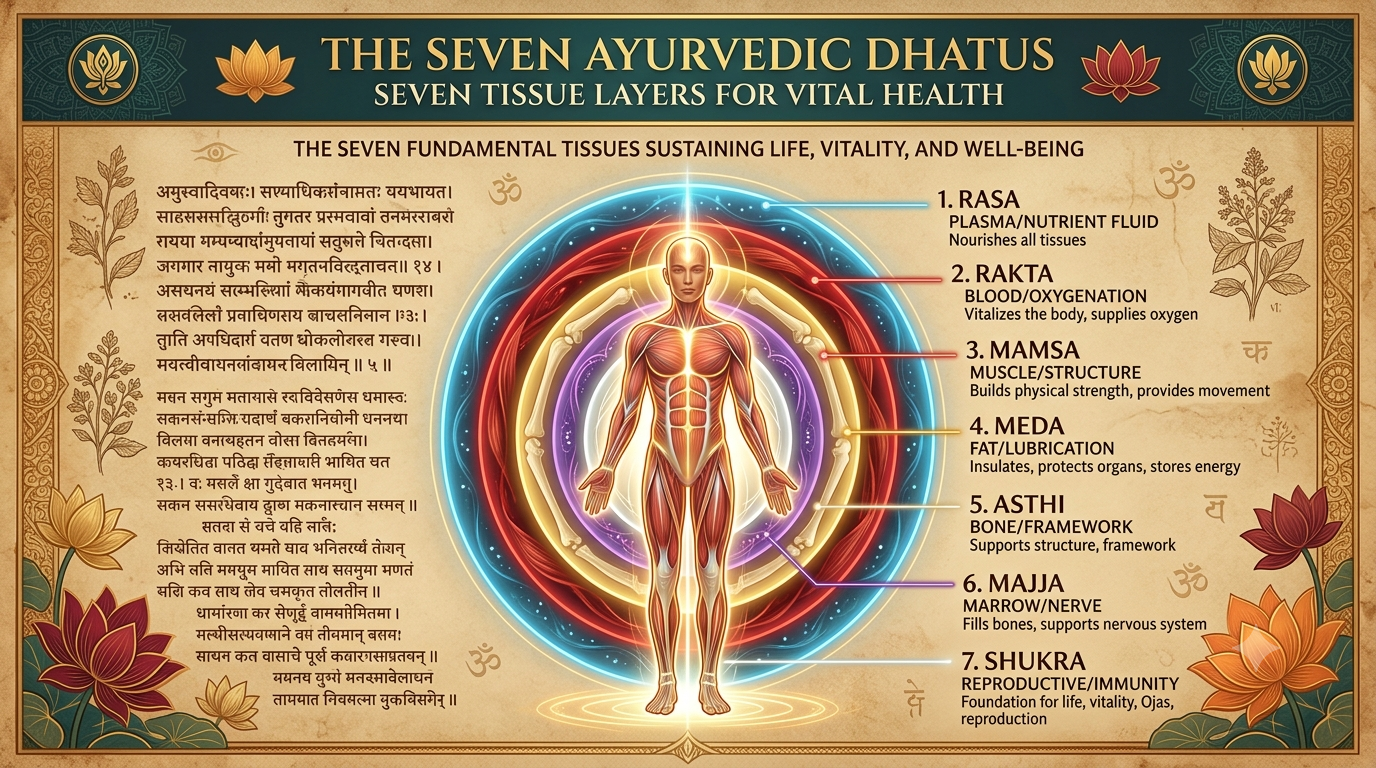
Have you ever thought about how food turns into your body? You eat an apple. You eat a piece of bread. Where does that food go? It becomes skin. It becomes blood. It becomes bone. It even becomes the energy behind your thoughts.
Ayurveda has an old answer for this. It’s called the concept of Dhatus. Dhatus are the tissues that build and support your body. This idea is called the Sapta Dhatus. It means the seven basic tissues of the body. This same idea also appears as sapta dhatu in Ayurveda. Each tissue has its own job. Each tissue has its own place in the body.
Modern science uses different words. It talks about cells. It talks about tissue layers. It talks about organs. But ancient rishis mapped this out long ago. They did this without microscopes. They still built a full picture of the body.
Western medicine often splits the body into separate parts. Ayurveda sees it in a different way. It sees the body as one flow. Energy and matter move together, always in motion. The Dhatus are not fixed blocks. They are living. They grow. They change. They protect the mind. They also give shape to our body.
Learning about Dhatus helps with deep healing. It helps tissues repair. It supports long-term health. The seven dhatus in Ayurveda work as one system. They do not work alone.
What Are Dhatus?
Let’s start simple. What does the word “Dhatu” mean?
Dhatu comes from the Sanskrit root “Dhā.” It means “to hold.” It also means “to support.” It means “to sustain.” It means “to nourish.”
So Dhatus are the parts of the body that hold it together. They give the body its shape. They also feed its vital functions. Without Dhatus, the body has no form. It has no structure at all.
Dosha vs. Dhatu: What’s the Difference?
New students often mix these two words up. But they mean very different things.
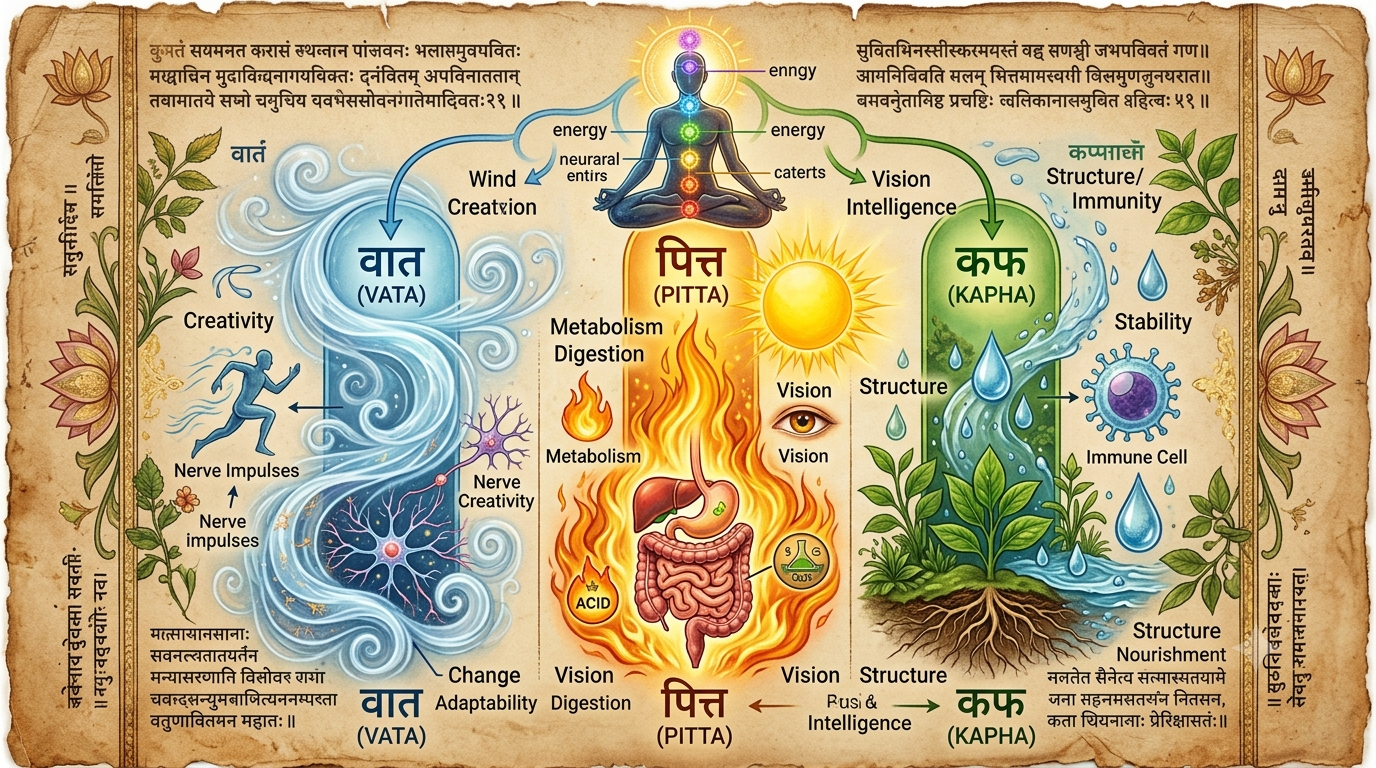
Doshas are Vata, Pitta, and Kapha. They are energy. They move. They act. They control body functions and thoughts.
Dhatus are different. They are physical. They are the tissues. They are the organs. Think of Doshas as workers. Think of Dhatus as the building they work on.
When Doshas stay balanced, they support the Dhatus. They feed them well. But when a Dosha goes out of balance, it can harm the Dhatus. It may drain them. It may cause them to grow the wrong way. This is where disease can start.
This link matters a lot. It helps explain the full idea behind the Sapta Dhatus and how they stay healthy.
What Are the Sapta Dhatus?
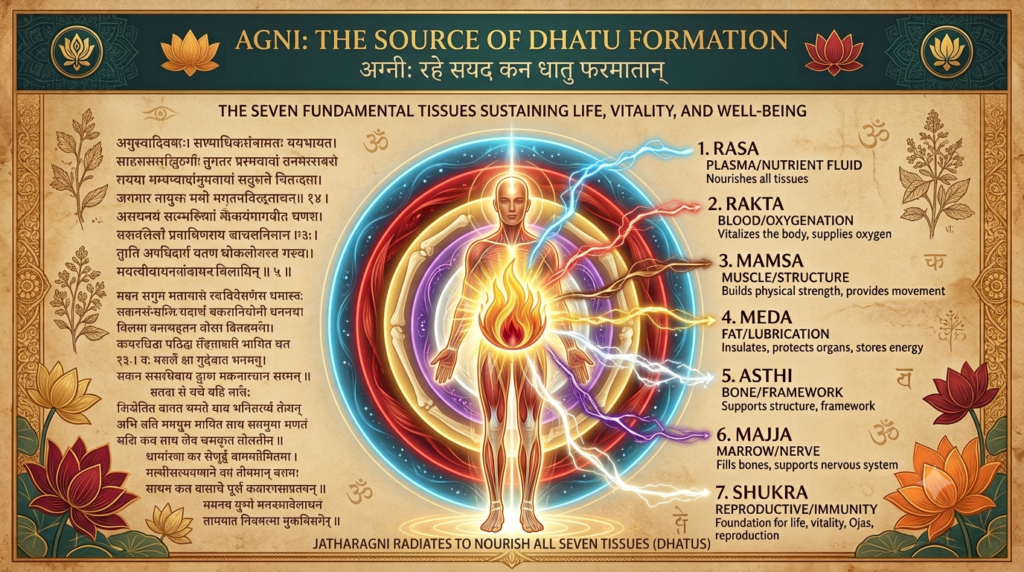
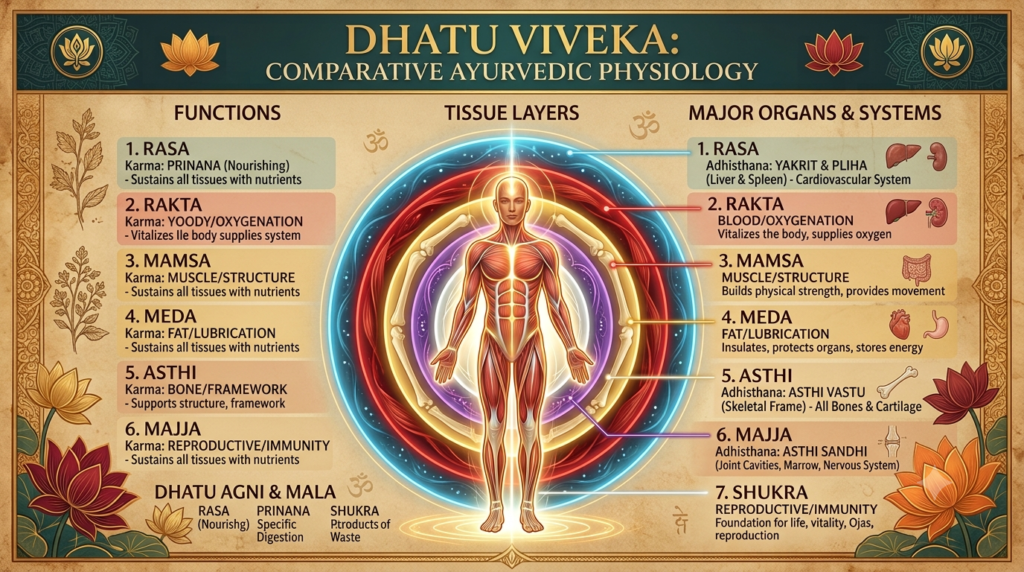
Ancient Ayurveda names seven key tissues. Together, they are called the Sapta Dhatus.
These seven parts do not work alone. They connect in a clear order. Each one feeds the next.
This is also known as the 7 dhatus in Ayurveda. This idea shows how the body grows. It also shows how the body holds its shape. Experts study these tissues together. A change in one tissue can affect the next.
How the Sapta Dhatus Form
One key idea in Ayurveda is Dhatu Poshana. This means “tissue nourishment.”
Your body does not build bone and blood all at once. It builds them step by step. Nourishment flows like a river. One tissue feeds the next tissue. This is a slow chain.
The Sapta Dhatus grow through this same slow chain. Each step matters.
The Journey of a Meal
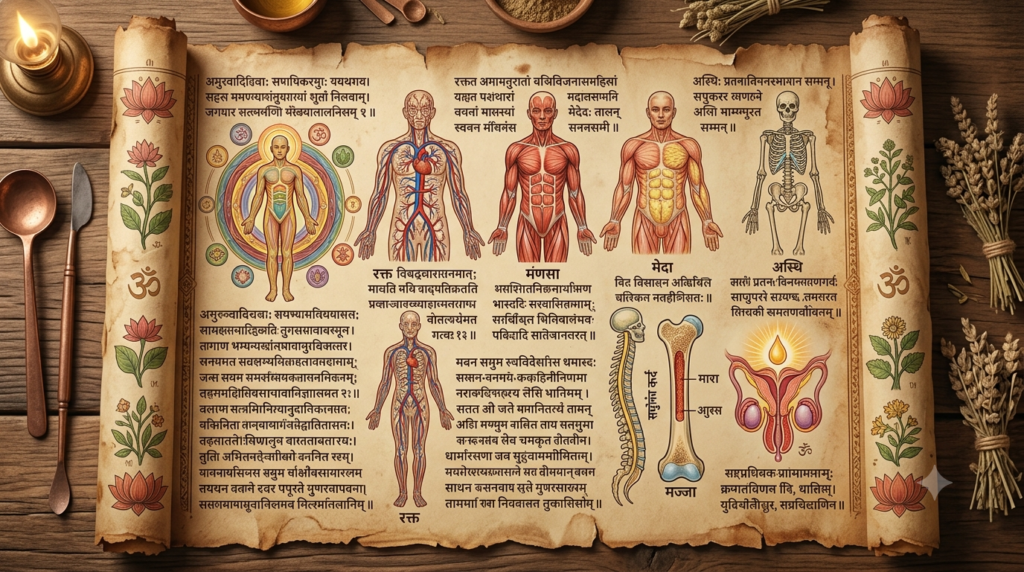
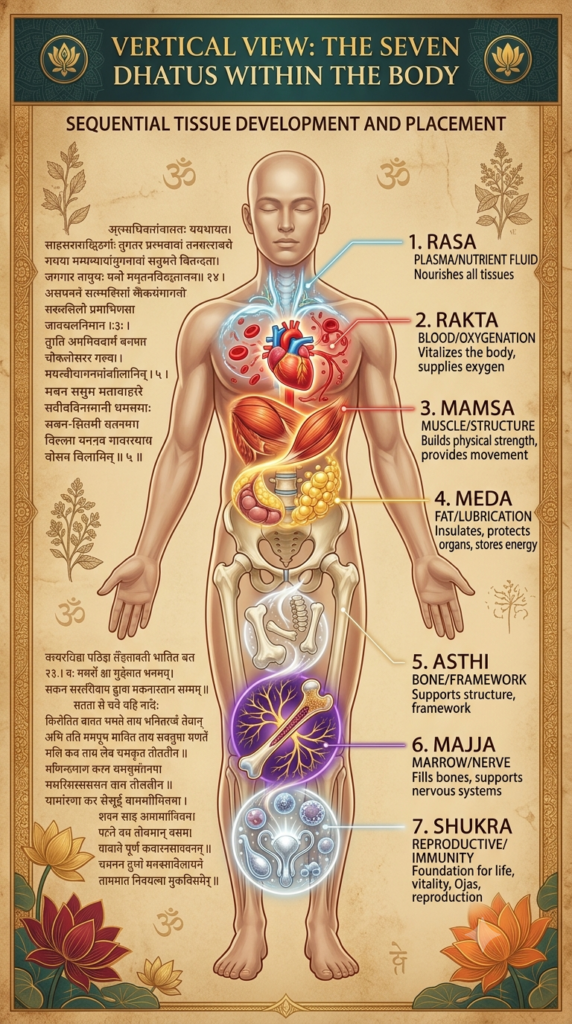
Here is how one meal turns into your body:
- You eat food. Your stomach turns it into a nutrient fluid. This is called Ahara Rasa.
- Ahara Rasa first feeds Rasa Dhatu. This is your plasma.
- Rasa turns into Rakta Dhatu. This is your blood.
- Rakta helps build Mamsa Dhatu. This is your muscle.
- Mamsa feeds Meda Dhatu. This is your fat.
- Meda hardens into Asthi Dhatu. This is your bone.
- Asthi protects Majja Dhatu. This is your marrow and nerves.
- Majja finally forms Shukra Dhatu. This is your reproductive tissue.
This step-by-step chain is core to the Sapta Dhatus model in Ayurveda.
Why Timing Matters
This chain has one strict rule. If your first tissue, Rasa, is weak, every tissue after it will also be weak.
According to ancient Ayurveda, this entire process needs time. It takes around 30 to 35 days. This is the time required for a single meal to reach the last tissue, which is Shukra Dhatu.
This is why deep healing takes time. Real change needs weeks, not days. This model helps explain the seven body tissues in Ayurveda and how they grow.
The Role of Agni (Digestive Fire)
One force drives this whole process. It is called Agni. Agni means fire. Without fire, food cannot become tissue.
Ayurveda names three types of Agni:
- Jatharagni: The main fire in your stomach and gut. It turns food into Ahara Rasa.
- Bhutagni: Five smaller fires in the liver. Each one handles one element.
- Dhatvagni: Seven tiny fires. One lives in each tissue layer.
When food reaches a tissue, its own fire acts on it. This fire splits the food into three parts:
- Sthula (Gross) Part: Feeds and supports that tissue.
- Sukshma (Subtle) Part: Moves ahead to feed the next tissue.
- Mala (Waste) Part: Leaves the body as waste, like sweat or hair.
If a fire burns too low, waste builds up. If a fire burns too hot, the tissue breaks down fast.
A Closer Look at Each Dhatu
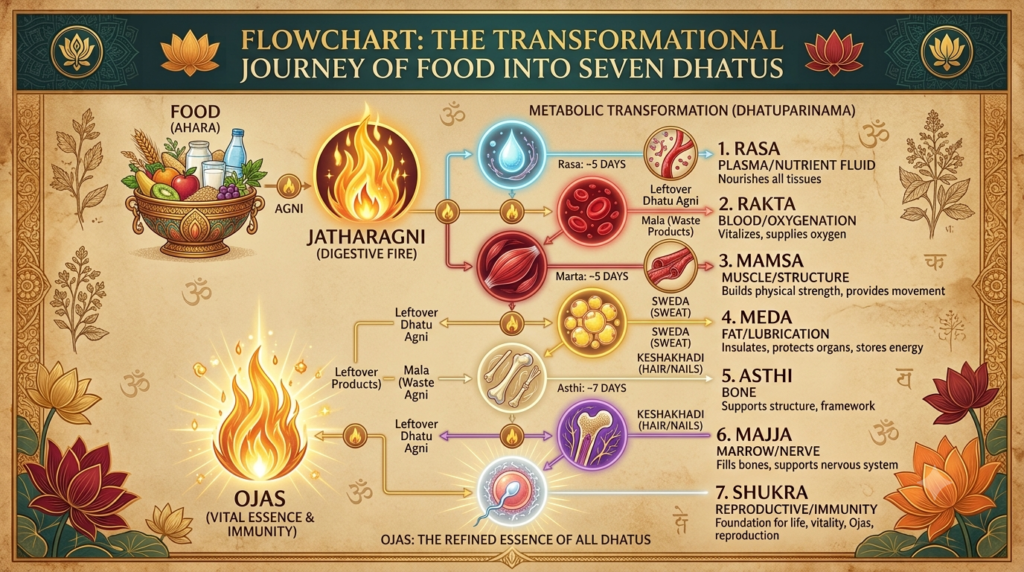
Now let’s look at each tissue on its own. We’ll cover what it does. We’ll cover signs of health. We’ll cover signs of imbalance. This helps make the Sapta Dhatus easier to grasp.
1. Rasa Dhatu (Plasma)
Rasa is the fluid of life. It’s your plasma. It’s your lymph. It bathes every cell in your body.
- Main job: It hydrates and comforts the body.
- Signs of health: Glowing skin. Healthy hair. A sense of joy. Strong empathy.
- Signs of low Rasa: Dry skin. Constant thirst. Early wrinkles. Feeling drained or empty.
- Signs of too much Rasa: Fluid buildup. Excess saliva. Low appetite. Nausea. A white coat on the tongue.
- Foods to help: Fresh fruit. Foods with high water content. Simple, light meals.
Rasa is the first stop in the Sapta Dhatus chain. It sets the tone for the tissues that follow.
2. Rakta Dhatu (Blood)
Rakta is your blood. It carries oxygen through your body. It also carries Prana, or life force.
- Main job: It sustains life by carrying oxygen to every cell.
- Signs of health: Warm, glowing skin. Clear eyes. Warm hands and feet. Sharp thinking.
- Signs of low Rakta: Anaemia. Pale skin. Cold hands and feet. Low energy. Foggy mind.
- Signs of too much or impure Rakta: Acne. Eczema. Bloodshot eyes. Bleeding gums. High blood pressure. A short temper.
- Foods to help: Beets. Pomegranate. Dark leafy greens like spinach and kale. Raisins. Cooling herbs like coriander and fennel.
Rakta is the second stage in the Sapta Dhatus sequence.
3. Mamsa Dhatu (Muscle)
Mamsa builds your muscles and tendons. It also forms the walls of your organs. It gives you strength and shape.
- Main job: It binds bones together. It gives the body strength and motion.
- Signs of health: Firm, toned muscles. Good posture. A strong sense of confidence.
- Signs of low Mamsa: Muscle loss. Weakness. Loose joints. Poor posture.
- Signs of too much Mamsa: Fibroids. Cysts. A thick neck. Stiff, rigid muscles.
- Foods to help: Mung beans. Lentils. Black beans. Quinoa. Whole grains. Nuts. Clean animal protein, if that fits your diet.
Mamsa shows how the Sapta Dhatus link food to physical strength.
4. Meda Dhatu (Fat)
Meda is your body fat. It stores energy. It protects your organs.
- Main job: It lubricates joints. It insulates the body. It also holds emotional warmth, like love.
- Signs of health: Smooth, soft skin. Flexible joints. A warm voice. Open, loving relationships.
- Signs of low Meda: Dry joints. Dry eyes and hair. Fast weight loss. A feeling of being alone.
- Signs of too much Meda: Obesity. Shortness of breath. Heavy sweating. Fatty liver. Trouble letting go.
- Foods to help: Ghee. Avocado. Olive oil. Sesame seeds. Flaxseeds. Walnuts.
Meda is another key step in the Sapta Dhatus chain.
5. Asthi Dhatu (Bone)
Asthi covers your bones, teeth, and cartilage. It holds your body up against gravity.
- Main job: It supports soft tissue. It protects your organs. It holds your posture.
- Signs of health: Strong teeth. Dense bones. Strong nails. Good posture. A steady, calm mind.
- Signs of low Asthi: Weak bones. Frequent fractures. Tooth decay. Hair loss. Brittle nails.
- Signs of too much Asthi: Bone spurs. Thick teeth. Stiff joints. Kidney stones.
- Foods to help: Sesame seeds. Ragi (finger millet). Dairy. Almonds. Broccoli. Sea vegetables.
Asthi is the fifth tissue in the Sapta Dhatus sequence.
6. Majja Dhatu (Marrow and Nerves)
Majja fills your bones. It includes marrow. It includes your brain and spinal cord. It also includes your nerves.
- Main job: It fills bone cavities. It sends nerve signals. It supports clear thinking.
- Signs of health: Strong memory. Emotional strength. Sharp focus. Deep sleep. Bright eyes.
- Signs of low Majja: Nerve pain. Dizziness. Tremors. Memory loss. Poor sleep.
- Signs of too much Majja: Slow thinking. Oversleeping without feeling rested.
- Foods to help: Almonds. Walnuts. Gotu kola. Ghee. Eggs. Sweet potatoes.
Majja is the sixth tissue in the Sapta Dhatus model.
7. Shukra Dhatu (Reproductive Tissue)
Shukra is the final tissue. It forms from all six tissues before it. It includes sperm, eggs, and reproductive hormones.
Its finest part is called Ojas. Ojas is pure vitality. It is the root of strong immunity.
- Main job: It supports reproduction. It also supports overall immunity.
- Signs of health: Glowing skin. Strong creativity. Good fertility. Strong immune health. A deep joy for life.
- Signs of low Shukra: Infertility. Low sex drive. Fatigue. Early ageing. Frequent illness.
- Signs of too much Shukra: Overactive sex drive. Prostate congestion.
- Foods to help: Soaked dates. Saffron. Ashwagandha in warm milk. Raw honey. Ghee.
Shukra ends the Sapta Dhatus chain. It marks the final stage in this tissue model.
How Dhatus and Doshas Work Together
Dhatus don’t go out of balance on their own. Doshas cause the shift. Each Dosha connects to certain tissues.
- Vata (Air and Space): Vata links closely to Asthi, your bones. Vata is dry and light. Too much Vata makes bones dry and weak. This can lead to bone loss over time.
- Pitta (Fire and Water): Pitta links closely to Rakta, your blood. Spicy or hot food raises Pitta. This can heat the blood. It can cause skin flare-ups. It can also cause bleeding issues.
- Kapha (Earth and Water): Kapha links to Rasa, Mamsa, Meda, and Majja. Kapha is heavy and stable. Too much Kapha makes these tissues grow too much. This can block the body’s channels.
This link matters when you study the Sapta Dhatus. Tissue health and Dosha health always connect.
Foods That Support Each Dhatu
Here is a simple food guide for each tissue:
| Dhatu | Foods to Support It |
| Rasa | Melon, sweet berries, pomegranate juice, warm milk, fennel tea |
| Rakta | Beetroot, spinach, red lentils, raisins, dark cherries |
| Mamsa | Mung beans, plant protein, oats, clean poultry, quinoa |
| Meda | Ghee, tahini, pumpkin seeds, olive oil |
| Asthi | Black sesame seeds, ragi, goat’s milk, yoghurt, almonds |
| Majja | Walnuts, almonds, ashwagandha, gotu kola, eggs |
| Shukra | Honey, dates, warm milk with nutmeg and saffron |
These foods link directly to the seven dhatus in Ayurveda. Each tissue has its own kind of care.
Dhatus and Srotas: The Body’s Channels
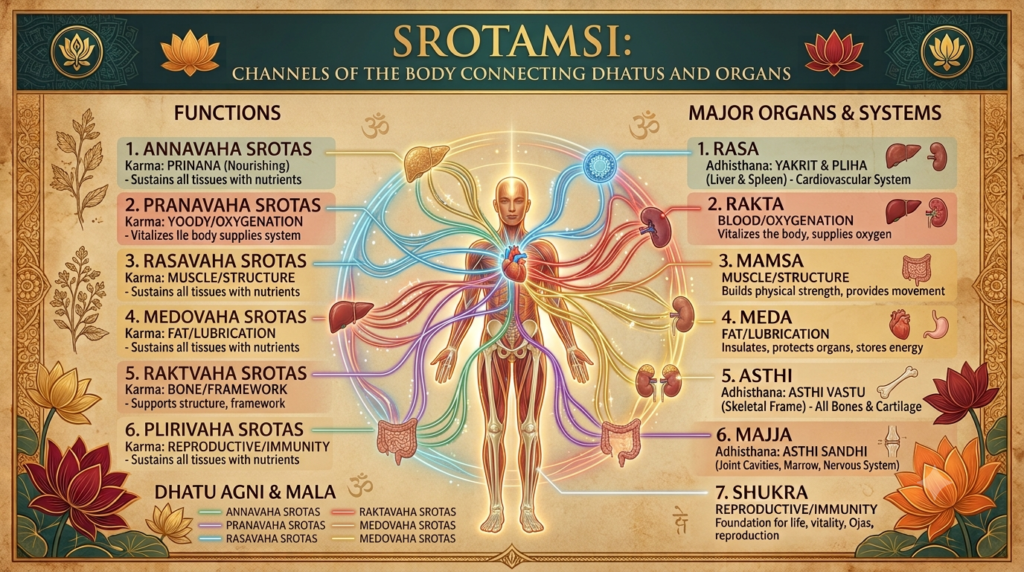
Each tissue needs a path. This path carries in nutrients. It also carries out waste. Ayurveda calls these paths Srotas, or channels.
| Dhatu | Channel Name | Main Body Area |
| Rasa | Rasavaha Srotas | Heart, blood vessels, lymph system |
| Rakta | Raktavaha Srotas | Liver, spleen, arteries |
| Mamsa | Mamsavaha Srotas | Tendons, muscles, skin |
| Meda | Medovaha Srotas | Kidneys, fat tissue |
| Asthi | Asthivaha Srotas | Pelvis, bones, hips |
| Majja | Majjavaha Srotas | Brain, spine, marrow |
| Shukra | Shukravaha Srotas | Testes, ovaries |
If a channel gets blocked, the tissue after it goes hungry. This can happen even with a good diet. The block itself, called Ama, causes the harm.
Real healing clears these channels first. Then nutrition can flow again. This channel view adds more depth to the Sapta Dhatus model.flow through the entire tissue chain.
Signs of Healthy Dhatus
You don’t need a lab test to check your tissue health. Watch for these simple signs:
- Glowing skin shows healthy Rasa and Rakta.
- Toned muscles show strong Mamsa.
- A warm, steady voice shows healthy Meda.
- Good posture shows strong Asthi.
- Sharp memory shows healthy Majja.
- Strong immunity and a bright presence show healthy Shukra and Ojas.
These signs offer a simple way to check the health of your Sapta Dhatus.
Dhatus Through Life Stages
Our tissues shift as we age. Each stage of life favors a different Dosha.
Childhood: The Kapha Stage
Kids grow fast. Their bodies build Rasa, Mamsa, and Meda quickly. This is a time of rapid growth.
Good food matters most here. Kids need protein. They need healthy fat. They need water. This growth stage helps show how the Sapta Dhatus first form.
Adulthood: The Pitta Stage
Adults reach full tissue growth. The focus shifts to Rakta and Mamsa. Life gets busy. Work and stress rise.
It’s key to manage stress in this stage. It’s key to keep the blood cool and calm. The full Sapta Dhatus system stays active and busy during this stage.
Old Age: The Vata Stage
After 60, Vata takes the lead. The body slows down. It starts to break down tissue instead of building it.
Asthi and Majja feel this the most. Bones grow weaker. Nerves grow tired.
Warm, oily, and grounding habits help most now. This stage is part of the 7 dhatus in Ayurveda framework, and it shows how age changes the body.
Frequently Asked Questions
What are the seven Dhatus?
They are Rasa, Rakta, Mamsa, Meda, Asthi, Majja, and Shukra. Together, they form the Sapta Dhatus. This is the main tissue system in Ayurveda.
Which Dhatu forms first?
Rasa forms first. It comes right from digested food. This starts the full Sapta Dhatus chain.
How long does it take to feed all seven Dhatus?
It takes about 30 to 35 days. That’s the time for one meal to reach Shukra, the final tissue. This idea helps explain the seven body tissues in Ayurveda.
What foods help Shukra Dhatu?
Try soaked dates, ghee, warm milk, almonds, and saffron. These foods connect to the Sapta Dhatus and support the final tissue stage.
Can damaged Dhatus heal?
Yes. Herbs help. Better habits help. Panchakarma, a cleansing process, also helps. This full process connects to sapta dhatu in Ayurveda.
What is Dhatu Kshaya?
It means tissue loss. It often comes from too much Vata. It can also come from weak digestion. Understanding this needs a clear grasp of the Sapta Dhatus.
How are Doshas different from Dhatus?
Doshas are forces. They act. Dhatus are tissues. They get acted on. This difference is key to the Sapta Dhatus model.
Which Dhatu supports immunity most?
Shukra does, through Ojas. Ojas is the root of deep immunity. This closes the loop on the Sapta Dhatus.
Conclusion
The Sapta Dhatus show us something simple. Our body is like a river. It always flows. It never stops. Every bite you eat becomes part of you. Every habit shapes your tissue. Every choice adds up over time.
True health isn’t just the lack of illness. It’s a smooth, steady flow. It runs from Rasa all the way to Shukra. Feed your digestive fire well. Eat food that fits your body type. Protect yourself from daily stress. Small steps like these rebuild your tissues from the inside out.
Every body is different. So it helps to talk with a trained Ayurvedic practitioner. They can check your tissue health closely. They can help you build a plan that fits you.
The full Sapta Dhatus framework offers one clear path. Each tissue plays its own role. Together, they build the body that carries you through life.
At Healthyayu, read more about Ayurvedic six tastes, 5 elements and doshas, types of doshas in Ayurveda, and Cooling Ayurveda foods for better well-being.
Frequently Asked Questions
What are the seven Dhatus?
They are Rasa, Rakta, Mamsa, Meda, Asthi, Majja, and Shukra. Together, they form the Sapta Dhatus. This is the main tissue system in Ayurveda.
Which Dhatu forms first?
Rasa forms first. It comes right from digested food. This starts the full Sapta Dhatus chain.
How long does it take to feed all seven Dhatus?
It takes about 30 to 35 days. That’s the time for one meal to reach Shukra, the final tissue. This idea helps explain the seven body tissues in Ayurveda.
What foods help Shukra Dhatu?
Try soaked dates, ghee, warm milk, almonds, and saffron. These foods connect to the Sapta Dhatus and support the final tissue stage.
Can damaged Dhatus heal?
Yes. Herbs help. Better habits help. Panchakarma, a cleansing process, also helps. This full process connects to sapta dhatu in Ayurveda.
What is Dhatu Kshaya?
It means tissue loss. It often comes from too much Vata. It can also come from weak digestion. Understanding this needs a clear grasp of the Sapta Dhatus.
How are Doshas different from Dhatus?
Doshas are forces. They act. Dhatus are tissues. They get acted on. This difference is key to the Sapta Dhatus model.
Which Dhatu supports immunity most?
Shukra does, through Ojas. Ojas is the root of deep immunity. This closes the loop on the Sapta Dhatus.