Estimated reading time: 7 minutes
Table of contents
What are water softeners?
Water softeners are devices that is used to treat hard water in the household. It work by removing minerals such as calcium and magnesium, as well as iron, aluminum, strontium, etc. But calcium and magnesium are the main contributors to water hardness. Hard water can lead to scale build-up in water supply pipes and appliances. In some conditions, hard water may also cause skin irritation or make it harder to lather soap. Softening water helps reduce these issues, making it more suitable for various household needs. in the last we will get to know Are water softeners bad for your health.
How Do Water Softeners Work?
Water softeners work on a process called ion exchange. During this process, both minerals calcium and magnesium present in the water replaced by sodium or potassium ions. This process involves a single large resin tank containing beads loaded with sodium and potassium ions. Durin the pasing of water through the tank, calcium and magnesium ions get rapidly replaced by sodium and potassium ions.
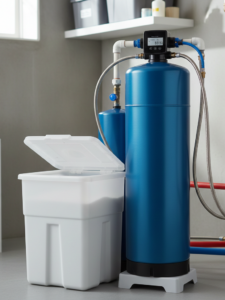
The softened water then flows out of the system, ready for use in applications such as washing, cooking, and bathing. Over time, the resin beads become saturated with calcium and magnesium, so they need to be “regenerated” by flushing them with a brine solution (typically saltwater), which replaces the accumulated minerals with fresh sodium or potassium ions.
Types of Water Softeners
There are several types of water softeners, including:
- Salt-Based Water Softeners:
This is the most common type of ion replacement method. This method uses sodium chloride (salt) to regenerate the resin beads. They provide an effective, long-lasting water-softening process. This process is usually use a single tank for the process. - Salt-Free Water Softeners:
This process is also called water conditioning. Instead of removing the minerals, salt-free systems use a different process. It uses Template-Assisted Crystallization (TAC). It converts hard minerals like calcium, iron, and magnesium into harmless, microscopic forms that cannot form crystals. In this process, minerals form inactive crystals that remain in the water and do not form scale on surfaces. It protects appliances from damage and improves water flow without salt, electricity, or waste. These systems oftenely used in areas where water hardness is moderate. - Dual-Tank Water Softeners:
This system uses two resin tanks to provide continuous, uninterrupted softened water during the regeneration process. In this process, 1 tank continuously removes calcium and magnesium ions from the water, while the other regenerates in the meantime. When 1st tank is exhausted, then the 2nd tank starts the process, and the 1st one goes into regeneration. This is ideal for households with high water usage as it can run 24/7. In this process, beads are either of sodium or sodium and potassium. - Magnetic or Electronic Water Conditioners:
These are non-traditional methods of softening water that claim to alter the behavior of minerals in the water to prevent scale buildup. In this process, magnets or electricity are applied to a part of the water pipe. In this method, magnetism and electricity alter the behaviour of calcium and magnesium, preventing them from crystallising or forming in water pipes. In this process, calcium and magnesium are not removed from the water. However, the effectiveness of these systems is often debated.
Benefits of Using a Water Softener
- Prevents Scale Build-Up: Soft water helps prevent mineral deposits in pipes, water heaters, and appliances, extending their lifespans and improving appliance efficiency.
- Improved Cleaning: Soft water makes soap and detergents more effective, leading to cleaner dishes, laundry, and surfaces.
- Softer Skin and Hair: Softened water can be gentler on the skin and hair. It reduces skin dryness and irritation caused by hard water minerals. Some people suffer from hair loss due to hard water, so it also solves that problem.
- Better-Tasting Water: While it removes certain minerals from the water. Soft water is usually considered as better tasting for some, but may not be for those who prefer metallic, heavy water to drink on daily basis. Especially people living in high-altitude maountain areas prefer heavy water.
- Improved Hydration: While soft water lacks certain minerals, it is still safe to drink. Additionally, soft water may be easier to drink for some individuals, as it lacks the bitter taste often associated with hard water.
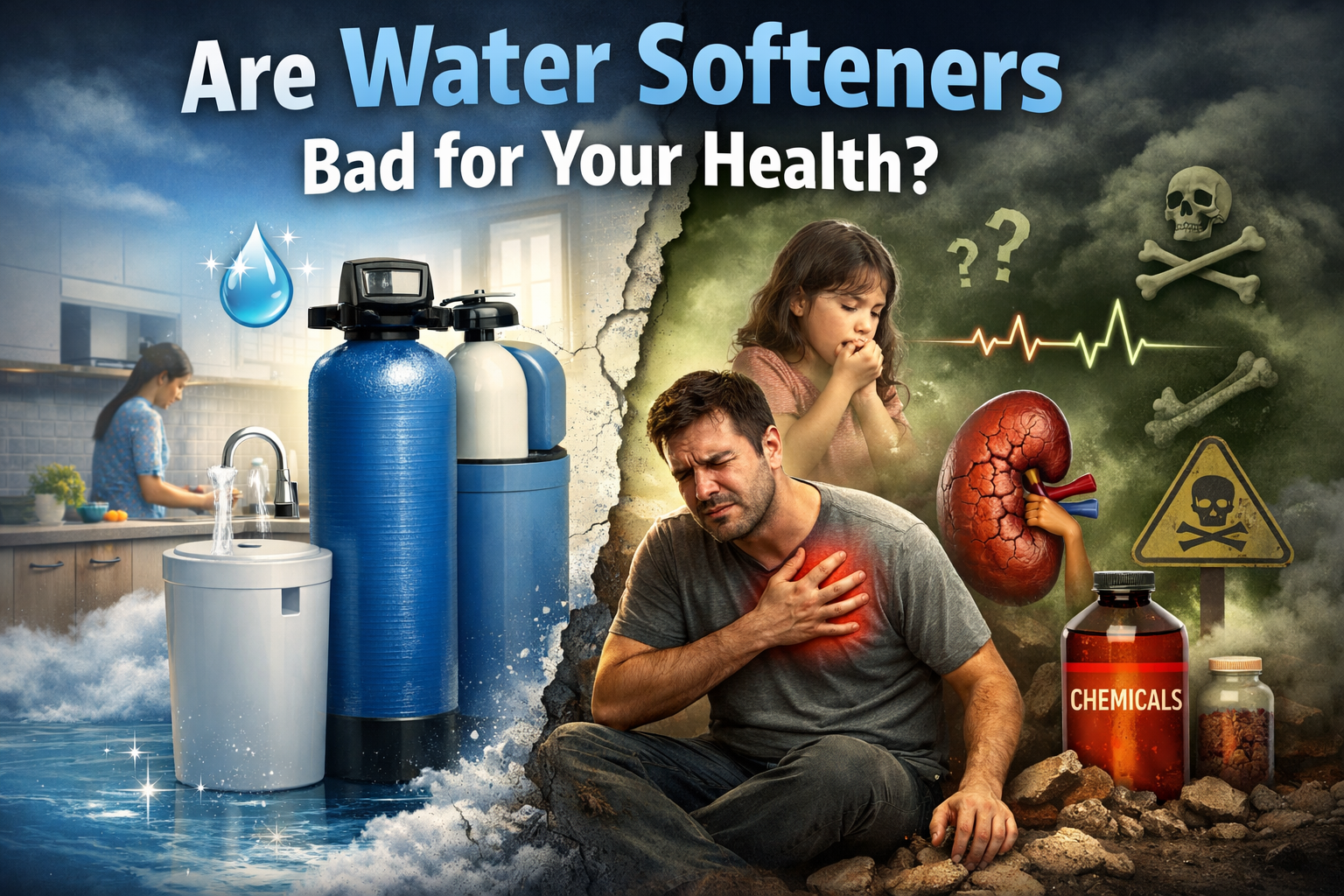
Are Water Softeners Bad for Your Health?
Water softeners is commonly used process for the treatment of hard water. It make water more manageable for daily use by removing minerals like calcium, iron, and magnesium. However, some people have concerns about whether water softeners could have negative health effects. In this article, we’ll explore the potential health risks and benefits associated with water softeners.
Potential Health Concerns
Despite the benefits of softened water, there are several health concerns to consider:
- Increased Sodium Content: One of the main concerns with water softeners is the presence of higher sodium content in softened water. The sodium ions used in the softening process can raise water sodium levels, which may be a concern for people on low-sodium diets. It can harm people suffering from high blood pressure due to any cardiac, liver, or kidney-related problem.
- Impact on Kidneys: Excessive sodium intake may affect kidney function in patients with kidney disease, including CKD, AKI, or parenchymal kidney disease, as well as in patients on dialysis. , leading to kidney failure. People with kidney problems should consult a healthcare provider before using softened water regularly.
- Impact on the heart: People with high blood pressure due to any type of arterial blockage may see their condition worsen. A high intake of sodium in the diet can also raise blood pressure.
- Impact on liver: People who are suffering from liver problems like cirrhosis of the liver are on a sodium-restricted diet. Excessive intake of sodium may lead to faster progression of the cirrhosis, which can result in ascites.
- Mineral Deficiency:
Since water softeners remove calcium and magnesium, there is concern about the possible lack of these important minerals in the drinking water. This further leads to calcium and magnesium deficiency in the body, especially among people who do not take care of their eating habits. While most people get sufficient calcium and magnesium from food. But people who rely on water for the significant source of these minerals might be affected.
Conclusion
Water softeners may have some potential health concerns, but they generally do not have that much effect on people’s health, as it would lead to serious disease in the human body, which can result in death. significant risks to most people’s health. The increased sodium levels in softened water are the primary health concern, particularly for individuals with specific health conditions or those at risk of developing them.
It is important to assess your personal health needs and consult a healthcare provider if you are unsure about the impact of softened water on your health. For many, the benefits of softer water for skin care and appliance longevity outweigh the risks, but it’s essential to make informed decisions based on individual health needs.efits of softer water in terms of skin care and appliance longevity outweigh the risks, but it’s essential to make informed decisions based on individual health requirements.
Estimated reading time: 7 minutes