Have you ever wondered why some people thrive in the heat while others struggle? Some handle extreme heat with ease. Others fall ill from it. Why does a heavy meal leave one person energized, while another feels sluggish or uneasy in the stomach? The answer to these differences often lies in the concept of Tridosha in Ayurveda.
This answer lies in the very old blueprint of Indian health philosophy known as Ayurveda. While Western medicine believes in a generalised approach to health, Ayurveda emphasises that health is very individual. This is the reason why newcomers to Ayurveda often wonder what the tridosha in Ayurveda is all about.
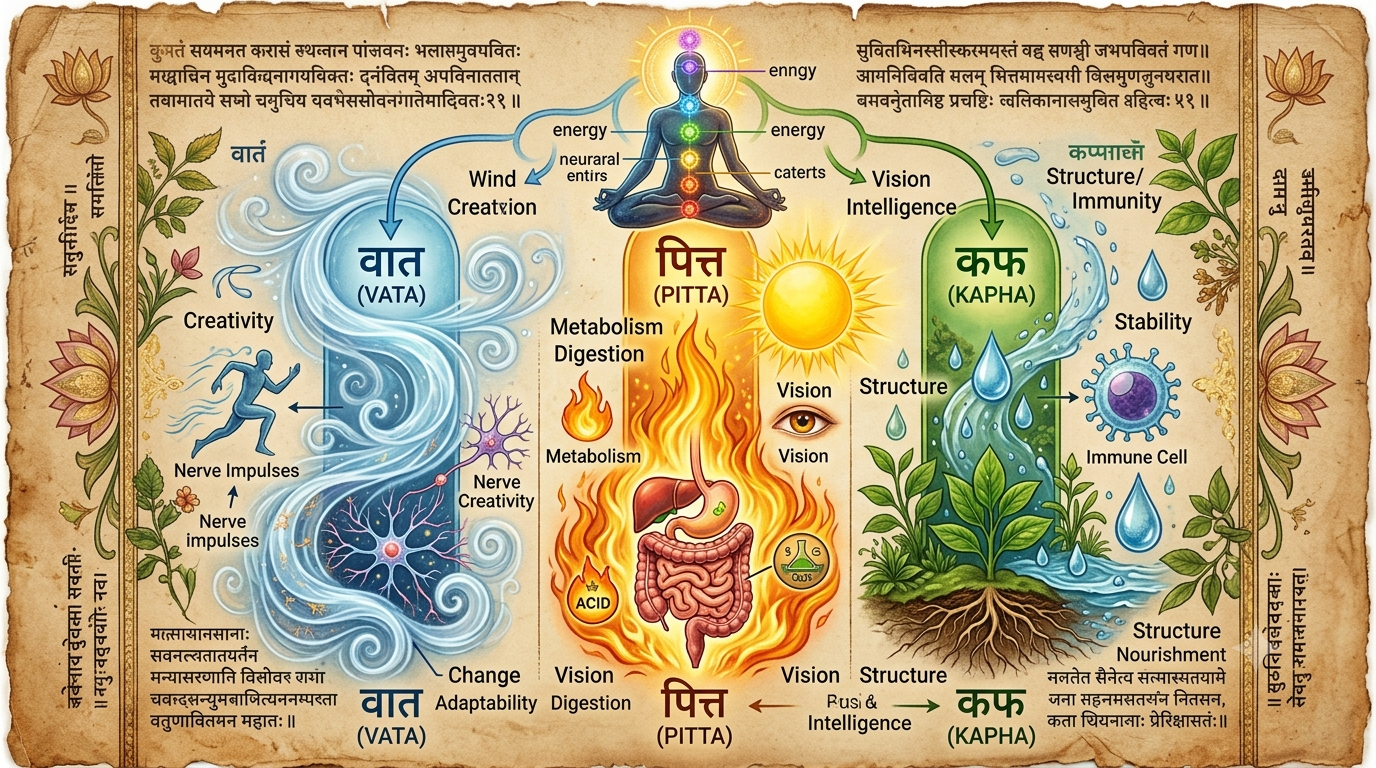
At the heart of this philosophy are three core energies – Vata, Pitta, and Kapha – known as the tridosha of Ayurveda. Together, they form the foundation of Ayurvedic medicine. They guide physical harmony, emotional stability, and vitality. The basic idea behind Tridosha in Ayurveda is simple: each of these three forces plays a different role in the body.
What Does Tridosha in Ayurveda Mean?
To understand this concept, start with the word itself. In Sanskrit, “Tri” means “three.” “Dosha” refers to a vital bio-energy – or more literally, “that which can become imbalanced.”
So, Tridosha refers to the three foundational forces that govern the mind and body. They drive every normal and abnormal activity in the body. This is the basic answer to what is tridosha in Ayurveda for a beginner.
This framework dates back thousands of years to classical Ayurvedic texts like the Charaka Samhita and Sushruta Samhita. It explains how the wider universe connects with the smaller world of our own bodies.
Balance among the three forces is the definition of health in Ayurveda. Disease, or Vikriti, is just an outcome when there is an imbalance among these forces. Balance is what lies at the heart of Tridosha in Ayurveda.
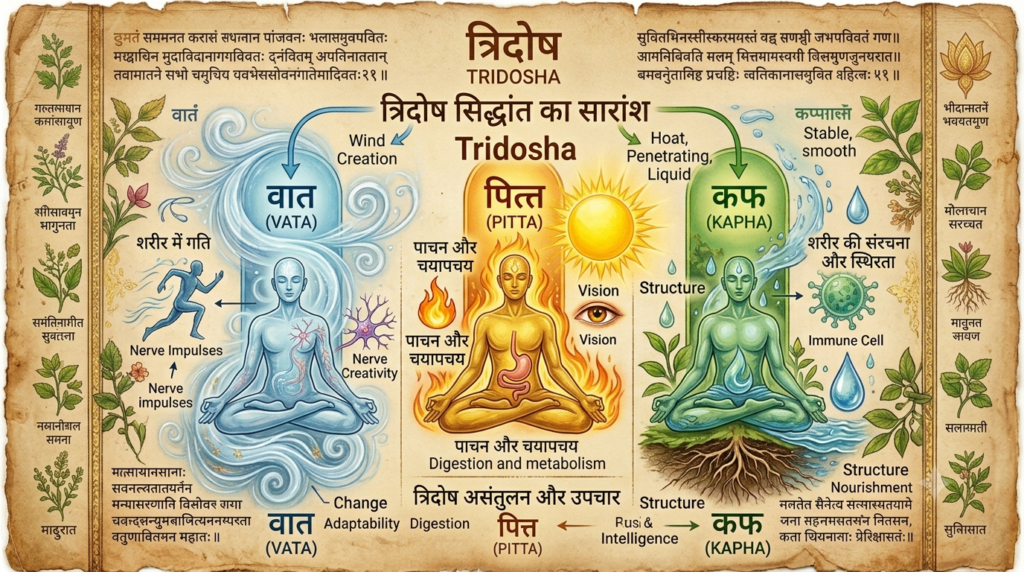
How the Panchamahabhutas Relate to Tridosha in Ayurveda
Ayurveda teaches that the human body is made of five elements, called the Panchamahabhutas. In fact, everything in the world is made from these same five elements:
- Akasha (Space/Ether)
- Vayu (Air)
- Agni (Fire)
- Jala (Water)
- Prithvi (Earth)
Each dosha – Vata, Pitta, and Kapha – forms from a combination of two dominant elements. These pairings help explain the link between the three doshas in Ayurveda and the five elements.
The doshas in Ayurveda aren’t separate physical substances. Instead, we understand them through their qualities, functions, and effects on the body.
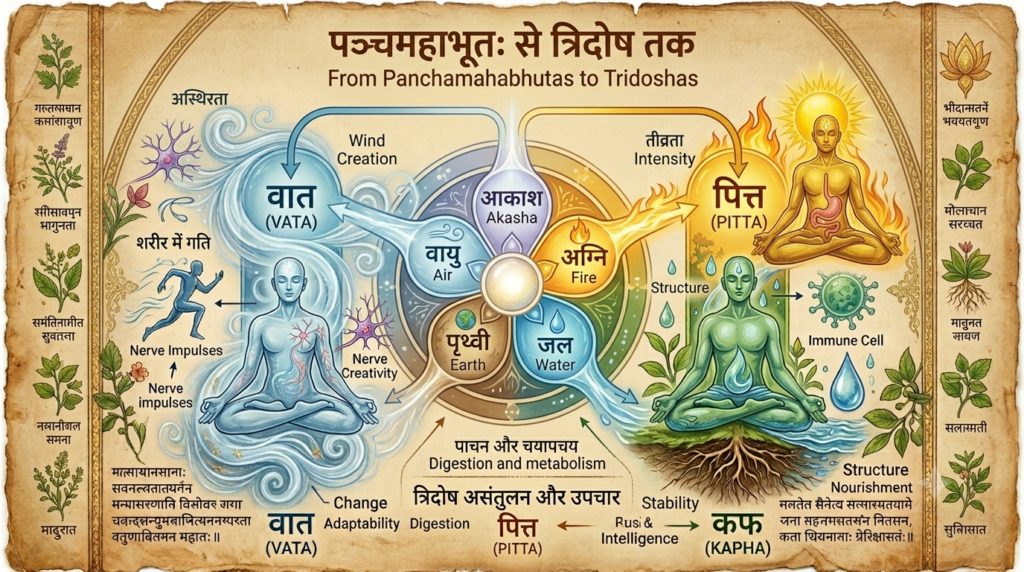
The Three Doshas Explained
Each dosha carries its own qualities, functions, and personality traits. Once you understand these profiles, it becomes easier to spot signs of balance or imbalance. Learning these differences is a key part of Tridosha in Ayurveda.
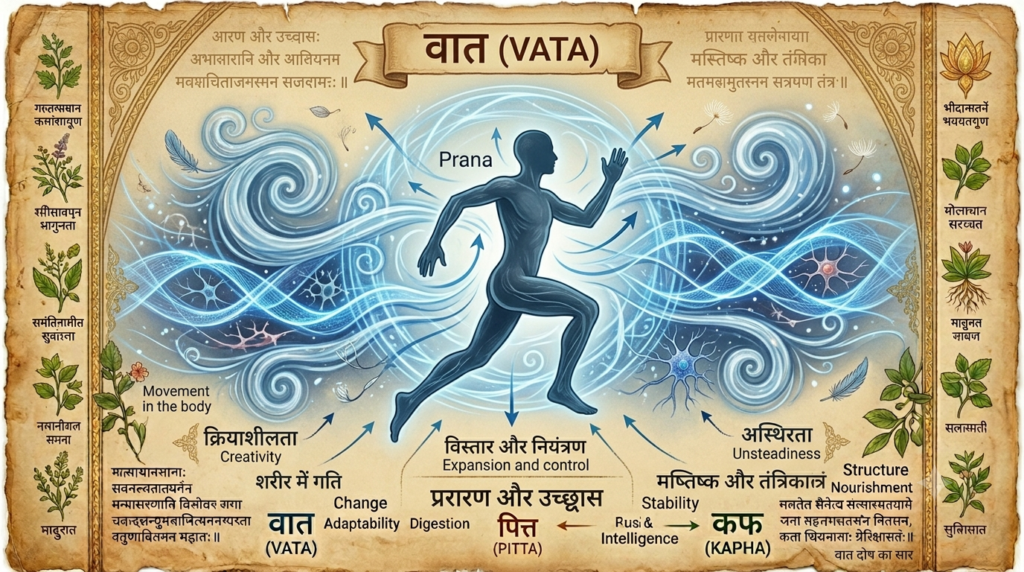
Vata Dosha
Vata is known as the energy of movement.
Elements: Air and Space
Qualities: Dry, light, cold, rough, subtle, and mobile.
Main location: Vata sits mainly in the colon, pelvis, hips, thighs, and lower limbs. Since it drives movement throughout the body, it also touches the nervous system, bones, skin, lungs, and ears.
Sub-doshas: Vata splits into five types:
- Apana Vata
- Samana Vata
- Prana Vata
- Udana Vata
- Vyana Vata
Functions: Vata governs every biological movement in the body. It works at the cellular level, controlling breathing, nerve impulses, blood circulation, and waste elimination.
When balanced: A person feels creative, energetic, and mentally flexible.
When imbalanced: A person may feel anxious or restless. Insomnia and exhaustion can follow. Imbalanced Vata can also cause constipation and dry skin.
Vata shows one clear side of Tridosha in Ayurveda – its main role centers on movement and activity.
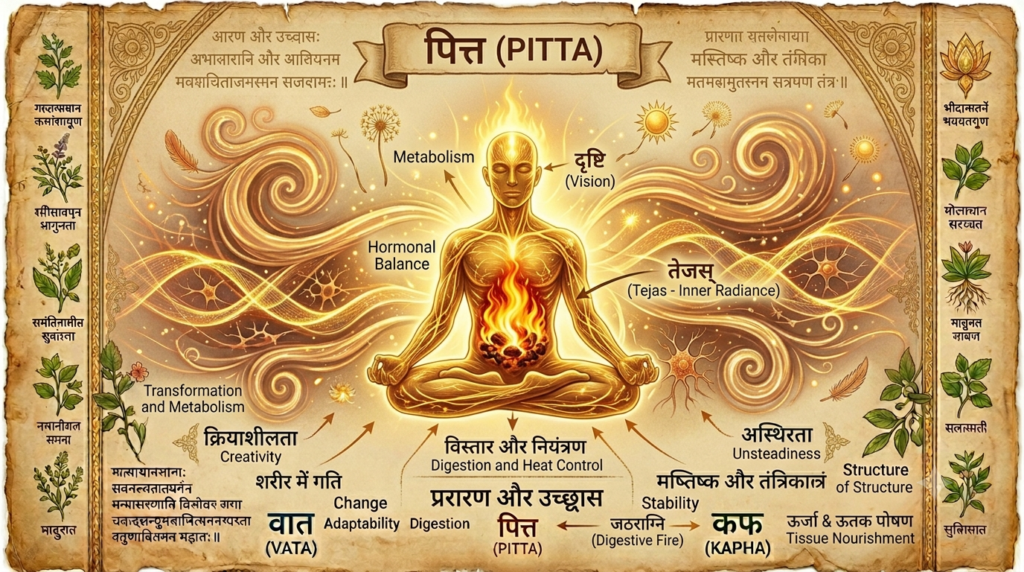
Pitta Dosha
Pitta is known as the energy of transformation.
Elements: Fire and Water
Qualities: Hot, sharp, light, fluid, spreading, and slightly oily.
Main location: Pitta sits mainly between the lungs and the navel. It governs digestion, metabolism, and body temperature.
Sub-doshas: Pitta splits into five types:
- Pachaka Pitta
- Ranjaka Pitta
- Sandhaka Pitta
- Alochaka Pitta
- Bhrajaka Pitta
Functions: Pitta regulates metabolism, powers digestion, and supports energy production. It breaks down food from the mouth to the intestines. It sets your metabolic rate, regulates core body temperature, fuels vision, and drives hormonal transformation.
When balanced: A person shows intelligence, natural leadership, and strong digestion.
When imbalanced: A person may feel angry or irritable. Heartburn and acidity can follow. Too much Pitta can also cause inflammation and skin rashes.
Pitta is another key part of Tridosha in Ayurveda, especially since it drives transformation, digestion, and heat.
Kapha Dosha
Kapha is known as the energy of structure.
Elements: Earth and Water
Qualities: Heavy, slow, cool, oily, smooth, dense, and stable.
Main location: Kapha sits mainly in the upper body – the lungs, chest, and head. Since it lubricates the joints, it’s present there too.
Sub-doshas: Kapha splits into five types:
- Avalambaka Kapha
- Kledaka Kapha
- Tarpaka Kapha
- Bodhaka Kapha
- Shleshaka Kapha
Functions: Kapha builds physical structure, provides lubrication, and holds the body together. It forms bones, muscles, and tendons. It lubricates joints and strengthens the immune system.
When balanced: A person feels grounded, stable, and emotionally calm, with strong physical strength.
When imbalanced: A person may gain weight unexpectedly and feel lethargic or sluggish. Excess Kapha can also cause respiratory congestion.
Kapha completes the basic picture of Tridosha in Ayurveda, since it governs structure, stability, and lubrication.
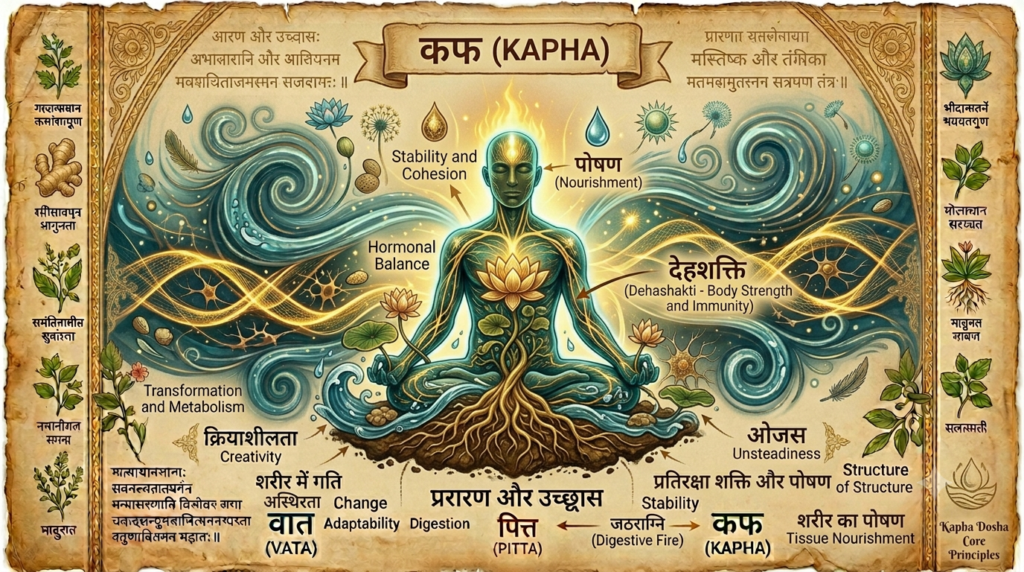
What Happens When Vata, Pitta, and Kapha Become Imbalanced?
When lifestyle habits cause one or more doshas to build up too much, the body’s natural harmony breaks down. Common triggers include a poor diet, chronic stress, sudden seasonal shifts, lack of sleep, and a sedentary lifestyle.
| Dosha | Common Symptoms of Excess |
| Vata | Bloating, gas, dry skin, severe anxiety, tremors |
| Pitta | Hyperacidity, skin inflammation, excess sweating, anger |
| Kapha | Chronic weight gain, sinus congestion, fluid retention, low mood |
Understanding this pattern helps when learning about the doshas in Ayurveda. Each dosha becomes disturbed in its own distinct way. This is why Tridosha in Ayurveda focuses on overall balance rather than treating one symptom at a time.
How Tridosha in Ayurveda Relates to Prakriti
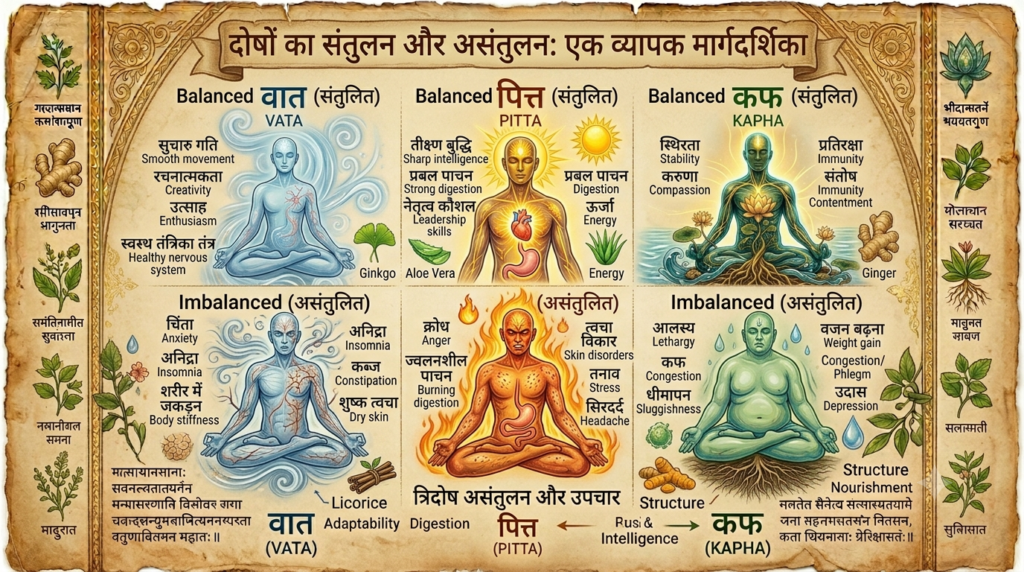
In simple terms, Prakriti is your Ayurvedic body type. Every person is born with a fixed combination of the three doshas, set at the moment of conception. This unique blueprint – your Prakriti – reflects your natural constitution.
While everyone carries all three doshas, their proportions differ widely from person to person. There are three constitutional categories:
- Single-dosha constitutions (rare): Vata-dominant, Pitta-dominant, or Kapha-dominant.
- Dual-dosha constitutions (most common): Vata-Pitta, Pitta-Kapha, or Vata-Kapha.
- Tridoshic constitution (highly rare): An equal balance of Vata, Pitta, and Kapha.
These patterns are often discussed as the different types of doshas in Ayurveda when explaining body constitution. Understanding your Prakriti helps you make lifestyle choices that fit your body’s natural tendencies.
This link between Prakriti and Tridosha in Ayurveda explains why the same food or routine doesn’t suit everyone equally.
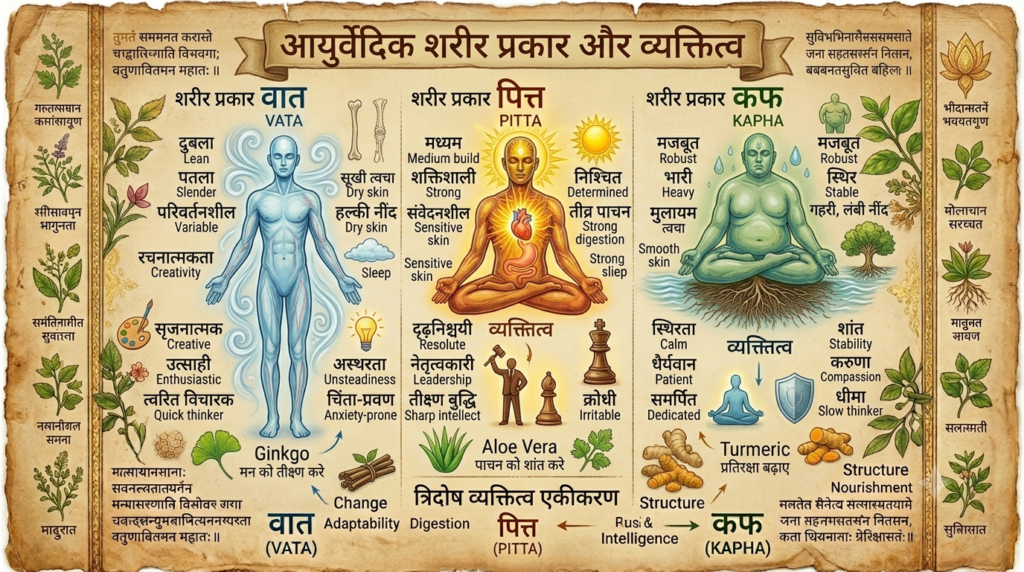
Vata, Pitta, Kapha, and Digestive Fire (Agni)
One often-overlooked piece of the puzzle is how the doshas relate to Agni, or digestive fire.
In Ayurveda, digestion sits at the centre of health. When digestion runs irregular or sluggish, health problems tend to follow over time.
When your doshas fall out of balance, they directly affect Agni:
- Excess Vata makes digestion erratic and unpredictable. This is called Vishamagni.
- Excess Pitta makes the digestive fire burn too hot, causing acidity and rapid nutrient burn-off. This is called Tikshnagni.
- Excess Kapha dampens the flame, making digestion slow and heavy. This is called Mandagni.
When Agni runs weak or erratic, the body produces Ama – a toxic, sticky buildup of undigested food. Ama clogs the body’s cellular channels and sits at the root of most physical illness.
This link between digestion and Tridosha in Ayurveda shows why food and daily habits matter so much in this system.
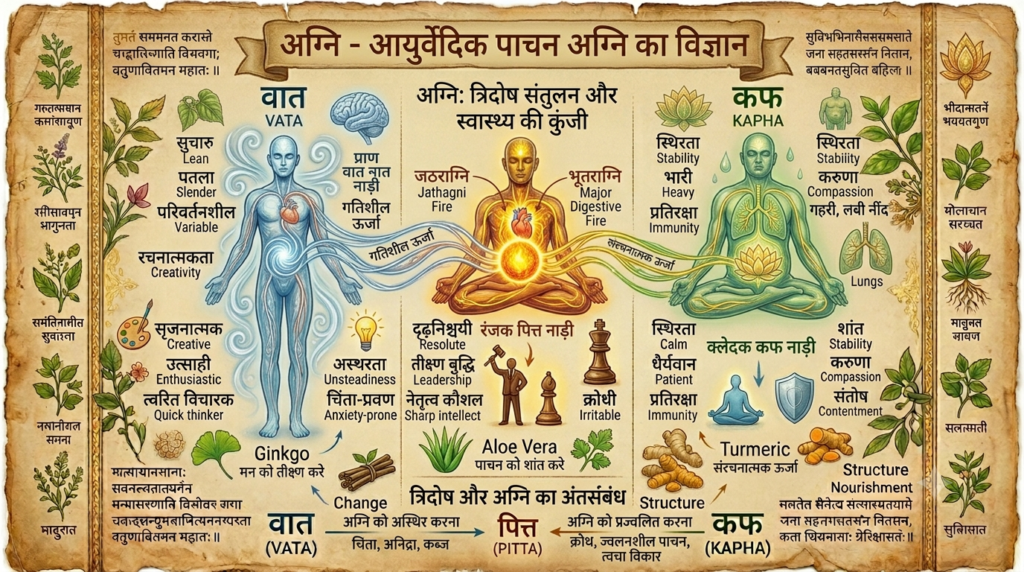
Vata, Pitta, and Kapha Through the Stages of Life
Just as the doshas shift within our bodies day to day, they also dominate different stages of life. Understanding this cycle helps you adjust your wellness habits as you age.
| Life Stage | Dominant Dosha | Focus of the Stage |
| Childhood (birth to puberty) | Kapha | Rapid growth, building structure, prone to mucus and colds |
| Adulthood (puberty to ~60) | Pitta | High ambition, transformation, sharp focus, career building |
| Old age (60+) | Vata | Natural drying, reduced structure, brittle bones, deeper spiritual focus |
These shifting patterns give another example of how Tridosha in Ayurveda helps explain the body across different life stages.
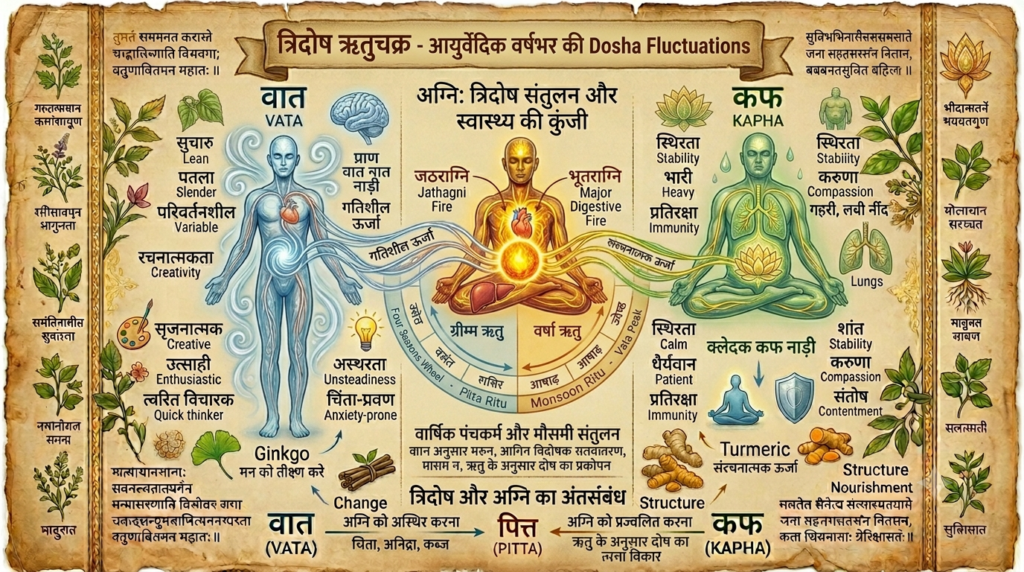
Ritucharya: How the Seasons Influence Tridosha in Ayurveda
Nature shifts the environment around us as the seasons change, and those shifts affect the doshas inside us too. Ayurveda recommends Ritucharya, or seasonal routines, to move through these changes smoothly:
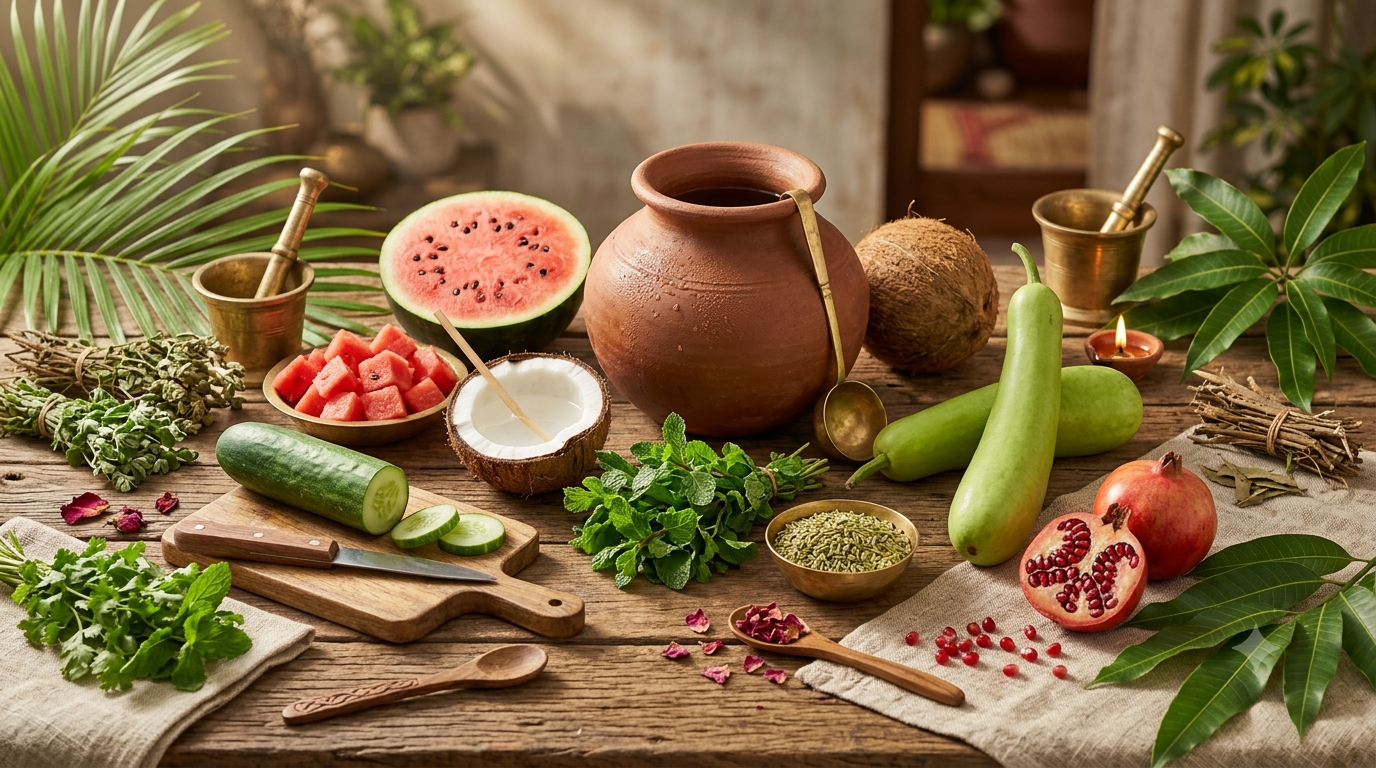
- Summer (Pitta season): Peak heat raises Pitta in the body. Favour cooling foods, like naturally sweet foods. Avoid heavy spices and cut back on intense workouts.
- Autumn and early winter (Vata season): Wind and cold weather raise Vata. Eat warm, oily, grounding meals – think soups and stews – and keep a steady daily routine.
- Late winter and spring (Kapha season): Dampness and thawing release stored Kapha, which can trigger allergies. Shift toward warm, light, spicy foods and move your body more.
Seasonal shifts play an important role in Tridosha in Ayurveda, since the environment directly influences the qualities tied to each dosha.
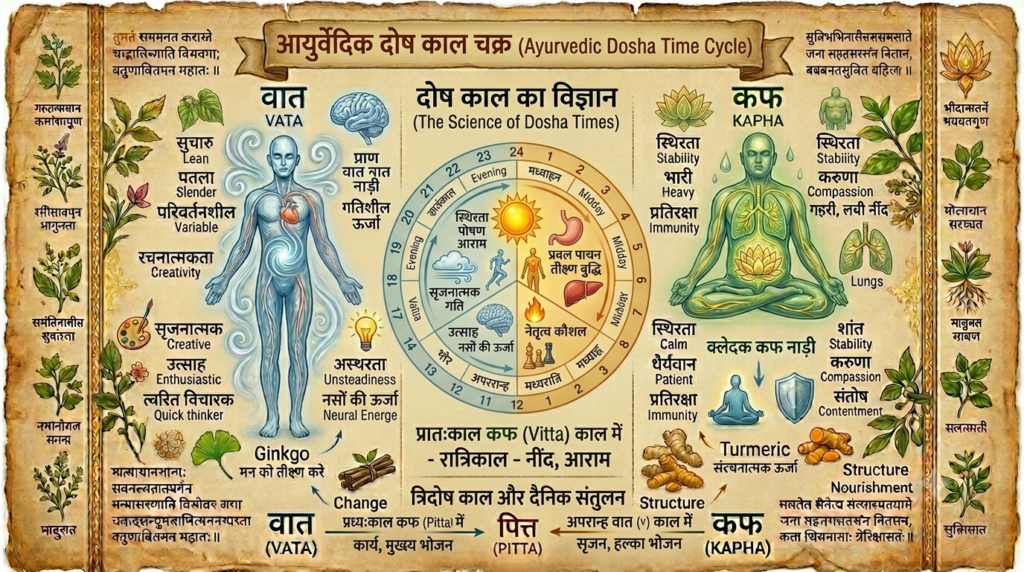
The Daily Dosha Clock (Dinacharya)
Much like modern circadian rhythms, Ayurveda maps out a 24-hour cycle where different doshas take the lead. Aligning your schedule – called Dinacharya – with this clock can boost both productivity and ease.
| Time | Dominant Dosha | Ideal Activity |
| 2:00 AM – 6:00 AM | Vata | Wake up, meditate, light spiritual practice |
| 6:00 AM – 10:00 AM | Kapha | Heavy exercise, clear your mind, start work |
| 10:00 AM – 2:00 PM | Pitta | Eat your largest meal (Agni is strongest), tackle demanding mental tasks |
| 2:00 PM – 6:00 PM | Vata | Creative work, communication, light intellectual tasks |
| 6:00 PM – 10:00 PM | Kapha | Wind down, spend time with family, sleep by 10 PM |
| 10:00 PM – 2:00 AM | Pitta | Internal repair and liver detox while asleep |
The dosha clock offers a practical example of how Tridosha in Ayurveda connects to everyday routines.
Natural Ways to Balance Vata, Pitta, and Kapha
Restoring balance to your Tridosha doesn’t require complex medical steps. It comes down to small, conscious, daily choices:
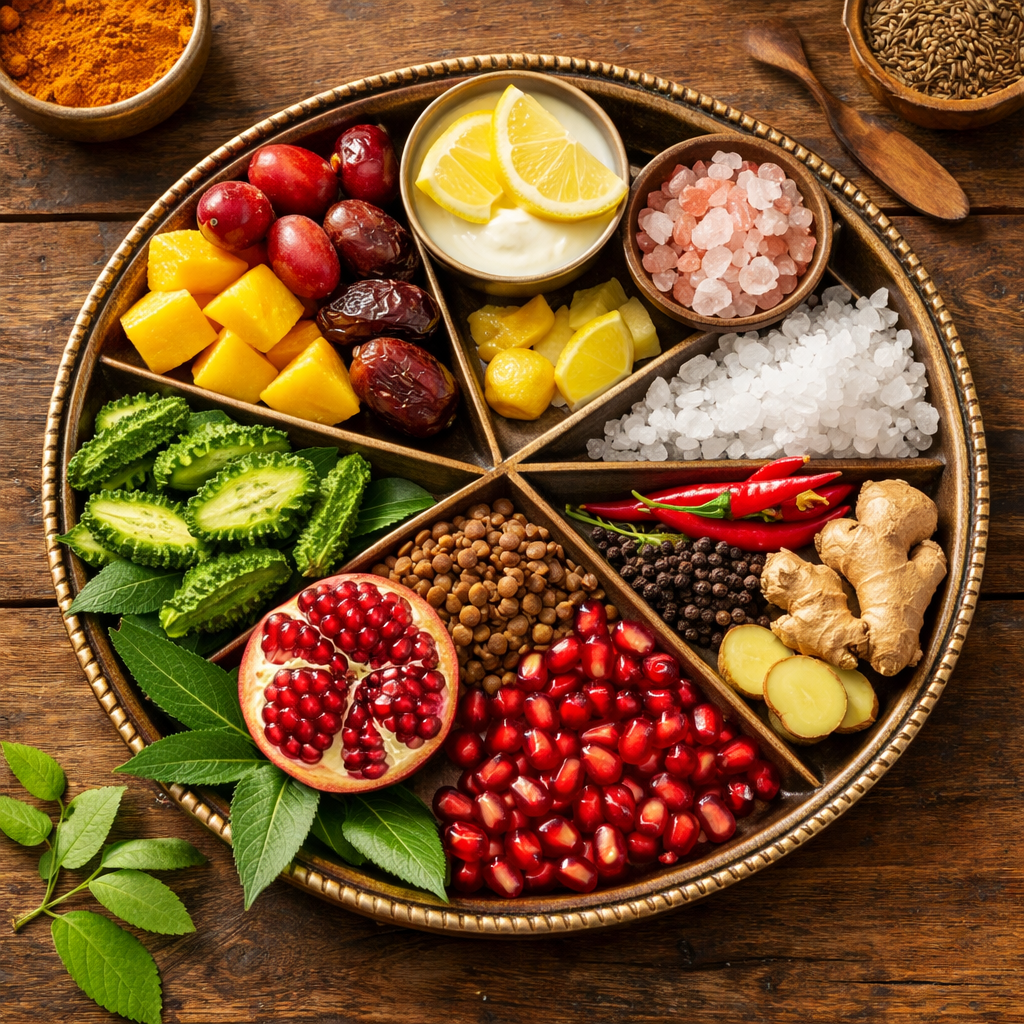
- Diet: Choose foods that counter your aggravated dosha’s qualities – warm foods for cold Vata, cooling foods for hot Pitta. Favour food that’s in season and grown close to home.
- Yoga or exercise: Regular movement helps balance the doshas. Slow, grounding yoga suits Vata. Gentle, non-competitive postures suit Pitta. Vigorous, warming flows suit Kapha.
- Meditation and breathwork: These calm the nervous system and can ease anxiety and anger. They especially help balance Vata-driven irregularities.
- Sleep: A disciplined sleep cycle lets Kapha naturally rebuild and repair tissue.
- Herbal support: Ayurvedic herbs like Ashwagandha (for Vata), Amla (for Pitta), and Triphala or ginger (for Kapha) can offer extra support.
These daily habits offer a simple way to apply Tridosha in Ayurveda without overcomplicating your wellness routine.
Tridosha in Modern Health Perspectives
In today’s medical landscape, the concept of Tridosha in Ayurveda lines up surprisingly well with systems biology and personalized medicine.
Rather than viewing the body as a set of isolated organs, both Ayurveda and modern systems biology see it as an interconnected web of physical and psychological processes.
Genomics research has also started exploring how a person’s Prakriti connects to measurable traits, revealing real metabolic differences among Vata, Pitta, and Kapha types.
This is why the traditional three doshas in Ayurveda framework often comes up in discussions of personalized health approaches.
A note on science: Ayurveda offers a genuinely useful framework for holistic wellness. That said, it’s classified as a complementary and alternative medical system. Many of its traditional concepts haven’t been validated through large-scale, double-blind clinical trials by Western standards, and Ayurveda shouldn’t replace conventional medical care for acute illness. Still, it can play a valuable role in managing chronic conditions and supporting a healthier daily life.
Summary
Understanding Tridosha in Ayurveda is like receiving a custom operating manual for your specific body and mind.
Once you recognize whether your Vata, Pitta, or Kapha needs attention, you can make smarter choices about diet, exercise, and stress management.
True wellness isn’t about forcing your body to match someone else’s ideal. It’s about finding balance within your own nature. Not everyone is built to carry heavy muscle, stay naturally lean, or run a marathon – and that’s fine.
Be kind to your body. Pay attention to its signals. And consider consulting a qualified Ayurvedic practitioner to map out a path that’s personalized to you.
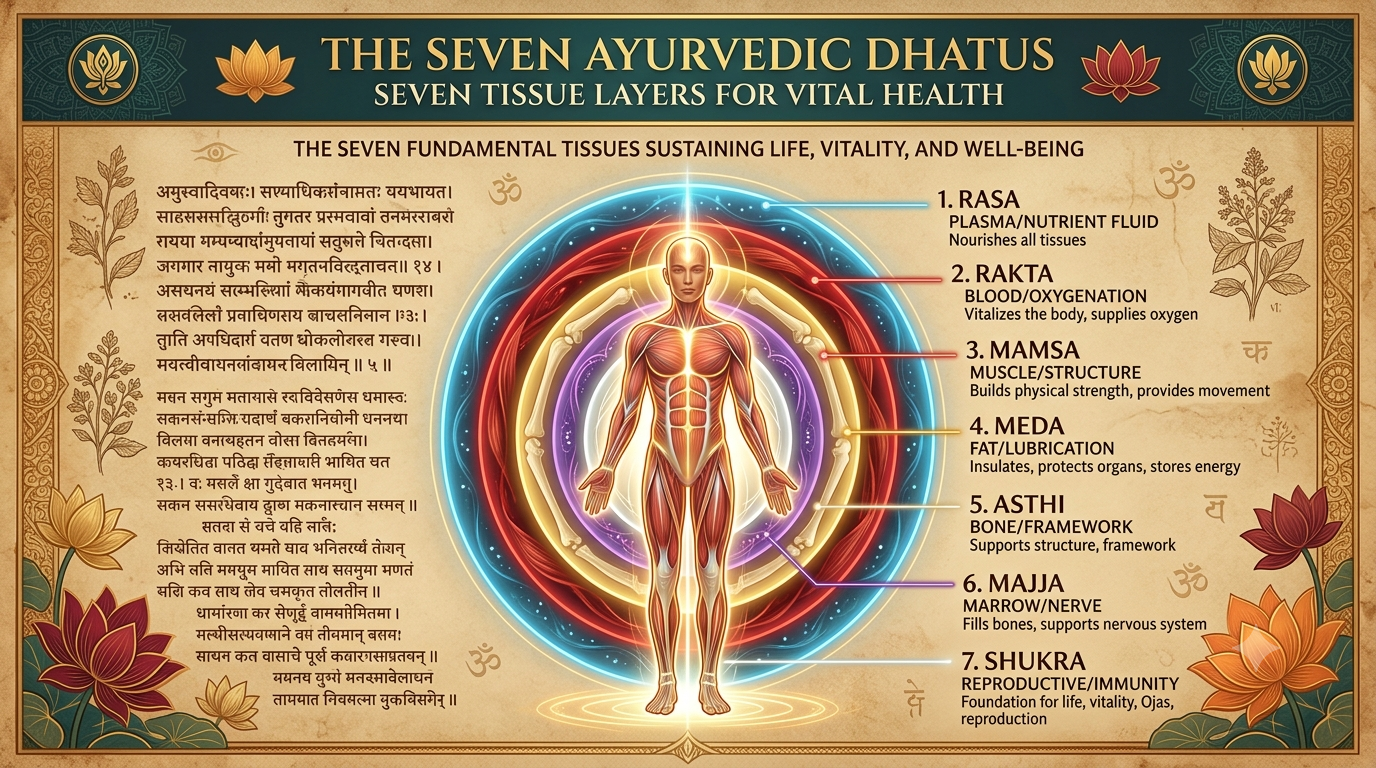
At Healthyayu, read more about Ayurvedic six tastes, 5 elements and doshas, 7 dhatus in Ayurveda, and Cooling Ayurveda foods for better well-being.
Frequently Asked Questions
Which dosha is the most powerful?
Vata is often seen as the most powerful dosha, since it governs all movement. It acts as the driver that moves Pitta and Kapha, which are considered structurally still without Vata’s push. This is one of the core ideas within Tridosha in Ayurveda.
Can a person have all three doshas?
Yes. Every person carries all three doshas, since each one is necessary for survival. What differs from person to person is the ratio between them. This is a key point in understanding what is tridosha in Ayurveda.
How can I find my dominant dosha?
Online body-type quizzes offer a basic starting point. But for an accurate read on your birth constitution (Prakriti) and current imbalance (Vikriti), a professional pulse diagnosis, or Nadi Pariksha, from an Ayurvedic practitioner works best.
Learning the types of doshas in Ayurveda helps beginners understand the differences between Vata, Pitta, Kapha, and their various combinations.
Can diet change your dosha balance?
Yes, diet is one of the fastest ways to shift your doshic balance. Foods that mirror a dosha’s qualities tend to increase it, while foods with opposite qualities tend to decrease it.
Food choices come up often alongside Tridosha in Ayurveda, especially in discussions of daily habits.
Is Tridosha scientifically proven?
Ancient texts describe the doshas using metaphorical language, like fire and air. Even so, modern pilot studies have found real correlations between Ayurvedic body types and genetic expression, metabolic rate, and cardiovascular response.
Still, the traditional model of doshas in Ayurveda should be understood within its own context, not treated as a substitute for established medical diagnosis.
Which dosha causes digestive problems?
All three doshas can trigger digestive issues, though each shows up differently. Excess Vata causes bloating and constipation. Excess Pitta causes hyperacidity and diarrhoea. Excess Kapha causes slow, heavy metabolism and sluggishness.
This is exactly why digestion plays such a central role in Tridosha in Ayurveda.
How do seasons affect the doshas?
Environmental changes mirror dosha characteristics. Dry, windy autumn weather naturally raises Vata in the body. Hot summer days raise Pitta and can easily trigger digestion-related issues.
Seasonal change offers another real-world example of Tridosha in Ayurveda, showing how Ayurveda ties the body closely to its surroundings.