Have you ever wondered why mental health matters so much? Let’s find out. First, let’s look at what it means. Then, let’s see how it connects to your body. Last, let’s look at what shapes it. This is where how to improve mental health begins.
So, what is mental health?
Mental health is how you feel, think, and connect with others. It shapes how you think. It shapes how you feel. It shapes how you handle daily life. Good mental health helps you know your strengths. It helps you manage stress. It helps you meet your goals. It helps you support others too.
Mental health guides how you handle stress. It guides how you talk to people. It guides how you make choices too. It has four main parts. Here they are:
- Emotional health: how well you handle feelings like joy, sadness, or anger.
- Mental health: your self-worth and your skill at solving problems.
- Social health: how you build and keep bonds with others.
- Physical health: a healthy mind supports a healthy body. Long-term stress can hurt both.

Here’s the key point: good mental health means being strong, not perfect for that you need to understand 10 signs of good mental health. It means you can bounce back after hard times. Learning how to improve mental health starts right here.
One common myth is that mental health only matters if you have a diagnosis. That’s not true. Anyone can struggle, even without a label. And people with a diagnosis can still do well.
What Shapes Your Mental Health
Many things shape your mental health. Knowing them helps you learn how to improve mental health in a real way.
Some factors come from birth, like your genes and brain chemistry. Your personality plays a role too. So do your life events. Things like loss, trauma, or big changes can affect you deeply. Strong social ties can help you bounce back. But things like bullying, stigma, or loneliness can hurt your mental health.
Bigger factors matter too. Poverty, job loss, and unsafe areas can limit healthy growth. Access to good healthcare and housing matters a lot. When your basic needs aren’t met, stress builds up fast.
Signs You May Need Support
Feeling sad or stressed sometimes is normal. But watch for these signs:
- Strong feelings that last for weeks.
- Big changes in sleep, appetite, or energy.
- Trouble focusing or making choices.
- Thoughts of self-harm or feeling hopeless.
- Pulling away from people or using substances to cope.

Here’s a key point: often, other people notice these signs before you do. Poor mental health can also cause real physical problems, like high blood pressure. It can make you feel easily upset or easily upset over small things.
Common issues include anxiety, depression, and bipolar disorder. Burnout and trauma reactions are common too. So are OCD and other related disorders.
How to Improve Your Mental Health
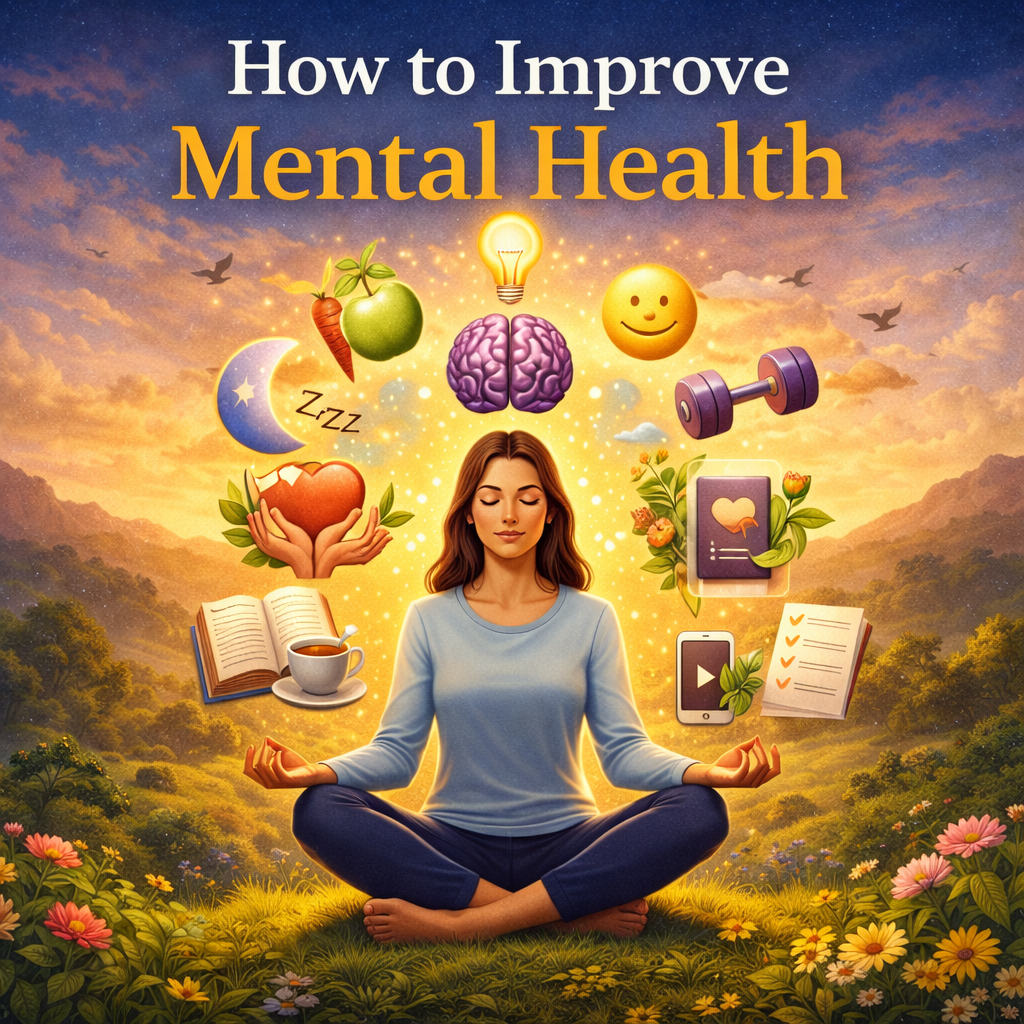
Small habits, done daily, work best. Try them one at a time. These simple daily habits for mental health are the real answer. They are the true key to how to improve mental health over time.

Start With the Basics
Your brain is part of your body. So what helps your body helps your mind too. These basic steps are some of the best ways to improve mental health.
- Sleep well: Poor sleep makes it harder to manage your emotions. Aim for 7 to 9 hours each night. This gives your brain time to rest and reset.
- Move your body: Just 20 to 30 minutes a day can help. Exercise releases feel-good chemicals. It also lowers cortisol, your main stress hormone. Can’t work out? Even a 15-minute walk helps a lot.
- Eat well: Choose whole foods like fruits, veggies, and lean protein. Cut back on fast food and sugar. Drink plenty of water. Go easy on alcohol.
Build Better Mental Habits
How you handle your inner world shapes your whole day. These tips to improve mental health can make a real difference.
- Try mindfulness: You don’t need hours to meditate. Just 5 to 10 minutes each morning can sharpen your focus. Feeling stressed? Take three deep breaths. This can calm your body fast. Break big tasks into small steps. This helps you avoid feeling overwhelmed.
- Cut back on doomscrolling: Too much bad news or social media can make you feel anxious. It can make life feel worse than it is. Set limits on screen time, most of all before bed.
- Practice gratitude: Take time each day to notice what’s going well. This helps train your brain to focus on the positive.

Strengthen Your Connections
Support from others is key to good mental health. This is a core part of how to improve mental health long-term.
Spend time with people who lift you. Even small chats can boost your mood. It’s okay to say no sometimes. Protecting your energy is a form of self-care. Try to get outside when you can. Time in nature can calm your mind and lower your heart rate. A walk outside, morning or evening, can help a lot.
When to Get Extra Help
Sometimes self-care isn’t enough. If stress keeps building, it may be time to ask for help. This is still part of learning how to improve mental health the right way.
- Talk to your doctor: They can check for symptoms and point you to the right specialist.
- Try therapy: A counsellor or psychologist can help you work through tough feelings.
- Ask about medication: A doctor may prescribe it for things like anxiety or depression.
- Join a support group: Talking with others who understand can really help.
Here’s the key point: don’t wait until things get worse. Ask for help early. This is one of the smartest ways for how to improve mental health.
Why Mental Health Matters So Much
Ignoring your mental health can hurt your whole life. This is exactly why learning how to improve mental health is so important.
Long-term stress can raise your risk for heart disease and other health problems. It can make it hard to focus, sleep, or get through your day. It can strain your bonds with others too.
On the flip side, good mental health brings real benefits. It builds resilience. It boosts your mood and sense of purpose. It supports your body and helps you live longer. It helps you think clearly under pressure. It helps you do your best at work or school.
If you want to look deeper, explore Healthyayu for the root causes of poor health, ways to improve mental health, and healthy food choices for better well-being. Also, close bonds with others are a big part of the picture too. So, show kindness to yourself. Less stigma and more support help everyone, not just those who struggle.
Close bonds with others are a big part of the picture too. So is showing kindness to yourself. Less stigma and more support help everyone, not just those who struggle.
Small, steady steps make the biggest difference. Start today. Your mind will thank you.
FAQs
1. What are the most effective ways to improve mental health?
The best ways to improve mental health combine a few things. Good sleep is key. Regular movement helps too. So does mindfulness. Strong friendships matter most of all. No single fix works alone.
2. How to improve mental health and wellness overall?
It comes down to small, steady steps. How to improve mental health and wellness means making simple changes. Change your sleep. Change your food. Change how you handle stress. Then stick with it.
3. What are some simple tips for improving mental health?
Good tips to improve mental health are simple. Cut your screen time. Write down what you’re grateful for each day. Set clear limits on things that drain your energy.
4. What are some simple mental health tips for new people?
Try easy mental health improvement tips. Take a short walk each day. Keep a steady sleep routine. Spend five quiet minutes each morning just breathing.
5. Why do daily habits matter for mental health?
Simple daily habits for mental health build strength over time. They make stress easier to handle. They help you keep learning how to improve mental health for the long run. Small steps, done often, add up fast.