What is Ayurveda?
What is Ayurveda is a question that helps explain one of the oldest approaches to health. Ayurveda is an ancient medical science. It existed in human societies before the application of modern science to health. Ayurveda dates back an estimated 5000 years. It is considered one of the world’s oldest healing systems and has been practised in India. Ayurveda uses a comprehensive approach to diagnosing and treating disease. It includes both medical and surgical approaches for treatment.
The best part of Ayurveda is its whole-body approach. It treats disease from the root, so it does not come back. This is a key part of What is Ayurveda.
Ayurveda works to keep balance in the body, mind, and spirit. Modern medicine often treats only symptoms, while Ayurveda uses diet, herbs, daily habits, yoga, and detox to build long-term health.
Today, people across the world know Ayurveda. It helps prevent disease, heals in a natural way, and supports overall wellness. Ayurveda sees humans as a part of nature. Nature is the big picture, and the body is the small picture, sharing the same traits. This idea also explains What is Ayurveda as a system that links people with nature.
Definition of Ayurveda
The term ‘Ayurveda’ is derived from the Sanskrit language. “Ayu” means life, whereas “Veda” stands for knowledge. Thus, Ayurveda means ‘the science of life.’ This simple definition of Ayurveda explains how this healing system considers well-being in a much broader way rather than the absence of diseases. Ayurveda is an ancient system of medicine.
Ayurveda says health comes when these four things work in harmony:
- Body: all body parts
- Mind: the brain
- Spirit: the soul
- Environment: your surroundings and daily life
Ayurveda does not just treat the disease. It treats the whole person, and this personal care sets it apart from many other health systems. This idea also helps explain what is Ayurveda in simple words.
Ayurvedic care often uses:
- Herbal medicine
- Natural therapy
- Diet advice
- Daily life habits
- Meditation and yoga
Ayurveda says immunity depends on many things, such as genes, place of birth, season, food, and digestion power. Ayurveda trusts the soil, which is the body. Modern medicine trusts the seed, which is germs, and gives less weight to the soil. This is why modern science leans on vaccines, while Ayurveda builds immunity with herbs that boost the body’s own defense. This focus on balance is another key part of What is Ayurveda.
History and Origin of Ayurveda
Ayurveda began in Asia over 5,000 years ago. It grew deep roots in Indian culture and shaped Hindu and Buddhist thought too.
Hindu myths say Lord Brahma gave this science to Lord Dhanvantri, the physician of the gods. Dhanvantri is known as the father of Ayurveda and taught this full-body approach to his students.
Ayurveda first appeared in old holy texts called the Vedas, mainly the Atharva Veda.
Two key old Ayurvedic texts are:
Charaka Samhita: This text is about internal medicine and herbs.
Sushruta Samhita: This text covers surgery, body parts, and medical steps.
Old sages studied nature, the body, and the world to build the base of Ayurvedic healing. These roots help explain What is Ayurveda from a historical point of view.
Today, the Indian government backs Ayurveda. The Ministry of AYUSH promotes it across the country.
Basic Principles of Ayurveda
Ayurveda says the whole world, and the human body too, is made of five basic parts.
The Five Elements
- Earth: Stability and structure
- Water: Flow and nourishment
- Fire: Digestion and metabolism
- Air: Movement
- Space: Room for body work
These five parts mix to form energy types called doshas, which control all body work. Knowing this basic idea makes What is Ayurveda easy to grasp.
The Three Doshas in Ayurveda
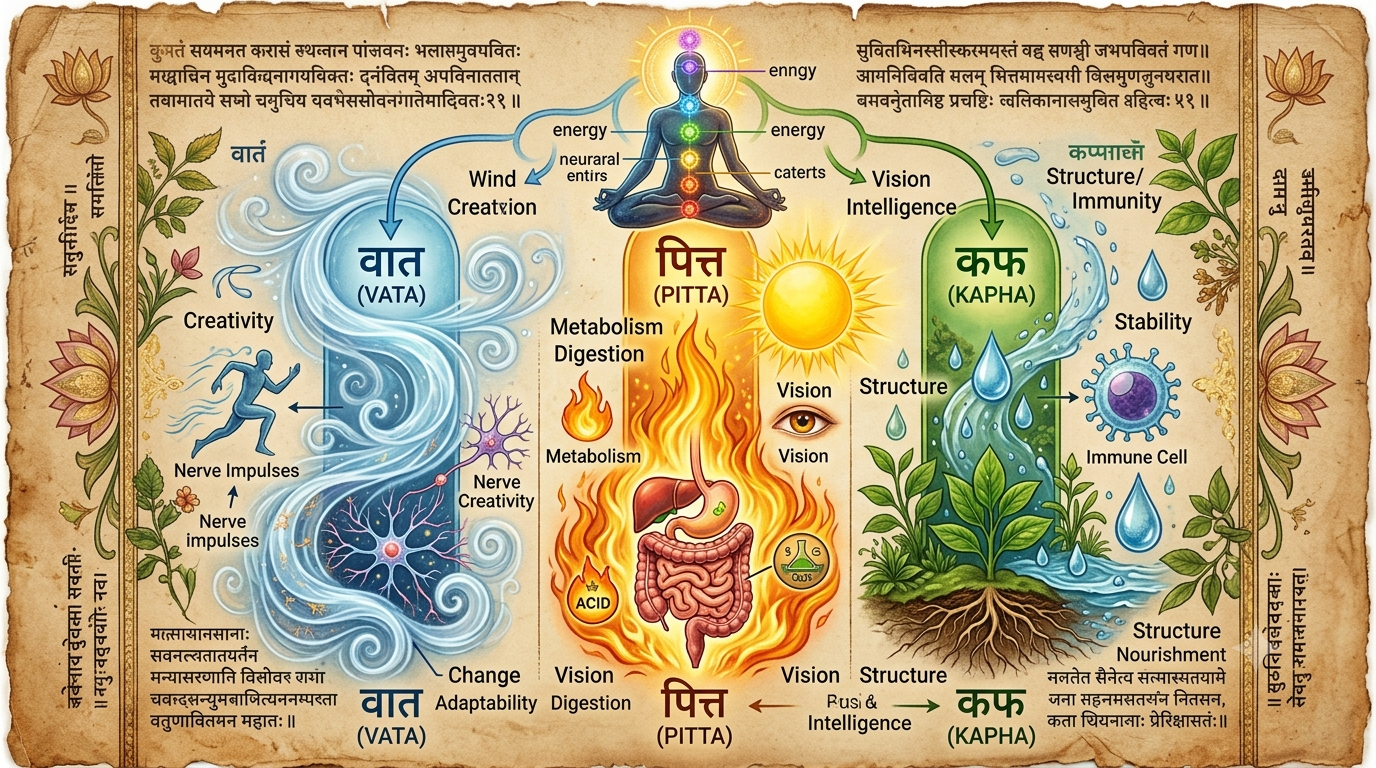
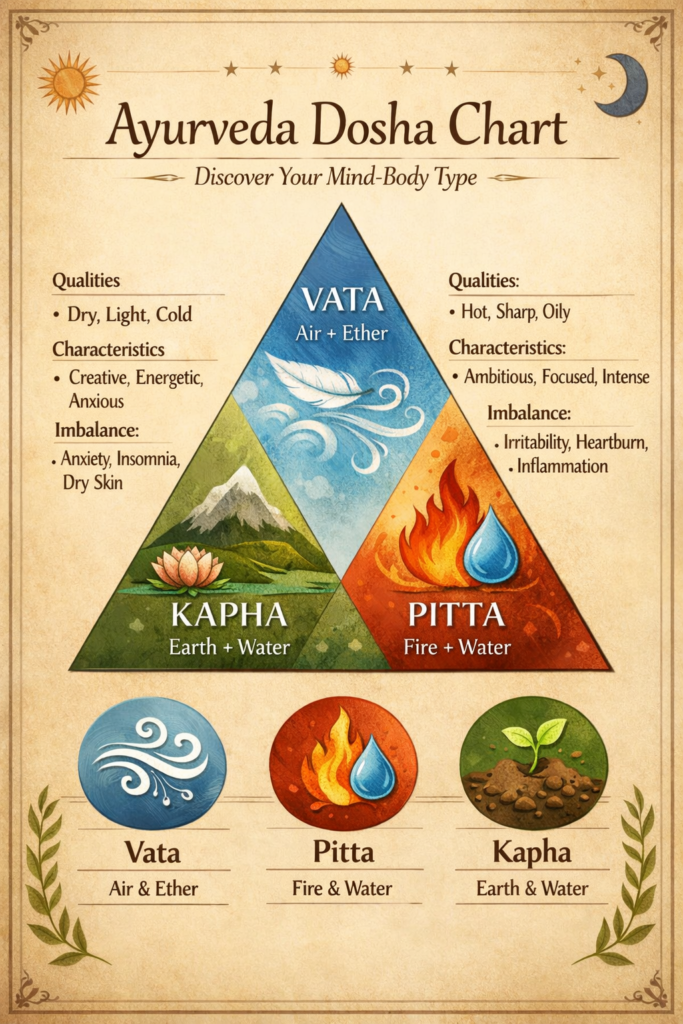
Ayurveda says the body runs on three doshas. Each dosha is a mix of the five Ayurvedic elements. A common question for new learners is what are doshas in Ayurveda. The three doshas are Vata, Pitta, and Kapha.
Vata Dosha: Vata comes from air and space. It controls:
- Body movement
- Breathing
- Blood flow
- Nerve activity
People with strong Vata are often energetic and creative. Out of balance, it can bring worry and dry skin. Learning about Vata is a small step toward What is Ayurveda as a full system.
Pitta Dosha: Pitta comes from fire and water. It controls:
- Digestion
- Metabolism
- Body heat
- Hormones
People with balanced Pitta tend to be smart and focused. Out of balance, Pitta can bring anger and body swelling. This dosha shows why What is Ayurveda cares so much about body heat and digestion.
Kapha Dosha: Kapha comes from earth and water. It gives:
- Body strength
- Stability
- Immunity
- Joint lubrication
People with balanced Kapha are calm and strong. Out of balance, Kapha can bring weight gain and low energy. Kapha rounds out What is Ayurveda and its full view of body strength.
Each dosha sits in its own body zone. Vata sits below the belly button. Pitta sits between the chest and belly button. Kapha sits in the chest and head. This gives a clear map of the three doshas and their body zones.
Manas Doshas: Mind Doshas
The mind has two doshas, Rajas and Tamas. A third state, Sattva, means the mind works well.
- Sattva: Calm and balanced
- Rajas: Restless, angry, greedy
- Tamas: Dull, sleepy, withdrawn
These ideas add more depth to What is Ayurveda, since it cares for both body and mind.
Prakriti: Your Unique Body Type
In Ayurveda, each person has their own mix of doshas. This is called Prakriti. It forms when the embryo forms and stays with the person from birth to death.
Prakriti covers a person’s body traits, body work, and mind traits. In simple terms, it means your nature, habits, mood, and full self. Common body types include:
- Vata type
- Pitta type
- Kapha type
- Mixed types, like Vata-Pitta or Pitta-Kapha
Prakriti shows why What is Ayurveda treats no two people the same way.
Knowing your Prakriti helps you pick the right:
- Diet: Foods that fit your type
- Lifestyle: A routine that fits your nature
- Exercise: The right level of activity
- Treatment: Care plans built around you
This personal care is one of Ayurveda’s biggest strengths and helps explain What is Ayurveda in a real, daily way.
How Ayurveda Works
Ayurvedic care restores balance through natural steps, a key part of What is Ayurveda.
Diet, or Ahara
Food is the top medicine in Ayurveda. Diet plans depend on:
- Dosha type
- Season
- Age and sex
- Digestion strength
Fresh, in-season food is best. This food focus is at the heart of What is Ayurveda as a daily practice.
Lifestyle, or Vihara
Daily habits shape health in a big way. Ayurveda teaches Dinacharya, a daily routine that includes:
- Waking up early
- Oil massage
- Yoga or exercise
- Meditation
- Healthy meals
These habits show how you can use Ayurveda for overall health.
Herbal Remedies
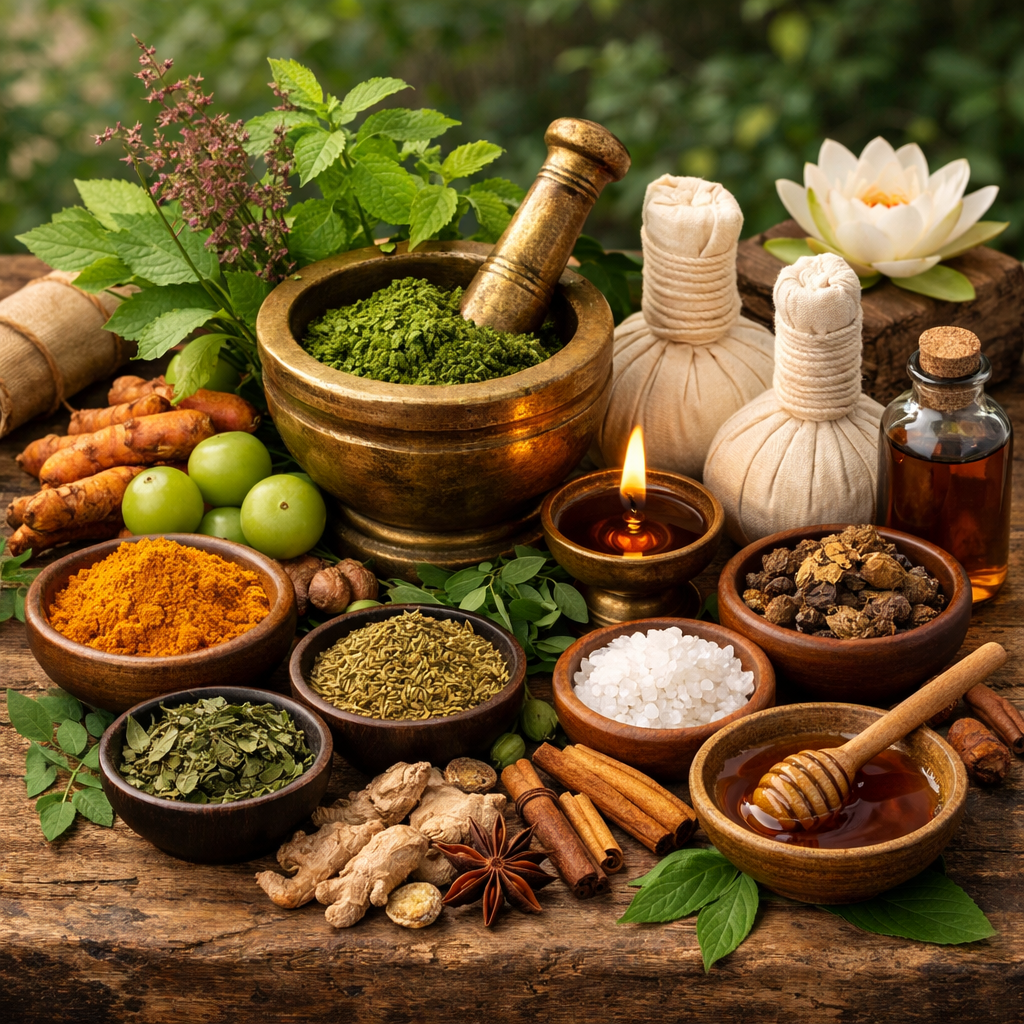
Ayurveda uses many plants to help the body heal, alone or mixed with other herbs. Common herbs include:
- Ashwagandha: cuts stress
- Turmeric: fights swelling
- Tulsi: builds immunity
- Triphala: helps digestion
Herbs like these show What is Ayurveda turns to nature first, not the lab.
Detox, or Panchakarma
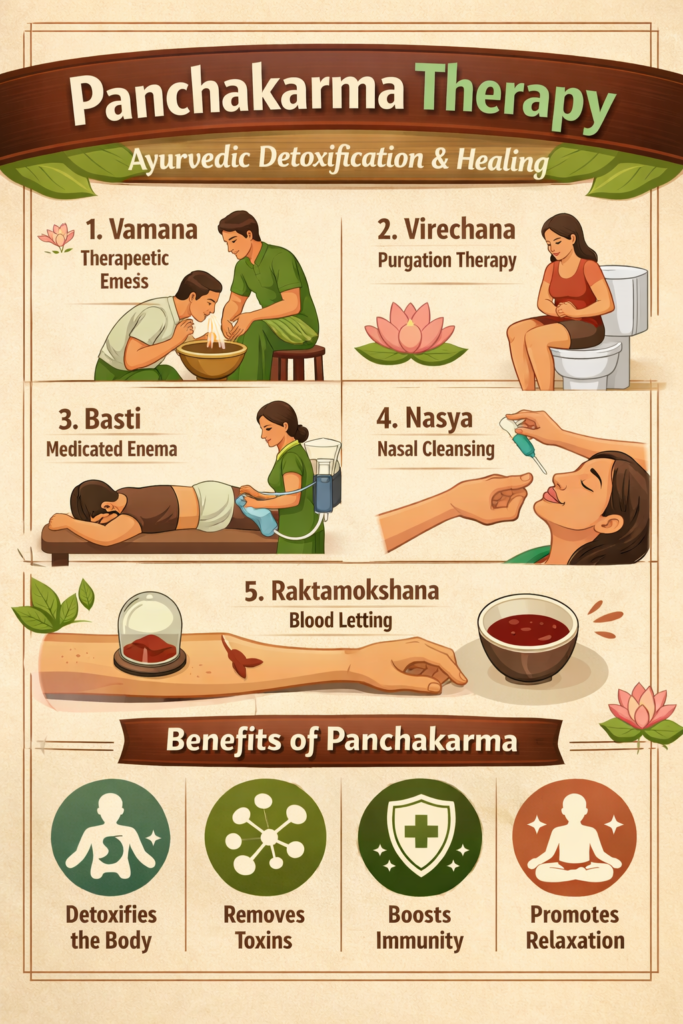
Panchakarma is a special detox plan that clears toxins from the body through five main steps:
- Vaman: Forced vomiting
- Virechan: Purging
- Basti: Medicated enema
- Nasya: Nose treatment
- Raktamokshana: Bloodletting
Panchakarma is a strong example of What is Ayurveda in action, deep in the body.
Yoga
Yoga is an old Indian practice that joins the mind, body, and spirit. It brings peace and self-awareness through body poses, breath work, and meditation, going far beyond simple exercise.
Benefits of Ayurveda
Regular Ayurvedic care brings many gains, which is often the first reason people ask What is Ayurveda in the first place. Key benefits include:
- Better digestion and metabolism
- Stronger immunity
- Less stress and worry
- Healthy skin and hair
- Steady body weight
- Better sleep
- Long-term wellness
People often bring up these gains when they study Ayurveda for overall health and its role in daily life.
Ayurveda Lifestyle Practices
Ayurveda supports simple habits that keep the body in balance.
Dinacharya: Daily Routine
A healthy daily routine has:
- Early wake-up time
- Tongue cleaning
- Oil pulling
- Yoga and meditation
- Balanced meals
Ritucharya: Seasonal Routine
Ayurveda also suggests habit shifts with the seasons to stop disease before it starts, such as:
- Cool foods in summer
- Warm, rich foods in winter
These habits give a clear view of Ayurveda and how it fits daily life. They also show What is Ayurveda in practice, not just in theory.

Ayurveda vs Modern Medicine
Both systems bring value in their own way.
| Aspect | Ayurveda | Modern Medicine |
| Approach | Whole-body | Disease-focused |
| Treatment | Natural remedies | Drugs |
| Focus | Root cause | Symptoms |
| Lifestyle | Very key | Less stressed |
Many people mix both today for better results, which helps explain the definition of Ayurveda next to other health systems.
Is Ayurveda Safe?
Ayurveda is safe when done right, under a trained guide:
- Use real, tested herbal products
- Ask trained Ayurvedic doctors for help
- Do not treat yourself without guidance
The Ministry of AYUSH sets rules for Ayurveda in India. Safe, guided use is a big part of What is Ayurveda.
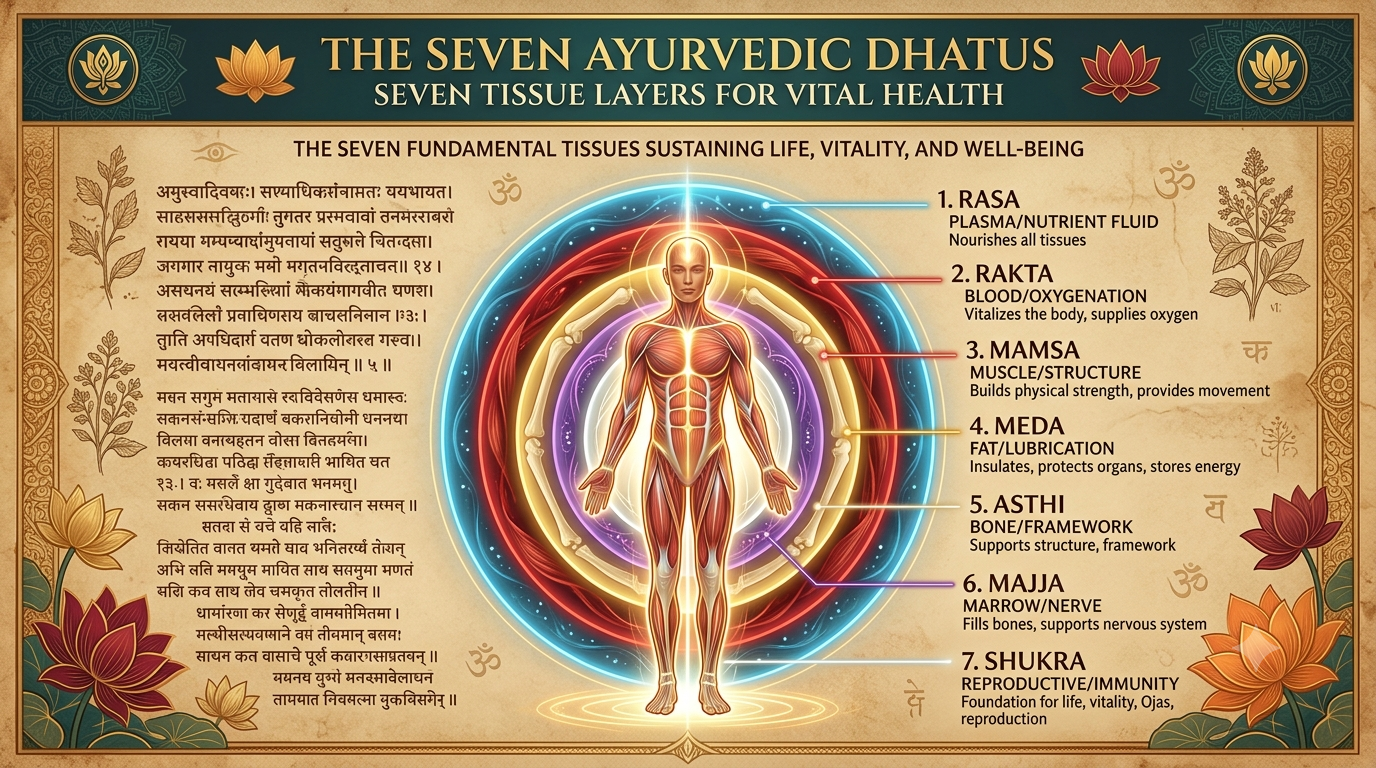
At Healthyayu, read more about Ayurvedic six tastes, Tridosha in Ayurveda, 7 dhatus in Ayurveda, and Cooling Ayurveda foods for better well-being.
Key Takeaways
- Ayurveda is an old, full-body science that balances body, mind, and spirit to build health and stop disease.
- Its core ideas are the five elements, the three doshas, and Prakriti, your own body type.
- Ayurvedic care uses diet, herbs, and daily habits to restore balance and build immunity.
- Ayurveda leans on natural methods and personal care, unlike modern medicine’s focus on symptoms and drugs.
- Safe use needs a trained guide and real herbal products.
Frequently Asked Questions
How would you explain Ayurveda in simple words?
Ayurveda is an old Indian system of natural healing. It balances the body, mind, and spirit. In what is Ayurveda in simple words, think of it as a system that looks at the whole person, not just one symptom.
What are the three doshas in Ayurveda?
The three doshas are Vata, Pitta, and Kapha. They stand for different types of energy in the body. Learning what are doshas in Ayurveda shows how these three link to body work.
Is Ayurveda backed by science?
Many Ayurvedic herbs and steps have research support, though proof can shift across herbs and health issues. Talk to a trained expert before you use Ayurveda for a health problem.
Can Ayurveda cure disease?
Ayurveda works to treat the root of disease and support natural healing. It leans on balance, diet, lifestyle, and other care steps. The phrase What is Ayurveda covers this whole approach to health, not just one single fix.