Estimated reading time: 6 minutes
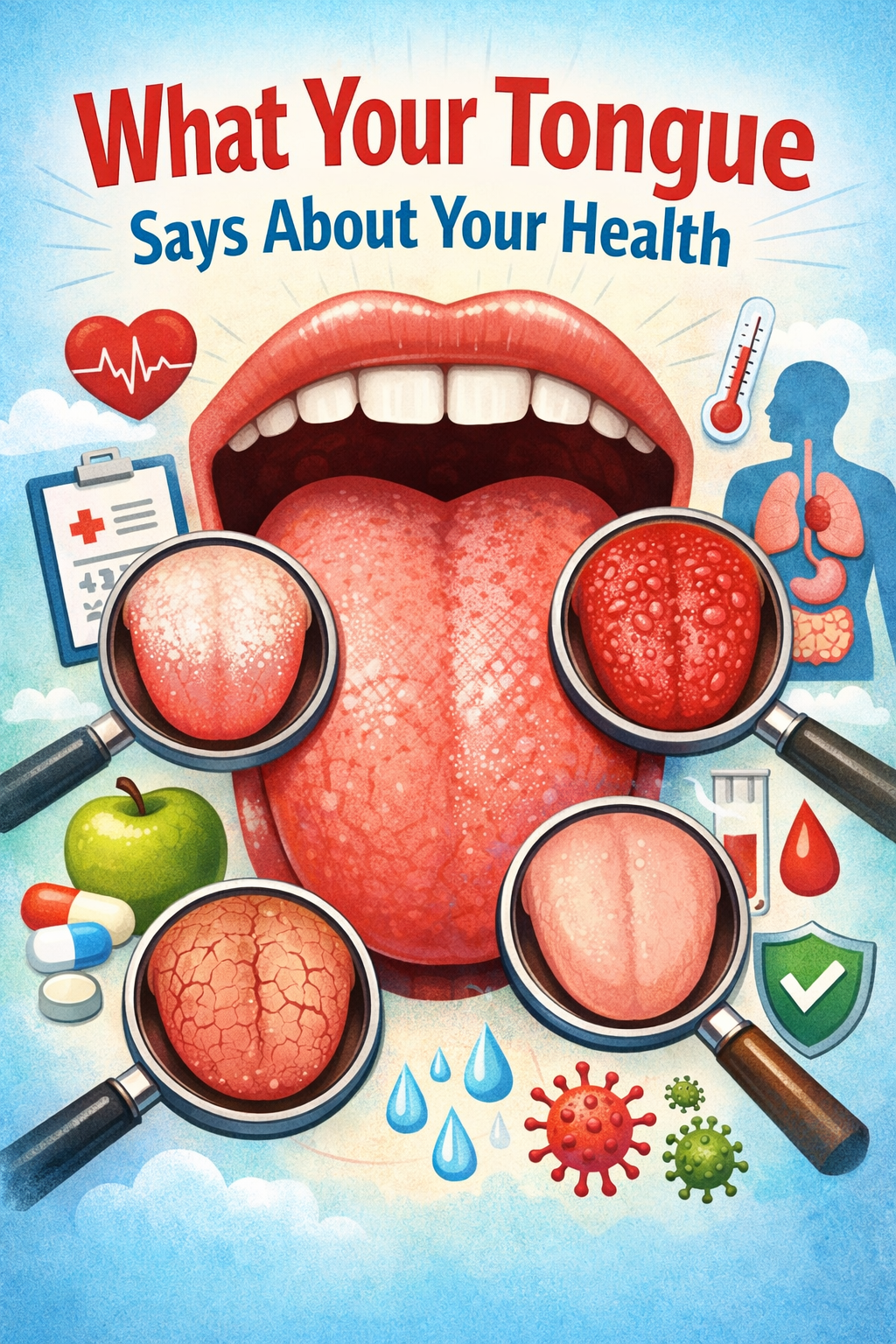
Most of the time, when you visit the doctor, he generally checks your tongue to assess your health. But we’ve wondered why they do so, and we’ve questioned ourselves: “What a tongue says about your health.” Come, let’s begin our journey to know about that.
We use our tongues every day to speak, swallow, and enjoy a perfectly seasoned meal, but how often do we actually look at them?. In traditional medical practices—from Ancient Greece to China and India—the tongue has long been viewed as a “window” into the body’s internal state.
A quick glance at your tongue in the mirror might provide important clues about the condition of your digestive system, immune system, and even your emotional health.
While it isn’t a crystal ball, your tongue is a highly sensitive muscle covered in a mucous membrane that reacts quickly to changes in your health. It has papillae, which give the tongue its rough texture and help it taste and move food around the mouth. If you’ve ever noticed a strange coating, a change in color, or an unusual texture on your tongue, your body might be sending you a memo.
The “Perfect” Tongue: What’s Normal?
Before we dive into the warning signs of change in tongue color and structure, it helps to know the baseline. A healthy tongue is typically:
- Pale Pink: Not bright red, but not ghostly white.
- Slightly Bumpy: These small bumps are called papillae, which contain your taste buds.
- Moist: A healthy mouth produces enough saliva to keep the surface hydrated.
- Thin White Coating: A very light, transparent film of debris and bacteria is normal when you wake up in the morning. It can be easily brushed away.
What a tongue says about your health
Learn step by step what changes you can see on your tongue:
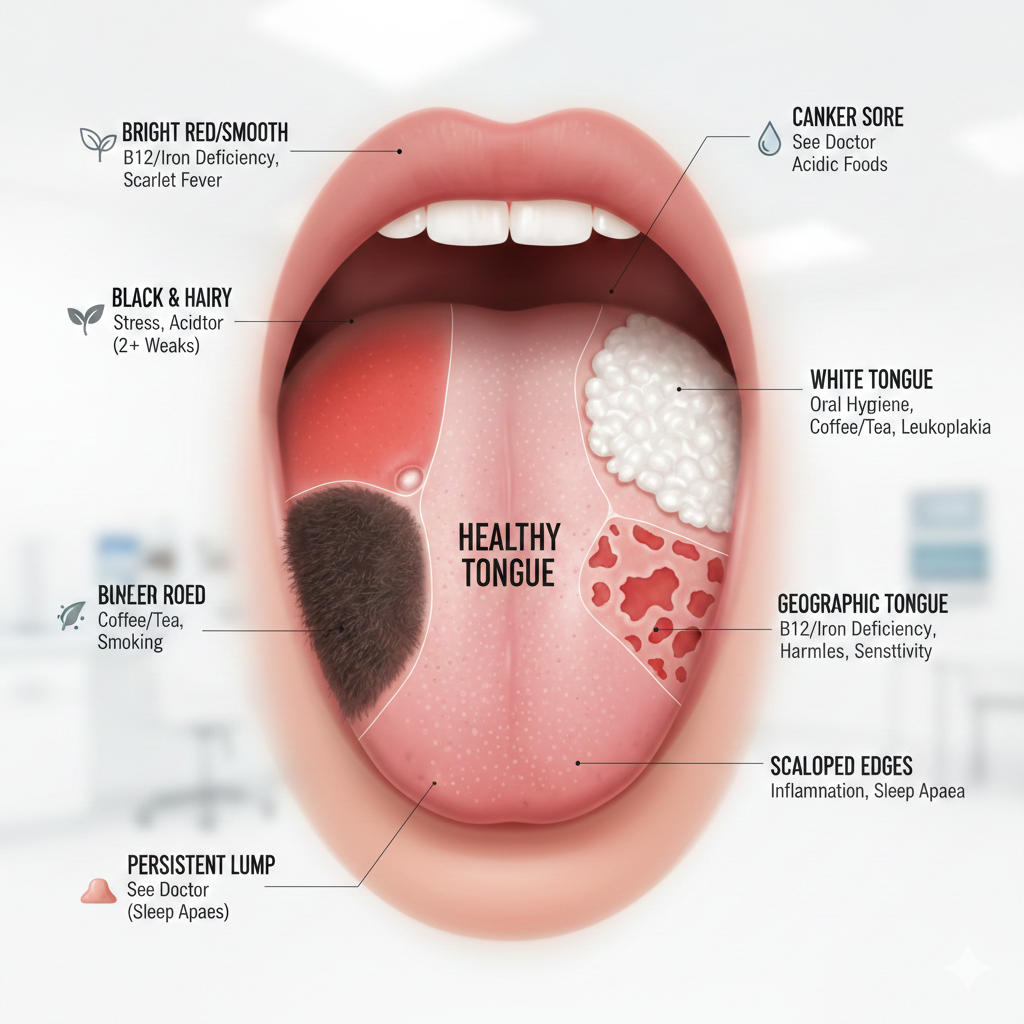
1. Decoding Color Changes of the tongue
Color is often the first thing a doctor notices when something is not right with your internal health. Here is what various shades of your tongue might indicate:
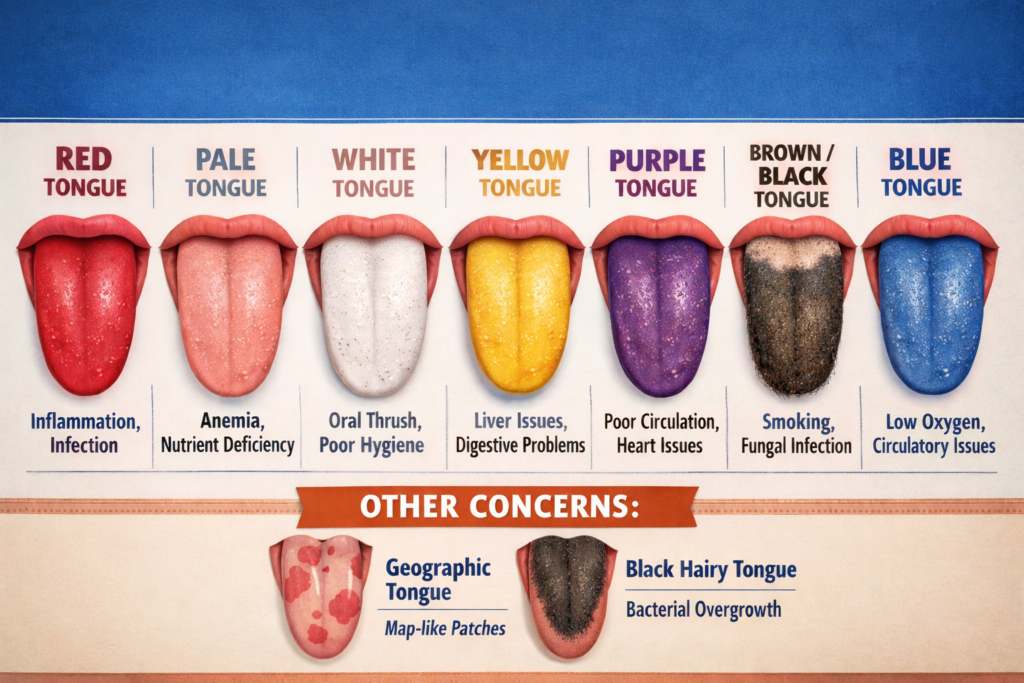
Pale Tongue
A pale tongue can be a sign of low hb or poor circulation in the tongue. If your tongue appears unusually pale, it might indicate a deficiency in red blood cells, commonly due to iron, folate, or vitamin B12 deficiencies. It can also be a symptom of a weakened immune system or poor digestion.
Red Tongue
A bright red tongue can point to various conditions. A red, smooth tongue with a glossy appearance is sign of a vitamin B12 or folic acid deficiency. It may also indicate a fever or infection. In some cases, a red tongue may signal scarlet fever, a bacterial infection.
Purple Tongue
A purple tongue may signal poor circulation or respiratory issues. It is also linked with “Qi deficiency” in traditional medicine. If your tongue stays purple for the whole day, see a Doctor.
Yellow Tongue
A yellow tongue could indicate liver issues or an infection. It’s commonly associated with jaundice, a condition in which the liver’s ability to filter toxins is impaired, leading to a buildup of bilirubin in the bloodstream. A yellowish coating could also signal digestive issues, such as bacterial overgrowth or a fungal infection.
2. The Texture of Your Tongue: A Closer Look
The texture of your tongue can reflect your health. While a smooth tongue may show good health, altered textures can signal problems.
Smooth Tongue
A smooth, glossy tongue can indicate a deficiency in vital nutrients, such as B vitamins, particularly B12 or folate. It may also occur in people with dehydration or iron deficiency. A smooth, shiny tongue can also be a symptom of systemic conditions, such as malnutrition or autoimmune disorders like lupus.
Coated Tongue
A white or yellow coating on your tongue may indicate digestive issues. Coatings can result from bacteria, fungi, or food debris. A thick white coating may indicate oral thrush, a yeast overgrowth. Yellow may indicate liver problems or digestive issues such as acid reflux.
Cracked Tongue
A cracked or fissured tongue, particularly one with deep grooves running along the surface, is often a sign of B vitamin deficiency, particularly B2 (riboflavin). Cracks can also indicate a chronic condition such as psoriasis or Sjögren’s syndrome, a condition where the body’s immune system attacks its moisture-producing glands. People with a cracked tongue should monitor other symptoms and consult a healthcare provider to rule out underlying issues.
3. The Size of Your Tongue: A Potential Clue
Tongue size can reveal health problems. A swollen or enlarged tongue may signal several concerns.
Swollen Tongue
A swollen tongue can indicate a serious health problem, such as an allergic reaction, hypothyroidism, or acromegaly (a hormonal disorder). Swelling of the tongue can also occur due to dehydration or a deficiency in certain nutrients. In some cases, a swollen tongue may signal more severe conditions, including tumors or infections. If swelling persists for a longer time, then go see a Doctor.
Shrunken Tongue
A shrunken or shriveled tongue can be a sign of dehydration, where the body lacks sufficient fluid to maintain normal functioning. It can also be associated with nutritional deficiencies or serious conditions like malnutrition or cancer. A shrunken tongue is often dry and may appear rough. If you experience this condition, it’s essential to stay hydrated. In serious condition, it may be due to a heart attack or stroke. In this condition, please go to the nearby hospital.
4. What Your Tongue’s Movement Tells You
While the appearance of your tongue is crucial in evaluating your health, its movement can also give clues about your overall wellness. An inability to move the tongue freely or discomfort while talking, chewing, or swallowing can point to conditions such as neurological disorders, dehydration, or muscle weakness.
Restricted Movement of the Tongue
Difficulty moving the tongue or pain in its muscles while moving can indicate underlying conditions. Possible causes include tongue-tie, neurological disorders like brain stroke, Parkinson’s, or dental issues like TMJ dysfunction.
Tingling or Burning Sensation in the Tongue
A tingling or burning sensation on the tongue can be indicative of nerve issues, especially if it persists for the long term. Conditions such as multiple sclerosis, oral herpes, or even anxiety can cause these sensations in the tongue. A burning tongue can also be a symptom of vitamin deficiencies, particularly in people with low levels of B12 or folic acid.
5. Your Tongue and Emotional Health
Your tongue can also reflect your emotional health. Stress or anxiety may cause tightness or tooth grinding, leading to tongue discomfort or pain.
Anxious individuals may bite their tongue tip, causing pain. If stress changes your tongue, consider how emotions affect your body.
Conclusion
Your tongue’s appearance and behavior give valuable insight into your health. Changes in color, texture, size, and movement can signal nutritional deficiencies, digestive issues, infections, emergencies or systemic disease. Checking your tongue can reveal issues before they worsen.
Remember, while your tongue can be a helpful diagnostic tool, it’s important to consult with a healthcare provider for a comprehensive evaluation.